
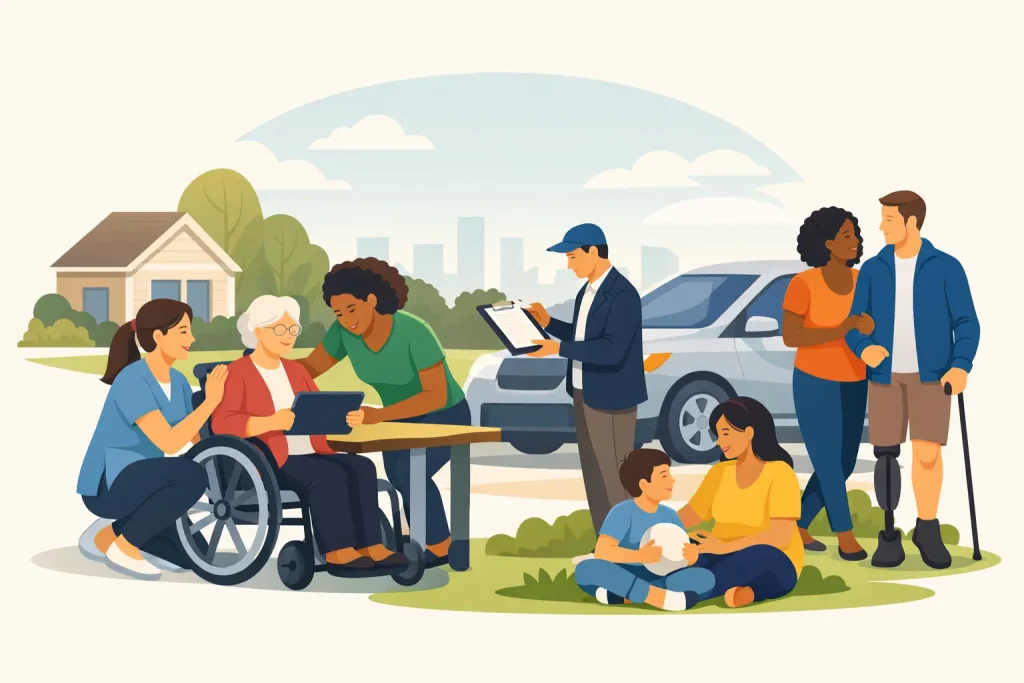
A family can spend weeks making calls, comparing programs, and trying to understand what kind of help is actually available – all while still managing work, appointments, medications, and everyday life. That is why Essex County disability supports matter so much. The right support is not just about filling hours in a schedule. It is about helping a person live safely, participate in the community, and maintain as much independence as possible.
For many families, the hardest part is not deciding that help is needed. It is figuring out what kind of help fits the person, the home, and the long-term goal. Some people need hands-on assistance with daily routines. Others benefit most from supervision, community access, caregiver relief, or support building practical life skills. Good support starts by looking at the whole person, not just the diagnosis.
What Essex County disability supports often include
Disability supports can look very different from one household to another. One adult may need help getting ready for the day, preparing meals, and staying on schedule. Another may need support attending community activities, practicing communication, or managing transitions without becoming overwhelmed. The service should match the person, not force the person to match the service.
In Essex County, families often look for support in a few key areas. Daily living assistance can include bathing, dressing, grooming, toileting, meal preparation, mobility help, medication reminders, and safety supervision. These services can reduce stress at home while preserving dignity for the individual receiving care.
There is also a strong need for community-based support. Many individuals do better when they are not isolated at home. Community inclusion services can help a person attend activities, build confidence in public settings, practice social interaction, and stay engaged in meaningful routines. For some families, this is the difference between simply getting through the week and seeing real progress.
Respite is another essential piece. Caregivers are often deeply committed, but commitment does not remove exhaustion. A parent, sibling, or guardian may be providing round-the-clock oversight while also handling employment, medical paperwork, and household responsibilities. Respite support gives families time to rest, work, attend appointments, or take care of other responsibilities without feeling that they are leaving their loved one unsupported.
Choosing Essex County disability supports based on real needs
The best support plan usually begins with honest questions. What does the person manage well alone? Where do they need cueing, supervision, or physical help? When does stress rise during the day? What helps them feel safe, respected, and understood? These details matter more than broad labels.
A person who is verbal and socially interested may still need close supervision in the community. Someone who appears physically independent may struggle with judgment, routines, or emotional regulation. Another person may need a calm, consistent support professional who understands how to prevent frustration before it grows into a difficult situation. Support works better when these realities are acknowledged early.
It also helps to think about goals in practical terms. Independence does not always mean doing everything alone. Sometimes it means learning to complete more tasks with less prompting. Sometimes it means being able to enjoy a community outing without distress. Sometimes it means helping a caregiver stay healthy enough to continue providing love and structure at home. Progress can be quiet, but it is still meaningful.
Home-based support versus community-based support
Families are sometimes unsure whether home-based or community-based services make more sense. The answer depends on the individual and the season of life they are in.
Home-based support is often the right fit when a person needs help with personal care, household routines, meal preparation, medication reminders, or safety in a familiar setting. It can also be especially helpful after a hospital stay, during periods of medical fragility, or when changes in routine are difficult to tolerate. Home is where many people feel most secure, and that matters.
Community-based support can be valuable when the goal is greater social engagement, skill-building, and participation outside the home. This may include attending local activities, practicing appropriate behavior in public spaces, using transportation with assistance, or becoming more comfortable in everyday settings. Community support can expand confidence, but only when it is paced appropriately. Too much too soon can create stress instead of growth.
In many cases, a combination works best. A person may need support at home in the morning and community participation later in the day. Another may benefit from respite on certain days and one-on-one individual support on others. Good care is flexible enough to reflect real life.
What families should look for in a provider
Credentials and service offerings matter, but so does the way support is delivered. Families should look for a provider that treats the individual with respect, communicates clearly, and understands that consistency is part of quality care.
A strong support professional does more than complete tasks. They notice changes in mood, routine, appetite, mobility, or behavior. They understand the importance of patience. They know that trust is built over time and that dignity should never be sacrificed for efficiency.
Communication with families and care teams is equally important. Guardians, support coordinators, and social workers need dependable updates and a clear picture of how services are going. If something is not working, the provider should be willing to adjust. Not every match is perfect on the first try, and pretending otherwise does not help the client.
It is also reasonable to ask how the provider approaches supervision, community participation, and caregiver relief. A warm tone is not enough on its own. Families deserve practical reliability – arriving on time, following care plans, documenting concerns appropriately, and maintaining professionalism in the home and community.
Why local understanding matters
When providers understand the needs of Essex County families, support tends to feel more realistic and less generic. Local knowledge can help with scheduling, transportation expectations, community access, and understanding the pressures many families face. In areas such as Newark, Irvington, East Orange, and South Orange, daily routines may be shaped by traffic, building access, neighborhood resources, and caregiver work schedules. Support should account for that.
Local understanding also matters because disability support does not happen in isolation. Families may be coordinating with physicians, discharge planners, schools, day programs, support coordinators, and other community resources. A provider who appreciates that larger picture can often communicate more effectively and reduce unnecessary stress for the family.
Comfort Zone Home Healthcare serves families who need this kind of dependable, person-centered support, including home care and DDD services that respect both the individual and the people caring for them.
When support needs change
One of the most important things families can remember is that support needs rarely stay exactly the same. A routine that worked six months ago may no longer fit. Health changes, caregiver burnout, behavioral shifts, social goals, or a new discharge from a hospital or rehab setting can all change what kind of help is needed.
That is why it helps to think of disability support as something that should be reviewed and adjusted over time. If a person is doing well, the goal may be to build more independence or increase community access. If things are becoming harder at home, it may be time for more hours, different scheduling, or additional respite. Asking for a change is not a failure. It is often a sign that the family is paying close attention.
The right support should make life feel more stable, not more complicated. It should reduce avoidable stress, protect dignity, and give families room to breathe. Most of all, it should reflect the person receiving care – their strengths, their preferences, their pace, and their right to be treated with respect every step of the way.
If you are exploring options, start with what would make daily life safer, calmer, and more sustainable right now. The best path forward is often the one that supports both independence and peace of mind at the same time.