
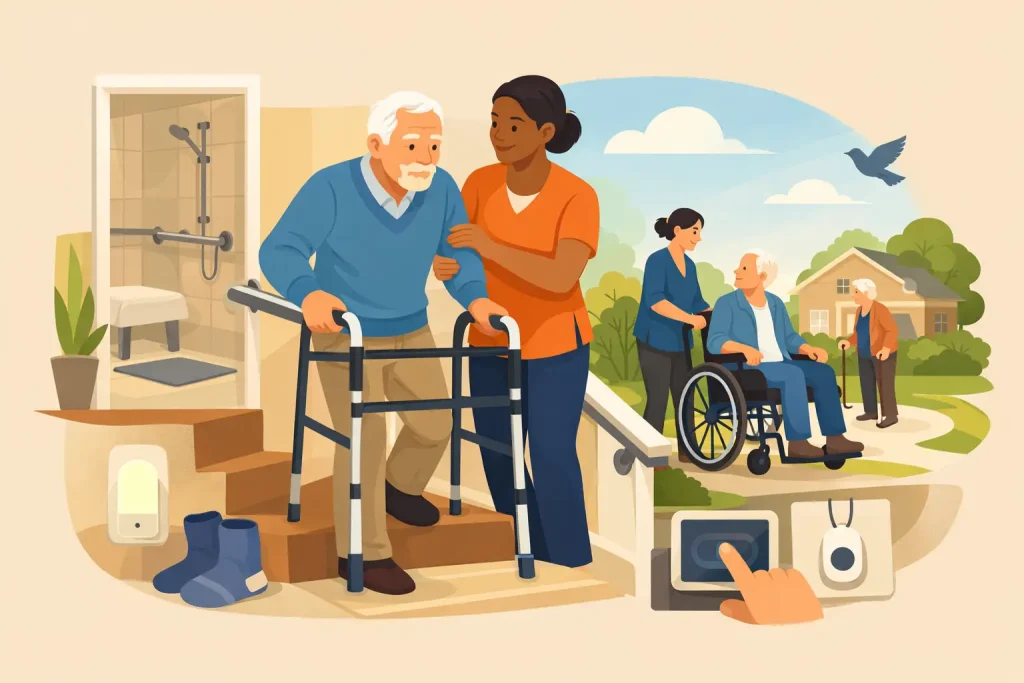
A fall can change a routine afternoon into a hospital visit, a difficult recovery, or a loss of confidence that lingers long after the bruise has healed. Thoughtful fall prevention home support helps reduce those risks while honoring the person’s wish to remain comfortable, capable, and independent at home.
For older adults, people recovering from surgery, and adults with disabilities, fall prevention is rarely about one single change. It is about noticing how the home, health needs, daily habits, and available support fit together. The goal is not to restrict someone’s life. It is to make everyday movement safer and more manageable.
Why Falls Happen at Home
Falls are often described as accidents, but many have contributing factors that can be identified ahead of time. A loose rug, poor lighting, slippery bathroom flooring, medication side effects, weakness after an illness, or the need to rush to the bathroom can each create risk. When several factors occur at once, even a familiar room can become difficult to navigate.
Changes in strength, balance, vision, or memory may also affect safety. A person who once moved easily from the bed to the bathroom may need more time, a walker, or a steady arm after a hospital stay. Someone with developmental disabilities may benefit from consistent cues, supervision, and practice with safe routines. These needs are personal, and a plan should reflect the individual rather than rely on assumptions about age or diagnosis.
Family members may notice small warning signs before a fall occurs. These can include holding onto furniture while walking, avoiding stairs, leaving lights off at night, wearing socks on smooth floors, or seeming unsteady when standing from a chair. Repeated near-falls deserve attention, even when no injury has occurred.
Fall Prevention Home Support Starts With a Clear Look Around
A safer home does not have to feel clinical or stripped of personality. Many useful adjustments are simple, affordable, and respectful of the way someone prefers to live. Start by walking through the home at the times the person uses it most, including early morning and nighttime. Look at the path from the bedroom to the bathroom, the entryway, the kitchen, and any stairs.
Clear walking paths matter. Boxes, electrical cords, low furniture, pet toys, and small tables can become hazards when someone is tired, using a mobility aid, or carrying laundry. Frequently used items should be within easy reach, reducing the need to climb, bend deeply, or stretch overhead.
Lighting deserves close attention. Hallways, stairways, bathrooms, and entrances should be bright enough to show changes in flooring or steps. Night-lights can make overnight trips safer, particularly for someone who wakes frequently or takes medication that causes drowsiness. Light switches should be easy to reach from the doorway and beside the bed when possible.
Bathrooms require special care because water and hard surfaces increase the chance of injury. Non-slip mats, secure grab bars, a shower chair, and a raised toilet seat may be helpful depending on the person’s needs. Grab bars should be professionally installed into wall studs, not attached with temporary suction, which can fail under pressure.
Footwear also makes a difference. Well-fitting shoes or non-slip slippers provide more stability than loose sandals, socks, or worn-out footwear. If swelling, numbness, pain, or foot wounds are present, it is wise to discuss appropriate footwear with a healthcare professional.
Build Safer Routines, Not Just a Safer Space
Home changes work best when they are paired with daily habits that support safe movement. Encourage the person to sit at the edge of the bed for a moment before standing, especially after sleeping or resting. Standing too quickly can cause dizziness. When using a cane or walker, the device should be within reach before getting up, not across the room.
Medication routines are another important part of fall prevention. Some prescriptions and over-the-counter products can cause sleepiness, dizziness, confusion, or changes in blood pressure. Families should not stop medications on their own, but they can raise concerns with a physician, pharmacist, or prescribing provider. Keeping an updated medication list is particularly helpful after a hospital or rehabilitation discharge.
Hydration and regular meals can support steadier energy and reduce weakness or lightheadedness. This may sound basic, but people who live alone, have memory changes, or are recovering from illness may skip meals or drink too little. Home support can make a meaningful difference by preparing balanced meals, offering reminders, and noticing changes in appetite or energy.
Movement should be encouraged at an appropriate level. Spending all day seated can lead to loss of strength and balance, while trying to do too much too soon can also be unsafe. A doctor or physical therapist can recommend exercises and safe activity levels for a person’s health condition. The right approach depends on whether the person is managing arthritis, recovering from surgery, living with a neurological condition, or facing another mobility challenge.
When Hands-On Support Can Reduce Risk
There are times when a safer environment is not enough on its own. A person may need assistance with bathing, dressing, toileting, transfers, meal preparation, or moving safely through the home. These are often the moments when falls are most likely to happen, especially if someone feels rushed, embarrassed about asking for help, or determined to manage alone despite new limitations.
A trained caregiver can provide calm, respectful support with these routines. This may include staying nearby while a client walks, offering a steadying hand during transfers when appropriate, assisting with personal care, and helping maintain clear, orderly living areas. Just as valuable, a caregiver can observe patterns that family members may not see, such as increasing fatigue in the afternoon, trouble using a walker correctly, or hesitation on a particular stair.
Support should always preserve as much independence as possible. For one person, that may mean setting out clothing and remaining close by during dressing. For another, it may mean direct help with bathing after surgery. The level of care should be adjusted as health needs change, rather than taking over tasks a person can still do safely.
For family caregivers, reliable assistance can ease the constant worry of leaving a loved one alone. Respite care can provide time to work, rest, attend appointments, or care for other responsibilities while knowing the individual has attentive support. This is not a replacement for family involvement. It can be a practical way to make caregiving more sustainable.
Plan Carefully After a Hospital or Rehab Discharge
The first days home after a hospitalization, rehabilitation stay, or surgery can be a particularly vulnerable time. A person may be weaker than expected, adjusting to new medications, using unfamiliar equipment, or trying to follow detailed discharge instructions while still tired or in pain.
Before discharge, families can ask practical questions: Is the person safe to use stairs? Do they need supervision when bathing or getting out of bed? Are they allowed to bear weight on one leg? What symptoms require a call to the doctor? Will they need help picking up prescriptions, preparing meals, or getting to follow-up appointments?
It is helpful to prepare the home before the person arrives. Make sure pathways are open, medications are organized according to the discharge plan, and commonly used items are easy to access. If medical equipment is recommended, such as a walker, commode, or shower chair, ensure the person knows how to use it correctly. A rushed return home without adequate support can lead to avoidable setbacks.
Know When to Seek Professional Guidance
A fall should always be taken seriously, even when there is no obvious injury. Older adults and medically fragile individuals may have pain, bleeding, or confusion that is not immediately apparent. Seek urgent medical care for severe pain, a head injury, loss of consciousness, new weakness, difficulty breathing, or an inability to get up. When in doubt, contact a healthcare provider for guidance.
It is also appropriate to ask for help before a fall happens. A primary care provider can review health concerns and medications. A physical or occupational therapist may recommend exercises, mobility equipment, and home modifications. For people with disabilities, support coordinators, guardians, and direct support professionals can help develop routines that build skills while maintaining safety.
In New Jersey, families managing care across work schedules, medical appointments, and changing needs do not have to carry every responsibility alone. Comfort Zone Home Healthcare can provide compassionate in-home assistance tailored to daily routines, mobility needs, and caregiver relief.
A safer home is built through small, respectful decisions: turning on the light, clearing the path, pausing before standing, accepting help when it is needed, and paying attention to changes before they become emergencies. Those choices can help someone continue living at home with greater comfort, dignity, and confidence.