
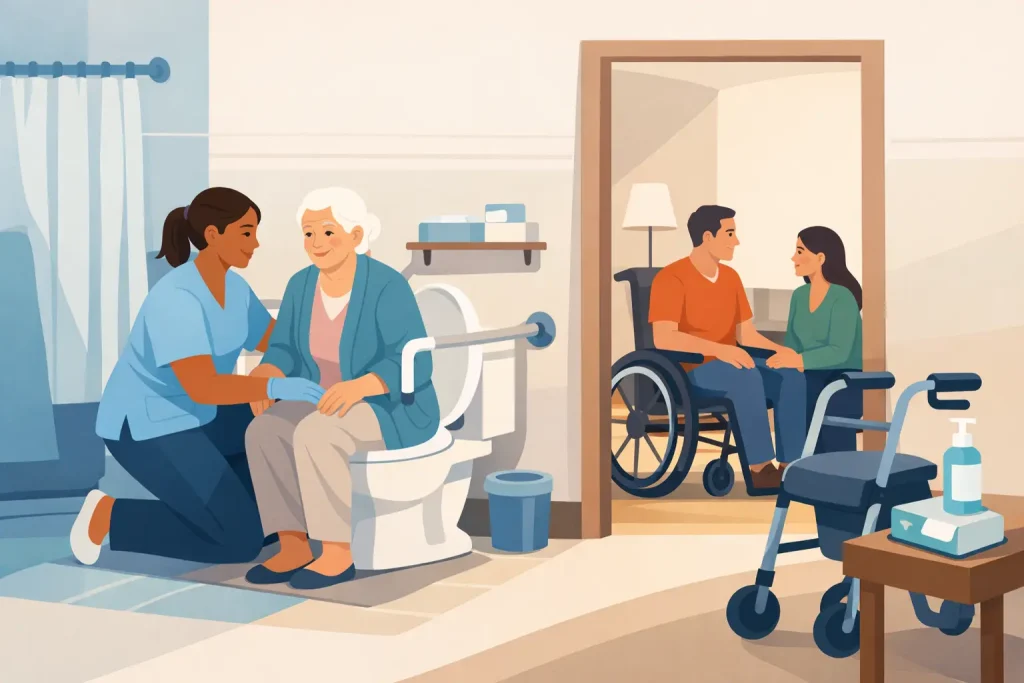
A rushed trip to the bathroom can change far more than a daily routine. For an older adult recovering from surgery, a person living with a disability, or someone managing weakness or balance changes, it can bring fear of falling, embarrassment, and a loss of confidence. Thoughtful toileting support at home helps make these private moments safer while protecting the person’s comfort, preferences, and independence.
Families often recognize the need gradually. A loved one may begin holding urine to avoid getting up, have more near-falls, need help with clothing fasteners, or seem reluctant to leave the bedroom. These are not simply housekeeping concerns. They can affect hydration, skin health, mobility, mood, and overall well-being.
What Toileting Support at Home Can Include
Toileting assistance is personal care provided with discretion and respect. The level of help should reflect the individual’s abilities, routines, and care needs. One person may only need a steady arm while walking to the bathroom. Another may need hands-on assistance with transfers, clothing, hygiene, or safely using a bedside commode.
Support can include help getting to and from the bathroom, transferring on and off the toilet, adjusting clothing, personal hygiene, handwashing, and returning safely to a chair or bed. A caregiver may also provide reminders to use the bathroom on a regular schedule, especially for someone with memory changes, limited mobility, or a condition that affects bladder or bowel awareness.
For people who use incontinence products, respectful support includes changing products promptly, cleaning and drying the skin carefully, and disposing of supplies properly. The goal is never to take over unnecessarily. It is to offer the right amount of help at the right time.
Privacy Is Part of Quality Care
Good care is not only about completing a task safely. It is also about how the task is done. Asking permission before assisting, explaining each step, closing the door or curtain, and allowing extra time can make a meaningful difference.
Whenever possible, caregivers should encourage the person to do the parts they can manage independently. That may mean letting them wash their own hands, choose their clothing, or use a grab bar while the caregiver stays close by. Small choices help preserve a sense of control.
Why Bathroom Needs Can Become a Safety Concern
Bathrooms are one of the most common places for falls at home. Wet floors, low toilet seats, poor lighting, throw rugs, and the urgency of needing to go can create a dangerous combination. Risk may be higher after a hospital or rehabilitation discharge, during medication changes, or when someone is recovering from illness or surgery.
Mobility challenges are not always obvious. A person who walks well during the day may be less steady at night. Someone with arthritis may struggle with buttons or standing from a low seat. A person with Parkinson’s disease, a developmental disability, stroke-related weakness, or vision changes may need a more individualized approach.
A caregiver can help reduce risk by staying attentive to the person’s pace, using prescribed mobility equipment correctly, and avoiding the temptation to rush. If a transfer feels unsafe, it is better to pause and reassess than to force the movement. Families should also speak with the person’s health care professional about new weakness, dizziness, repeated falls, pain, sudden confusion, or significant changes in toileting habits.
Creating a Safer Bathroom Routine
The most effective routines are usually simple and consistent. Begin by observing when help is needed most. Is the challenge getting out of bed in the morning, reaching the bathroom after meals, or using the toilet safely overnight? A clear picture of the pattern makes it easier to plan support that feels natural rather than intrusive.
A few practical changes can improve safety considerably:
- Keep a clear, well-lit path between the bed and bathroom, including night-lights for evening trips.
- Remove loose rugs and clutter, and clean spills promptly to reduce slipping hazards.
- Consider equipment recommended by a clinician, such as grab bars installed correctly, a raised toilet seat, a shower chair, or a bedside commode.
- Place commonly used supplies within easy reach so the person does not need to twist, stretch, or stand suddenly.
Equipment can be helpful, but it is not a substitute for proper assistance. A grab bar may support someone with mild balance concerns, while a person who cannot bear weight may require hands-on transfer support and a plan developed with a qualified professional. The right solution depends on the person’s strength, mobility, medical guidance, and home layout.
Timing Can Prevent Urgency
Scheduled bathroom visits can be useful for people who have difficulty recognizing the need to go or who wait until the last moment. Gentle reminders before bedtime, after meals, and at regular intervals may reduce accidents and rushed transfers.
At the same time, schedules should not feel controlling. A respectful caregiver pays attention to the person’s normal routine and asks what works for them. Some people value privacy and prefer a verbal reminder; others feel safer knowing someone is nearby. Individual preferences should guide the plan.
Supporting Hygiene and Skin Health
Toileting support also plays a role in preventing discomfort and skin problems. Moisture left on the skin can cause irritation and increase the risk of breakdown, especially for someone who spends much of the day in bed or a chair. Caregivers should use gentle hygiene practices, dry the area thoroughly, and follow any skin-care instructions from the individual’s clinical team.
Changes in urine or bowel habits can sometimes signal a health concern. Pain or burning with urination, fever, blood in urine or stool, black stools, severe constipation, diarrhea that continues, new incontinence, or a sudden change in mental status should be reported to a health care professional promptly. Home caregivers can observe and communicate concerns, but they should not diagnose or delay needed medical attention.
Hydration matters as well. Some people drink less because they worry about accidents or do not want to ask for bathroom help. Encouraging fluids in accordance with a clinician’s recommendations, along with regular toileting opportunities, can support comfort and health.
When Family Caregivers Need More Help
Helping a loved one with toileting can be emotionally difficult, even when the relationship is close. Adult children may feel uncertain about how to provide intimate care without causing embarrassment. Spouses may be managing their own health needs. Parents and guardians of adults with developmental disabilities may need reliable support that promotes daily living skills while also providing supervision and safety.
There is no failure in asking for help. In many cases, professional care allows family members to spend less time worrying about transfers, accidents, or overnight routines and more time being present as family. It can also provide respite when care needs become physically demanding.
A dependable home care provider should take time to understand the person’s mobility, communication style, cultural preferences, toileting schedule, and level of independence. Families should be clear about what assistance is needed, what equipment is used, and any instructions provided by doctors, therapists, or discharge planners. Consistency between caregivers can make personal care feel more comfortable and predictable.
For New Jersey families, Comfort Zone Home Healthcare provides compassionate personal care support designed around each client’s needs and routines. Whether support is needed after a discharge, as part of ongoing home care, or alongside services for adults with developmental disabilities, care should always center the person – not just the task.
Choosing Dignity Every Day
The best toileting support at home is often quiet and unobtrusive. It helps a person feel clean, safe, and respected without making them feel watched or rushed. With patient assistance, a safer environment, and a routine tailored to the individual, a deeply personal part of daily life can remain a source of comfort rather than concern.