
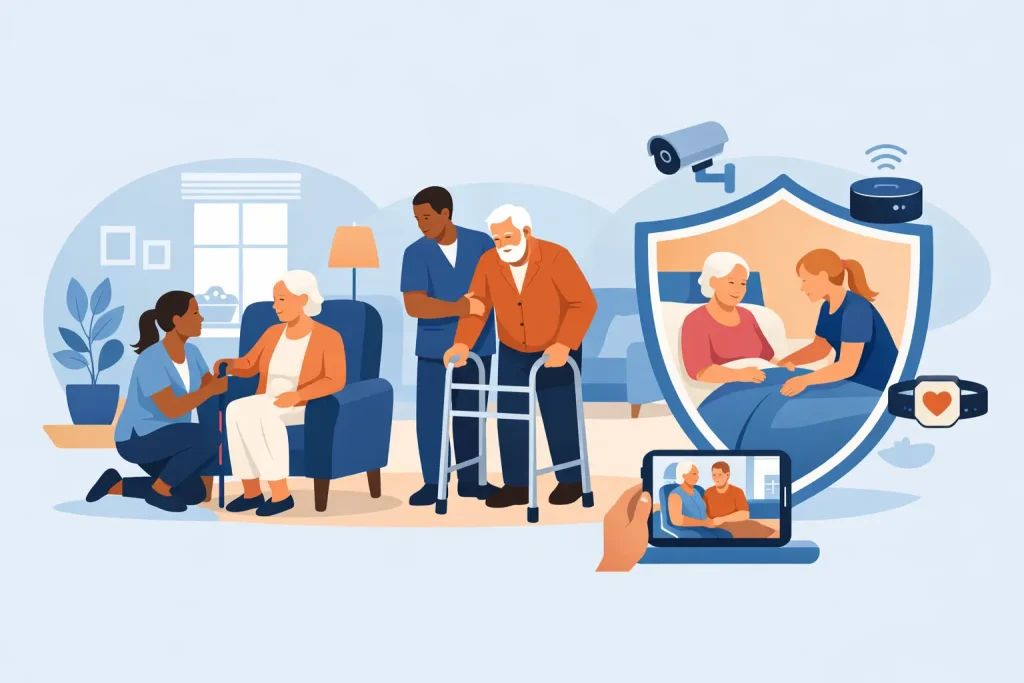
A missed step on the stairs, a forgotten burner on the stove, or a moment of dizziness while getting out of bed can change an ordinary day very quickly. That is why safety supervision for seniors matters so much at home. It is not about taking over a person’s life. It is about noticing risks early, offering support at the right moments, and helping older adults stay comfortable and independent in a familiar setting.
For many families, the need for supervision does not appear all at once. It often starts with small concerns. A parent seems unsteady in the shower. Medications are skipped or doubled. Meals become less regular. The house feels harder to manage. These changes may seem minor on their own, but together they can point to a growing need for added oversight and reassurance.
What safety supervision for seniors really means
Safety supervision for seniors is the ongoing presence, monitoring, and support that helps reduce the chance of injury or harm during daily life. In a home care setting, that may include watching for fall risks, assisting with movement, reminding someone to take medication, helping with bathing and dressing, and making sure the home environment remains safe.
Good supervision is attentive without being intrusive. The goal is not to remove independence, but to protect it. Many older adults want to continue making their own choices, following their routines, and staying in their own homes. Supervision works best when it respects those preferences while reducing the risks that can come with aging, illness, recovery after surgery, or memory changes.
This balance is important. Too little support can leave a senior vulnerable. Too much control can feel discouraging or even upsetting. The right approach depends on the person’s health, mobility, judgment, and comfort level.
Why supervision becomes necessary
There are many reasons an older adult may benefit from closer attention at home. Sometimes it is related to physical changes, such as weakness, limited balance, arthritis, vision loss, or recovery after hospitalization. In other cases, memory concerns or confusion make it harder to manage routines safely.
Even seniors who seem mostly independent can face certain risks. Bathrooms are a common place for slips and falls. Kitchens present burn and fire hazards. Cluttered walkways, poor lighting, and loose rugs can turn a normal room into a dangerous one. A person who forgets to drink enough water may become weak or dizzy. Someone who is lonely may also be less likely to notice changes in their own condition or ask for help when they need it.
Families also have to consider timing. A loved one may be fine for most of the day but need support in the morning, at bedtime, or during bathing and transfers. Others may need consistent supervision because of wandering, poor judgment, or a history of falls. There is no single standard. The right level of care depends on what is actually happening in the home.
Signs a loved one may need safety supervision for seniors
Sometimes the signs are obvious, but often they build slowly. You may notice bruises that are explained away, unopened mail, missed appointments, spoiled food in the refrigerator, or a home that looks harder to keep up. You may also hear repeated stories about almost falling, trouble getting to the bathroom in time, or feeling nervous when walking alone.
Medication mistakes are another serious warning sign. A senior may forget doses, take them twice, or confuse one pill for another. That can lead to avoidable medical problems very quickly. Changes in personal hygiene, poor nutrition, and increased isolation can also point to a need for more hands-on support.
Families should trust patterns, not just isolated incidents. One bad day may not mean much. Several close calls in a short period of time usually do.
How supervision supports dignity and independence
Some older adults resist help because they hear the word supervision and assume it means losing privacy or control. That concern is understandable. No one wants to feel watched in their own home.
The best care is built on respect. A caregiver can supervise while still honoring routines, preferences, and personal space. That may mean standing nearby during a shower rather than stepping in unless needed. It may mean offering a medication reminder instead of taking over the entire task. It may mean helping with mobility on stairs while allowing the person to walk at their own pace.
This kind of support protects confidence. When seniors feel safe, they are often able to do more for themselves. They can move through the day with less fear, less strain, and less risk of a preventable setback.
What a caregiver may do during in-home supervision
In practical terms, supervision often includes a combination of observation, assistance, and companionship. A caregiver may help someone get in and out of bed, steady them during toileting, prepare meals that are easy to eat and safe to reheat, and notice if swelling, fatigue, or confusion seems worse than usual.
Caregivers also help create safer routines. They may encourage regular hydration, support good lighting and clear walking paths, and reduce the rush that often leads to accidents. A person who feels hurried is more likely to fall. A calm, structured routine can make a meaningful difference.
There is also value in simple presence. A senior who lives alone may feel more secure knowing someone is there to notice if something seems off. That reassurance matters to families too, especially when they cannot be present every day.
Home safety changes that work well with supervision
Supervision is strongest when paired with a safer environment. Small home changes can reduce risk without making the house feel clinical. Better lighting in hallways and bathrooms, grab bars near the toilet and shower, non-slip mats, secure handrails, and cleared pathways all support safer movement.
It also helps to place commonly used items within easy reach. Reaching high shelves or bending low can cause falls, especially for someone with balance issues. If a senior uses a walker or cane, furniture layout matters more than many families realize. Tight spaces and loose cords can quickly become hazards.
That said, equipment alone is not always enough. A grab bar helps, but only if the person remembers to use it. A medication organizer is useful, but only if someone can manage it correctly. This is where supervision and environment work together.
Family caregiving and the limits of doing it alone
Many relatives begin by filling in where they can. They check in before work, stop by after dinner, and answer late-night phone calls. This comes from love, but it can become exhausting. Over time, constant worry and interrupted schedules can affect a caregiver’s own health, work, and family life.
There is also the question of skill. Family members know their loved one well, but they may not always know how to assist safely with transfers, bathing, or changes in condition. Good intentions do not remove risk.
Professional support can ease that pressure. At Comfort Zone Home Healthcare, safety supervision is part of helping clients remain at home with dignity while giving families greater peace of mind. For some households, that means a few hours of support each week. For others, it means more regular care. What matters most is matching services to the real level of need.
Choosing the right level of support
The right care plan is rarely one-size-fits-all. A senior recovering from surgery may need short-term supervision until strength returns. Someone with progressing memory loss may need more consistent oversight. Another person may only need help during bathing, meal preparation, and medication times.
It helps to look at the full picture. Consider mobility, cognition, bathroom safety, nutrition, fall history, medication routine, and how often the person is alone. Think about whether the current arrangement is sustainable not just this week, but over the next few months.
Families sometimes wait for a crisis before seeking help. In many cases, earlier support prevents the very emergencies they fear. A thoughtful care plan can reduce injuries, hospital visits, and the stress that comes from trying to manage too much at once.
Safety supervision for seniors is, at its heart, an act of protection and respect. It says that comfort matters, that independence deserves support, and that no one should have to face daily risks alone when help can make home feel safer and more manageable. If you are starting to notice small warning signs, paying attention now can make the next season of care steadier for everyone involved.