
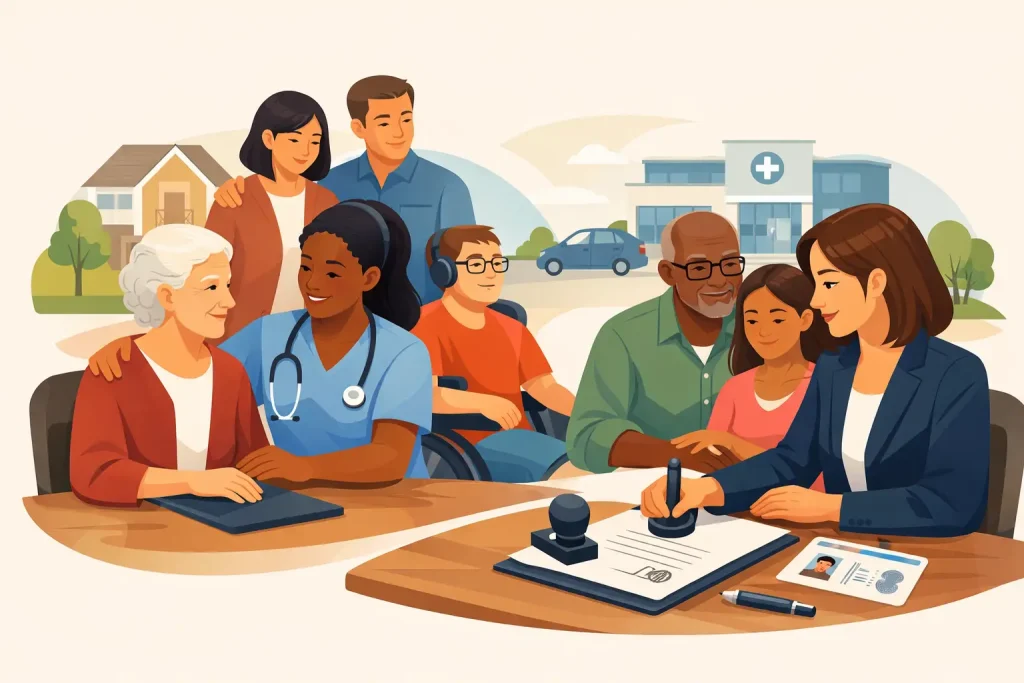
A hospital discharge, a new diagnosis, or a change in a loved one’s care needs can bring a stack of paperwork at exactly the moment a family has the least time and energy to sort through it. This guide to healthcare document notarization can help you understand what a notary does, what to prepare, and how to avoid a preventable delay when documents need to be signed.
Notarization is not just an administrative step. For documents that affect medical decisions, finances, care arrangements, or a person’s wishes, it can help verify that the signer is who they say they are and is signing willingly. When travel is difficult after surgery, during a serious illness, or for a person receiving care at home, a qualified mobile notary can meet the signer where they are.
What Healthcare Document Notarization Does
A notary public is an impartial witness who verifies a signer’s identity, confirms that the signer appears aware of what they are signing, and completes the required notarial certificate. The notary may administer an oath when a document requires one, record the notarization, and apply their official stamp or seal as required.
A notary does not decide whether a document is fair, explain its legal effect, tell someone what they should sign, or determine whether a person has legal capacity. Those are important boundaries. If a family has questions about which form is appropriate, how a document should be completed, or whether a proposed decision is legally sound, they should speak with an attorney, healthcare provider, social worker, or the organization requesting the document.
For families, the practical value of notarization is reassurance. The signing process creates a clear record that the signer was personally present, identified, and acting voluntarily at that appointment.
Documents That May Need a Notary
Healthcare-related paperwork does not all follow the same rules. Some documents require notarization, some require witnesses, some accept either, and some need neither. The receiving facility, attorney, insurance carrier, or agency should be able to confirm its requirements before the appointment is scheduled.
Documents that may require notarization include powers of attorney, certain advance care planning forms, authorizations connected to financial or care decisions, guardianship-related paperwork, affidavits, and documents requested by a hospital, rehabilitation center, nursing facility, government agency, or insurer.
A healthcare power of attorney or other advance directive is often completed so a trusted person can make medical decisions if the patient cannot speak for themselves. A financial power of attorney may allow someone to manage bills, insurance matters, or other financial responsibilities. These documents can be especially significant, which is why families should be careful to follow the execution instructions printed on the form or supplied by an attorney.
Do not assume that a document is ready because it has been downloaded or filled out. In New Jersey, requirements can vary based on the document type and the purpose it serves. A document prepared for another state may have different witness or notarization rules as well.
The Signer Must Be Present and Willing
The most common reason a notarization cannot proceed is simple: the signer is unavailable, unable to communicate their willingness to sign, or does not have acceptable identification. A family member, caregiver, agent, or guardian generally cannot sign on another adult’s behalf unless the document and applicable law specifically authorize that arrangement.
The notary must communicate directly with the signer. The signer needs to be physically present for the notarization and able to indicate that they understand they are signing a document voluntarily. A diagnosis, disability, speech difference, or physical limitation does not automatically prevent notarization. Many people can sign with accommodations, such as additional time, a quiet setting, assistance positioning the document, or an accessible communication method.
What matters is whether the notary can reasonably confirm the signer’s identity, awareness, and willingness at the time of the appointment. If the signer is heavily sedated, unconscious, confused, pressured by another person, or unable to express a voluntary decision, the notary may need to decline the request. That can be disappointing during a stressful moment, but it protects the signer and the integrity of the document.
Preparing for a Mobile Notary Appointment
A little preparation can make the visit calmer for everyone involved. Have the original document ready, but do not sign it before the notary arrives unless the document specifically instructs otherwise and the receiving party has confirmed that arrangement is acceptable. The notary needs to witness the signature when the notarial certificate calls for an acknowledgment or jurat.
The signer should have a current, government-issued photo ID available whenever possible, such as a driver’s license, state identification card, passport, or another form the notary can accept. Expired identification, photocopies, photos of an ID, or a hospital wristband may not be sufficient. If valid ID is unavailable, ask the notary in advance whether an alternative identification method is permitted for the situation.
Review the document before the appointment for blank spaces. The notary cannot complete the form for you or tell you what to write. Names, dates, addresses, and other required details should be filled in as directed, while signature spaces and notarial sections should remain ready for the signing process.
If witnesses are required, arrange them ahead of time. A notary may sometimes serve as a witness when permitted, but that is not always appropriate or allowed by the document’s instructions. Witnesses may need to be adults, disinterested parties, or people who are not named in the document. Confirm these details before the appointment rather than making assumptions at the bedside or discharge desk.
It also helps to choose a private, well-lit location with a stable surface for signing. If the appointment takes place in a hospital, rehab center, assisted living community, or private residence, check any visitor or scheduling policies in advance.
When Timing and Setting Matter Most
Healthcare documents are often time-sensitive, but rushing can create problems. A patient may be preparing for discharge, moving into a care setting, beginning home care, or facing an upcoming procedure. In these situations, scheduling notarization before the last minute gives the family time to address missing witnesses, incomplete forms, or identification concerns.
A mobile notary can be especially helpful for individuals with limited mobility, those who are recovering from surgery, medically fragile clients, and caregivers who cannot easily leave a loved one alone. The setting should support the signer’s comfort and privacy, not add pressure. Family members can help coordinate the appointment, but they should give the signer space to answer the notary’s questions directly.
For New Jersey families, mobile notary service can reduce the strain of arranging transportation while still respecting the formal steps required for a valid notarization. Comfort Zone Home Healthcare provides mobile notary services with a compassionate, professional approach for healthcare-related and general documents statewide, with primary service in Essex, Union, Hudson, Passaic, and surrounding counties.
Questions Families Often Ask
Can a notary come to a hospital or home?
Often, yes. Mobile notaries may travel to homes, hospitals, rehabilitation centers, nursing facilities, and other approved locations. The facility may have its own visitor policies or preferred appointment times, so it is wise to coordinate with staff when needed.
Can a family member speak for the signer?
A family member can provide background information and help organize documents, but the notary must assess the signer directly. If another person answers every question or pressures the signer, the notary may pause or decline the notarization.
What if the signer cannot physically sign their name?
Some situations may allow a signature by mark or another legally permitted accommodation. The requirements depend on the document and the circumstances. Contact the notary before the visit so they can explain what may be possible and what information is needed.
Does a notary make a healthcare document legally valid?
Not necessarily. Notarization addresses the signing act, but a document must still meet all applicable legal and organizational requirements. It must use the right form, contain the necessary information, and include any required witnesses or other execution steps.
A carefully planned appointment cannot remove the emotional weight of healthcare decisions. It can, however, give your loved one a more comfortable way to complete necessary paperwork with dignity, privacy, and the time to be heard.