
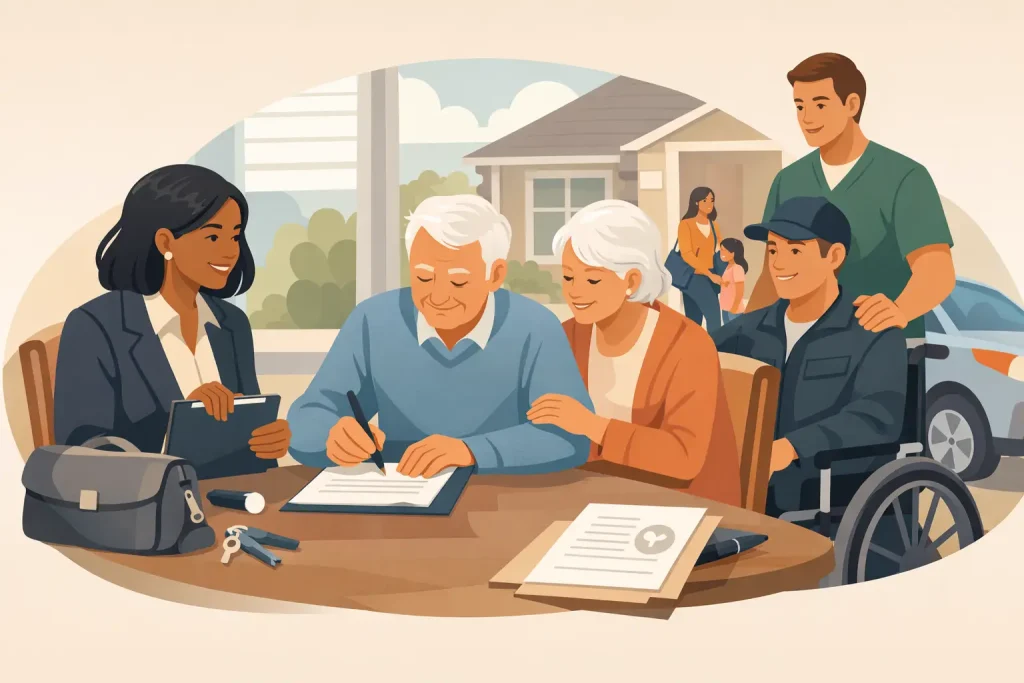
A power of attorney often becomes urgent at the exact moment a family is already stretched thin. A parent is being discharged from rehab, a spouse can no longer get to an office, or a caregiver realizes important financial or healthcare decisions cannot wait. In situations like these, a mobile notary for power of attorney can make the process more manageable by bringing notarization directly to the signer.
That convenience matters, but so does getting the process right. Power of attorney documents can affect medical decisions, finances, property matters, and day-to-day support. When families are under pressure, it helps to understand what a notary does, what a notary cannot do, and how to prepare for a signing that is valid and respectful.
When a mobile notary for power of attorney makes sense
A mobile notary is often the right choice when the person signing cannot easily travel. That may include older adults with limited mobility, someone recovering after surgery, a person living with a disability, or an individual whose condition makes leaving home physically difficult or emotionally overwhelming.
It can also help when timing is tight. If a hospital discharge is approaching, a bank requires a notarized document, or a family needs authority in place before care arrangements can move forward, waiting for office availability may add unnecessary stress. In-home notarization gives families one less logistical problem to solve.
There is also a dignity factor that families appreciate. Many people feel more comfortable reviewing personal documents at home rather than in a public setting. For signers who are medically fragile or easily fatigued, familiar surroundings can make the appointment calmer and easier to complete.
What a notary does during a power of attorney signing
A notary’s role is important, but limited. The notary verifies the identity of the signer, confirms that the signer appears willing to sign, and checks that the signer seems aware of what they are doing. The notary then completes the notarial act required by the document, which may involve an acknowledgment or a jurat depending on how the paperwork is prepared.
That does not mean the notary decides whether the power of attorney is legally appropriate for the person’s situation. A notary is not there to choose the form, explain legal consequences, or give advice about whether the document should be durable, immediate, springing, medical, or financial. Those are legal questions. If a family is unsure which document is needed, an attorney should guide that decision before the notary appointment is scheduled.
This distinction protects everyone involved. Families sometimes assume a notary can fill in blanks, tell them who should be named as agent, or confirm that the form will be accepted everywhere. In reality, the safest path is to have the document completed properly in advance and then arrange notarization.
Does a power of attorney always need notarization?
It depends on the type of document and how it will be used. Some powers of attorney are commonly notarized because banks, healthcare institutions, title companies, and other organizations expect that extra formality. In certain cases, state law or the institution receiving the document may require notarization or even witnesses.
That is why preparation matters. Before the appointment, families should confirm whether the document needs only a notary, both a notary and witnesses, or any special signing instructions. Missing one requirement can delay the process, which is especially frustrating when a decision needs to be made quickly.
For New Jersey residents, document rules may vary based on the form and purpose, so checking the exact requirements ahead of time is worthwhile. A little clarity before the visit can prevent a second appointment later.
Capacity, willingness, and why timing matters
One of the most sensitive parts of notarizing a power of attorney is the signer’s capacity. The person signing must be able to understand what they are signing at the time of the appointment. If the signer is heavily medicated, confused, unconscious, or unable to communicate understanding, the notarization may need to be postponed or may not be possible.
This can be painful for families, especially when they are trying to help. But notarization is meant to protect the signer from coercion and protect the document from later challenges. A rushed signature from someone who does not understand the document can create bigger legal and practical problems later.
Willingness matters just as much. The signer must act voluntarily. If a notary suspects pressure, intimidation, or someone answering every question on the signer’s behalf, that raises concerns. Families can support the process by creating a calm environment and allowing the signer to respond directly whenever possible.
How to prepare for the appointment
The easiest appointments are the ones that are fully organized before the notary arrives. The document should be complete but unsigned, unless an attorney has given different instructions. The signer should have acceptable identification ready. If witnesses are required, that should be confirmed ahead of time rather than handled at the doorstep.
It also helps to choose the right time of day. If the signer is most alert in the morning, schedule then. If medications cause drowsiness in the afternoon, avoid that window if possible. For individuals with cognitive fluctuations, families often know when the person is most comfortable and communicative.
Privacy is another practical consideration. A quiet room with good lighting and a stable surface for signing can make the appointment smoother. If several relatives are present, it may still be best to limit the room to those truly needed for support. Too many voices can confuse or overwhelm the signer.
Common issues that can delay notarization
Many delays come from simple misunderstandings. Sometimes the document is incomplete, key pages are missing, or the signer has no valid ID available. In other cases, the family assumes the notary can provide witnesses or explain legal language during the appointment.
Another common issue is waiting too long. Families sometimes realize a power of attorney is needed only after a health crisis has escalated. By then, the person may no longer have the capacity to sign. While every family hopes to avoid difficult conversations, planning earlier gives the signer more control and usually makes the process less stressful.
There are also cases where an institution has its own preferred form. A general power of attorney may be legally signed and notarized, yet still reviewed closely by a bank or healthcare provider. That does not always mean the document is invalid, but it can slow things down. When possible, families should ask the receiving institution in advance whether it has specific requirements.
Why in-home notarization can feel more supportive
For families caring for someone with mobility limits, chronic illness, or disability, convenience is only part of the benefit. A home visit can reduce transfers in and out of vehicles, avoid waiting rooms, and spare the signer the physical strain of an outside appointment.
It can also reduce emotional stress. Legal paperwork is often tied to difficult transitions – illness, recovery, caregiving changes, or long-term planning. Having the signing handled in a familiar setting can bring a sense of calm to a process that otherwise feels clinical or rushed.
This is especially meaningful when the service is provided with patience and respect. A professional mobile notary should understand that some signers need extra time, clear communication, and a steady pace. The goal is not just to complete a signature, but to do so in a way that protects dignity.
Choosing a mobile notary with care
Not all appointments are routine, and power of attorney documents deserve careful handling. Families should look for a mobile notary who communicates clearly, explains the appointment process, confirms practical requirements in advance, and understands the importance of professionalism in healthcare-related situations.
Experience with seniors, caregivers, and medically complex households can also make a difference. When a notary is comfortable working in homes, rehab settings, or care environments, the appointment often feels less stressful for everyone involved. That kind of calm presence matters more than people expect.
At Comfort Zone Home Healthcare, this need is easy to understand because so many families are already managing care decisions, discharge plans, and changing levels of support. Bringing notary service to the home is one way to reduce pressure when important documents cannot wait.
A power of attorney is not just another form to sign. It is a step that can protect a person’s wishes, support a caregiver’s role, and make critical decisions possible when time and energy are limited. When the process is handled with preparation, clarity, and compassion, families can move forward with a little more confidence and a little less strain.