A good support service should make everyday life feel more possible, not more complicated. That is why community based supports disability services matter so much to individuals with developmental disabilities and to the families, guardians, and caregivers who want steady, respectful help. When support is provided in real-life settings instead of being limited to an office or program room, people have more opportunities to practice skills, participate in their communities, and move through daily routines with greater confidence.
For many families, the phrase sounds broad at first. They may wonder what these services actually include, who they are for, and how they make a meaningful difference. The short answer is that community-based supports are designed to help a person live as independently and safely as possible while staying connected to the world around them. The details, of course, depend on the individual.
What community based supports disability services mean
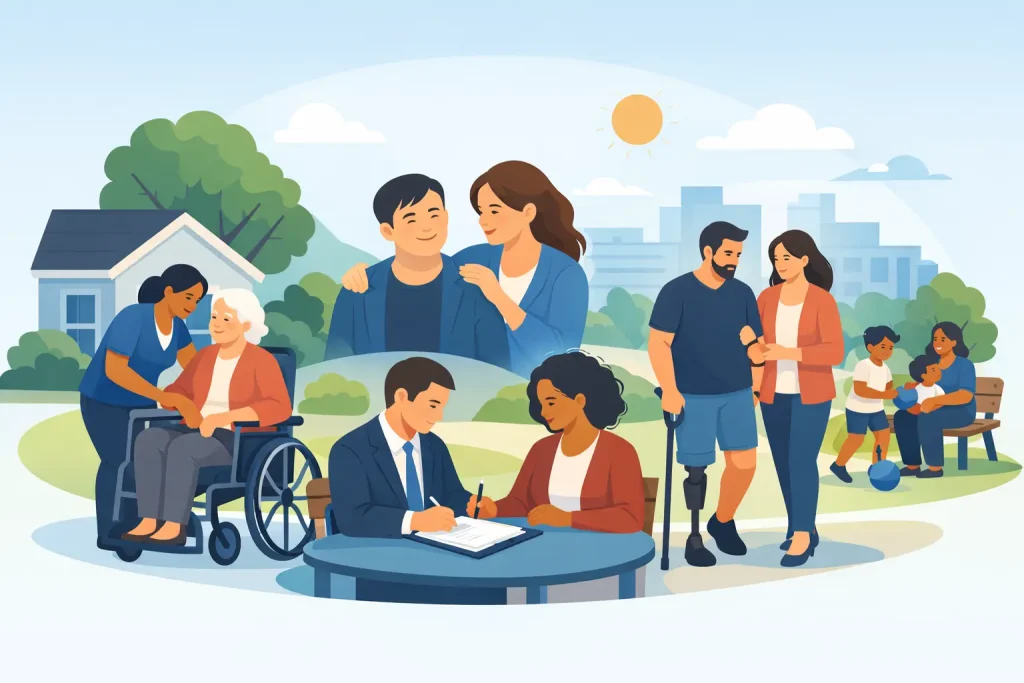
Community based supports disability services are personalized supports provided in everyday settings such as the home, neighborhood, store, library, workplace, or community program. The focus is not simply supervision for its own sake. The goal is to help the individual take part in daily life, build practical skills, and receive support in ways that protect dignity and encourage independence.
That can look different from one person to the next. One adult may need help using public transportation, keeping appointments, and managing routines outside the home. Another may need one-on-one support while participating in recreational activities, shopping, or practicing social interaction. Someone else may benefit most from structured assistance with communication, safety awareness, or decision-making in community settings.
What makes these services valuable is their real-world context. Skills are not taught in isolation. They are practiced where they are actually needed.
Why families often seek this kind of support
Families are often balancing a great deal at once. They may be caring for a loved one while also working, raising children, coordinating medical care, and trying to plan for the future. Even when a family is deeply involved and committed, there can still be gaps that are hard to fill alone.
Community-based supports can ease some of that pressure. They provide consistent assistance while also giving the individual a chance to grow, engage with others, and build a routine beyond the home. For caregivers, that can mean peace of mind. For the person receiving services, it can mean having a reliable support professional who understands their needs and helps them navigate everyday life with patience and respect.
There is also an emotional side to this decision. Many families are not just looking for coverage on a schedule. They are looking for someone who sees the person first, not just the disability. That difference matters.
What support may include in daily life
The day-to-day responsibilities within community based supports disability services depend on the service plan and the person’s goals. In many cases, support includes help with daily living tasks, community participation, safety supervision, routine building, and skill development.
A support professional might assist with planning a simple outing, encouraging appropriate social interaction, or helping the individual complete tasks step by step. They may help the person prepare for appointments, practice community safety, or participate in activities that support confidence and inclusion. Sometimes the work is highly hands-on. Other times, the role is more about cueing, prompting, and gradually helping the person do more independently.
That balance is important. Good support should not create unnecessary dependence. It should meet the person where they are and help them move forward at a pace that is realistic and safe.
Community participation is more than getting out of the house
It is easy to assume that community support simply means taking someone on outings. In reality, meaningful community participation goes much deeper than that. Being present in the community is one thing. Feeling included, prepared, and supported within it is another.
A person may need help learning how to wait in line, make a purchase, ask for assistance, follow a schedule, or respond calmly to changes in routine. These are practical skills, but they also shape confidence and self-esteem. Small successes in daily life often lead to larger gains over time.
There are trade-offs to consider, though. Some individuals thrive with frequent community engagement and a flexible schedule. Others do better with a predictable routine, quieter settings, or shorter periods of activity. The right approach depends on personality, sensory needs, communication style, health concerns, and overall goals.
How quality disability services protect dignity
The best disability services do not rush people, talk over them, or treat them like tasks to complete. They make room for choice, preference, and respectful communication. Dignity is not an extra feature. It is central to the service itself.
That means asking before assisting whenever possible, honoring routines that matter to the individual, and paying attention to how support is delivered. It also means recognizing that adults with disabilities are adults. Even when someone needs substantial assistance, the tone and approach should remain respectful.
Families usually notice this quickly. They can tell when a provider is merely present and when a provider is truly attentive. Reliability matters, but so does warmth, consistency, and the ability to build trust over time.
How community based supports disability services help build independence
Independence does not always mean doing everything alone. In disability services, independence often means having the right support to make choices, participate in daily life, and use or strengthen existing abilities.
For one person, progress may mean learning to follow a simple routine with fewer prompts. For another, it may mean becoming more comfortable in social settings or handling transitions with less stress. Some goals are practical, such as improving hygiene routines, money skills, or travel awareness. Others are relational, like building communication skills or becoming more active in community programs.
Progress is rarely perfectly linear. There may be strong weeks and harder weeks. Health changes, stress, staffing consistency, and life transitions can all affect outcomes. That does not mean the service is failing. It means support should be flexible enough to respond to real life.
What families should look for in a provider
A good provider should offer more than availability. Families should look for professionalism, clear communication, and a genuine understanding of person-centered care. The provider should be able to explain how support is tailored, how staff are expected to interact with clients, and how changes in needs are addressed over time.
It also helps to ask practical questions. How is consistency maintained? How are goals supported during regular activities? How does the provider handle safety concerns, behavior changes, or schedule adjustments? What does communication with families or guardians look like?
These questions matter because services are not one-size-fits-all. A provider may be a strong fit for one person and not the best fit for another. Sometimes the deciding factor is clinical complexity. Other times it comes down to communication style, routine needs, or the level of structure required.
In New Jersey, where many families coordinate supports through developmental disability services, it is especially helpful to work with a team that understands both the practical and human side of care. Comfort Zone Home Healthcare is one example of a provider that offers community-based support with an emphasis on dignity, consistency, and individualized attention.
When support works best
Community-based support tends to work best when everyone involved shares a clear understanding of the person’s needs, preferences, and goals. That includes the individual receiving services, family members or guardians, support coordinators, and direct support staff. When communication is strong, services are usually more consistent and more meaningful.
It also works best when expectations are realistic. Support can create opportunities, build routines, and improve quality of life, but it is not a quick fix. Growth often happens in small, steady ways. A person becomes more comfortable with an errand, more confident during an outing, or more willing to try something new. Those changes may seem modest from the outside, yet they often represent real progress.
At its heart, this kind of service is about helping people participate in life with support that feels respectful, useful, and personal. The most effective care does not try to force a person into someone else’s idea of success. It helps them move toward a fuller, safer, more connected daily life in a way that truly fits who they are.
If you are exploring options for a loved one, it is worth paying attention to how a service feels as much as how it sounds on paper. The right support can offer structure, relief, and reassurance, but just as importantly, it can help a person feel seen, capable, and valued in the places where everyday life happens.