
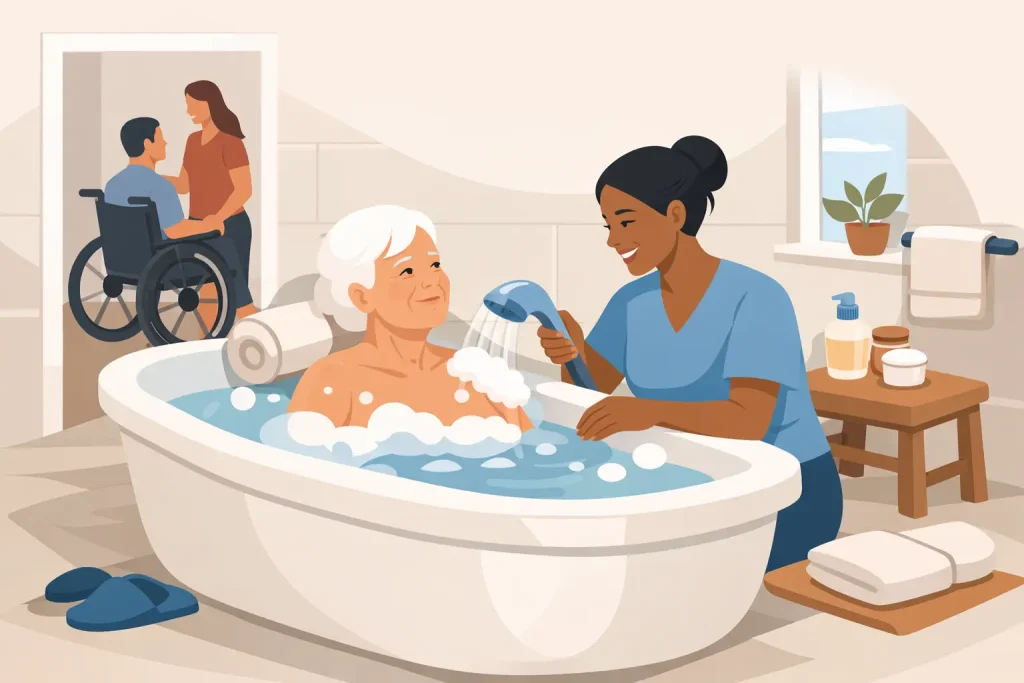
A bathroom can become the most stressful room in the house after a fall, a hospital stay, or a change in mobility. Families often notice the shift quickly – a loved one starts skipping showers, seems anxious about getting in and out of the tub, or needs more help than they want to admit. Bathing assistance for adults can make daily life safer, more comfortable, and far less overwhelming for everyone involved.
For many people, bathing is deeply personal. Needing help with it can bring up embarrassment, frustration, or fear of losing independence. That is why the right support is not just about getting clean. It is about preserving dignity, reducing risk, and helping someone feel at ease in their own home.
Why bathing becomes difficult for adults
Bathing can look simple from the outside, but it requires balance, strength, coordination, endurance, and judgment. A person may need to step over a tub wall, lower themselves onto a shower chair, stand on a wet surface, wash hard-to-reach areas, regulate water temperature, and dry off safely afterward. If any of those steps become harder, the whole process can feel risky.
This often affects older adults, people recovering from surgery, adults with disabilities, and medically fragile individuals. Arthritis can make it painful to lift arms or grip a washcloth. Weakness after hospitalization can make standing in the shower exhausting. Cognitive changes may affect sequencing, safety awareness, or comfort with personal care. Even when someone is still managing on their own, fear of slipping can lead them to avoid bathing more often than they should.
Families sometimes assume the answer is to wait until things get worse. In reality, earlier support can prevent injury and help a person maintain more independence, not less.
What bathing assistance for adults usually includes
Bathing assistance for adults can range from light supervision to hands-on personal care. The level of help depends on the person’s health, mobility, preferences, and home setup.
Some clients only need standby help. In that case, a caregiver may prepare the bathroom, check the water temperature, stay nearby for safety, and help with getting in and out of the shower. Others need more direct assistance with washing, shampooing, drying off, skin care, dressing, and grooming afterward.
The best care is respectful and individualized. Some people prefer help only with certain tasks, such as washing their back or lower legs. Others need full support because of weakness, pain, paralysis, or cognitive impairment. There is no one right model. What matters is matching the help to the person rather than forcing the person to adapt to a rigid routine.
Good bathing support also includes close attention to privacy. Covering the body when possible, explaining each step, and asking permission before assisting are small actions that make a meaningful difference.
Safety matters, but dignity matters too
When families think about bathing support, safety is usually the first concern. That makes sense. Wet floors, narrow spaces, poor balance, and rushing can lead to serious falls. A single bathroom accident can result in hospitalization, a loss of confidence, and a much harder recovery.
Still, safety alone is not the full picture. A person who feels rushed, exposed, or ashamed may resist care even when they need it. That is why a calm, respectful approach matters so much. People are more likely to accept help when they feel heard and when their routines and preferences are honored.
This can mean simple adjustments, such as scheduling bathing at the time of day when a person has the most energy, using products they already like, or having a same-gender caregiver if that makes them more comfortable. These details are not extra. They are part of quality care.
Signs a loved one may need help with bathing
The need for support is not always obvious. Some adults will clearly ask for help, but many do not. They may worry about burdening family members or feel embarrassed bringing it up.
You may notice practical signs first. Towels stay unused. There is a strong fear of the shower or tub. The person has body odor, dry skin, or signs they are struggling with hygiene. They may mention dizziness, fatigue, or pain during bathing. Sometimes the clue is not hygiene itself but what surrounds it – a near fall, bruising, increased confusion, or avoiding clothing changes because bathing feels too difficult.
It can also show up as caregiver strain. A spouse or adult child may be helping in the bathroom but feeling physically unable to continue safely. Bathing is one of the more demanding care tasks at home, especially when lifting, transferring, or close supervision is involved.
How to talk about bathing assistance without causing shame
This conversation often goes better when it starts with comfort and safety rather than control. Most adults do not respond well to being told what they can no longer do. They respond better when family members acknowledge the challenge and offer support that protects independence.
Instead of saying, “You cannot shower alone anymore,” it may help to say, “I want to make this easier and safer for you.” That difference matters. The goal is not to take over. The goal is to reduce stress and prevent accidents.
It also helps to be specific. If someone had a recent surgery, gets short of breath, or has trouble stepping into the tub, connect the support to that real issue. Vague pressure can feel insulting. Practical concern feels more respectful.
When possible, include the person in decisions about who helps, when bathing happens, and how much assistance they want. Choice supports dignity.
Bathing assistance at home versus family-only care
Many families begin by providing all personal care themselves. Sometimes that works for a while. Sometimes it becomes exhausting very quickly.
Bathing help is physically demanding, and it can also change family relationships in ways that are hard to talk about. An adult child may feel uncomfortable assisting a parent with intimate care. A spouse may want to help but no longer have the strength to do it safely. The person receiving care may feel less embarrassed with a trained professional than with a loved one.
There is no guilt-free formula here. Some families prefer to stay fully involved. Others want professional support for bathing while handling companionship, meals, or transportation themselves. Often, the best arrangement is a combination. It depends on the care needs, the family’s capacity, and the client’s comfort level.
Preparing the bathroom for safer bathing assistance for adults
Hands-on help matters, but the environment matters too. Even strong caregivers can struggle in a cramped or poorly set up bathroom.
A safer bathroom may include grab bars, non-slip surfaces, a shower chair, a handheld shower head, and adequate lighting. Removing clutter and keeping essentials within reach can reduce rushing and awkward movements. Water temperature should be monitored carefully, especially for adults with neuropathy, cognitive impairment, or reduced sensitivity to heat.
Not every home needs major modifications. Sometimes a few practical changes make a real difference. In other cases, more adaptation is needed because the person’s mobility has changed significantly. The right setup depends on the individual and the space.
What families should look for in a bathing caregiver
Skill matters, but so does manner. Bathing is not a task that should feel hurried or impersonal. Families should look for someone who is trained, patient, observant, and consistently respectful.
A good caregiver notices more than the bath itself. They may observe changes in skin condition, bruising, swelling, fatigue, or confusion and communicate concerns appropriately. They understand safe transfers, infection prevention, and how to support personal care without making the client feel powerless.
Reliability matters too. Personal care routines work best when there is consistency. A trusted caregiver can reduce anxiety and help the client feel more comfortable over time. For many families, that peace of mind is just as valuable as the physical help.
At Comfort Zone Home Healthcare, we understand that personal care requires both skill and compassion. Families are not just looking for help with a routine. They are looking for someone who will treat their loved one with dignity in one of the most private parts of daily life.
When professional support may be the right next step
If bathing has become unsafe, emotionally difficult, or physically too demanding for family members, professional care may be the right next step. This is especially true after surgery, after a rehab discharge, during progressive illness, or when disability-related needs require more structured support.
Getting help does not mean giving up independence. In many cases, it helps preserve it. A person who has safe support with bathing may have more energy and confidence for the rest of the day. Families may also have more space to focus on connection rather than constant worry.
The right care should leave a person feeling clean, comfortable, respected, and secure in their own home. That is the standard worth aiming for, and it is often what turns a stressful routine into something manageable again.