
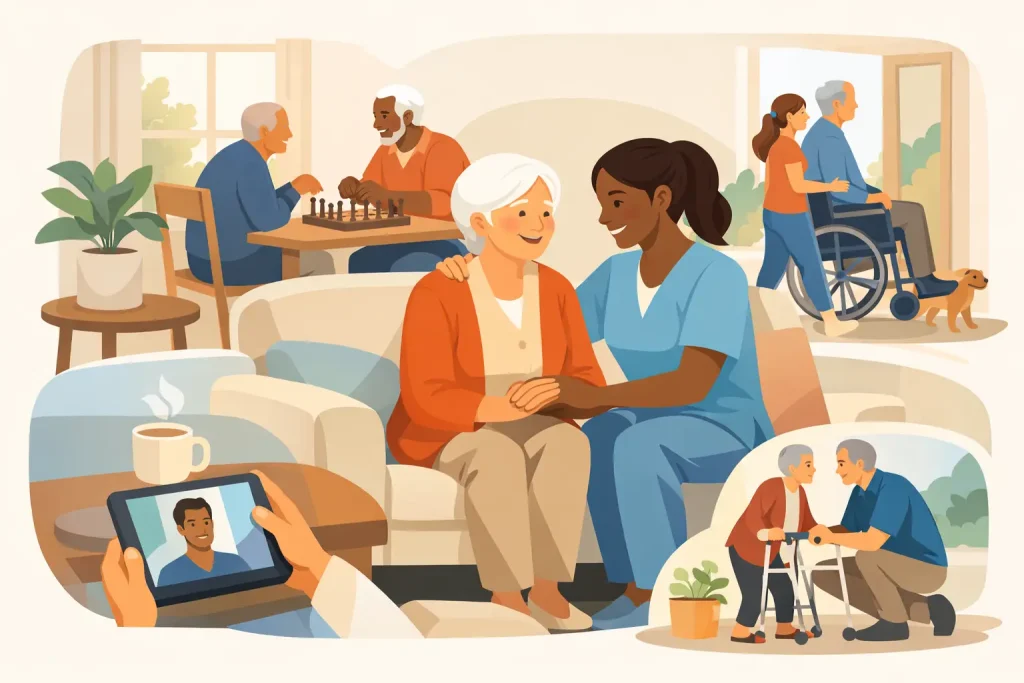
A quiet house can feel very different after a hospital stay, the loss of a spouse, or the moment everyday tasks start taking more energy than they used to. That is where in home companionship benefits become so meaningful. For many older adults and families, companionship is not simply about having someone nearby. It is about preserving routine, easing loneliness, noticing small changes early, and helping daily life feel manageable again.
Families often begin searching for care because of one visible concern, such as missed meals, long afternoons alone, or worry after a fall. What they sometimes find is that the emotional side of support matters just as much as the practical side. A trusted companion can help someone feel safer, more confident, and more connected to the world around them.
What companionship really means at home
Companionship is sometimes misunderstood as casual company or a luxury service. In reality, it plays an important role in overall well-being. A companion may share conversation, help with meal preparation, provide medication reminders, assist with errands, encourage walks, or simply make sure the day has structure and social interaction.
That structure can be especially important for seniors who live alone, adults recovering after surgery, or people whose families cannot be present every day. Even when a loved one is deeply involved, work schedules, distance, and caregiving demands can make consistent support difficult. Companionship helps fill those gaps in a respectful and dependable way.
It also supports dignity. Many people want help without feeling as though they are losing control over their lives. A good companionship relationship should feel personal, calm, and centered on the client’s preferences, not rushed or overly clinical.
The most important in home companionship benefits
One of the clearest in home companionship benefits is reduced isolation. Loneliness can affect mood, sleep, appetite, motivation, and even physical health. Regular conversation and shared activity can bring back a sense of normalcy, especially for seniors whose social circles have become smaller over time.
Another major benefit is consistency. When someone has regular support at home, routines become easier to maintain. Meals are more likely to happen on time. Hydration is less likely to be forgotten. Appointments, errands, and light household tasks can feel less overwhelming. These details may sound small, but together they shape the quality of daily life.
Companionship can also support safety in subtle but important ways. A companion may notice that a client seems more tired than usual, is moving more slowly, is eating less, or is becoming forgetful. Families may not see those changes immediately if visits are occasional. Early awareness can help prevent larger problems and allow families to respond sooner.
For many clients, emotional reassurance matters just as much as observation. Recovery, aging, and changing abilities can bring frustration, grief, and anxiety. Having a calm and familiar person nearby often helps ease that stress. People are more likely to stay engaged when they feel seen, heard, and respected.
Why families notice the difference quickly
Families are often carrying more than people realize. They may be managing careers, children, medical updates, transportation, and constant worry about a loved one living alone. Even when they are doing everything they can, there is often a lingering question in the background: Is Mom eating well? Did Dad take his medication? Has anyone checked on them today?
Companionship can bring relief because it creates another layer of support without taking family members out of the picture. Instead, it helps them return to their role as daughter, son, spouse, or sibling instead of feeling they must handle every task alone.
This is especially valuable for caregivers who are close to burnout. Respite is not only about taking time away. It is about knowing someone dependable is present, attentive, and kind. That peace of mind allows family caregivers to rest, work, or care for their own health without carrying constant guilt.
There is, however, an important balance to keep in mind. Companionship is highly beneficial, but it is not the same as skilled nursing or hands-on personal care in every situation. Some clients need a broader level of support that includes bathing, mobility assistance, toileting help, or closer supervision. The right care plan depends on the person’s health, functioning, and goals.
In home companionship benefits for health and routine
People often separate social well-being from physical health, but at home the two are closely connected. Someone who feels isolated may lose interest in meals, avoid movement, skip routines, or sleep at irregular times. A companion helps create gentle accountability.
That might mean preparing lunch together, encouraging a short walk, playing cards, organizing family photos, or accompanying the client on an errand. These activities are not just pleasant ways to pass time. They help maintain engagement, orientation, and a sense of purpose.
For clients with mild cognitive changes, companionship can be especially supportive. Familiar conversation, simple routines, and regular interaction may reduce confusion and agitation. It will not change an underlying diagnosis, but it can make day-to-day life feel steadier and less distressing.
Post-surgical clients can benefit as well. The period after discharge is often when families realize how much support recovery actually requires. Someone may not need intensive medical care, but they may need reminders, meal support, light housekeeping, mobility encouragement, and company during long recovery hours. In those moments, companionship can make home feel safer and less overwhelming.
What good companionship should look like
Not every companionship arrangement feels the same, and that matters. The best support is built around the person, not a generic checklist. Some clients want lively conversation and activity. Others prefer a quieter presence, a shared cup of tea, or help keeping the home orderly and the day on track.
A strong companion should be reliable, observant, respectful, and emotionally steady. They should understand that trust is earned. Families are not only welcoming someone into a home. They are placing part of their peace of mind in that person’s hands.
Compatibility matters too. Skills are essential, but personality fit can shape the success of care. A client is more likely to accept and enjoy support when they feel comfortable with the person providing it. That is why thoughtful matching and clear communication are so important.
It also helps when expectations are realistic. Some days will be easy and social. Other days may involve fatigue, resistance, or changing moods. Good care adjusts without losing patience or dignity.
When to consider companionship services
Families often wait until stress has built up before asking for help. In many cases, earlier support leads to a better experience. It gives the client time to build trust and allows care to begin before isolation or burnout becomes severe.
A few signs usually stand out. A loved one may seem withdrawn, forget meals, stop participating in favorite activities, call family repeatedly out of worry, or struggle with managing the day alone. Caregivers may notice they are exhausted, missing work, or feeling anxious whenever they cannot be present.
Those moments do not always mean a person needs full-time care. Sometimes a few hours of companionship each week makes a meaningful difference. In other cases, more regular visits are the better fit. It depends on health needs, family availability, and how much support helps the person stay safe and comfortable at home.
For many New Jersey families, the right service is the one that protects independence without leaving someone isolated. That balance is at the heart of compassionate home care.
The value goes beyond company
When people hear the word companionship, they sometimes think only of conversation. But the real value is wider than that. It touches emotional health, daily habits, family stress, and the ability to remain at home with confidence.
At Comfort Zone Home Healthcare, this kind of support is understood as part of caring for the whole person. A home should feel safe, but it should also feel human. Having someone there to listen, encourage, notice, and help with everyday life can change the tone of the entire day.
If you are weighing care options for a parent, spouse, or loved one, it may help to ask a simple question: what would make daily life feel less lonely and more supported right now? Often, that is where the clearest answer begins.