
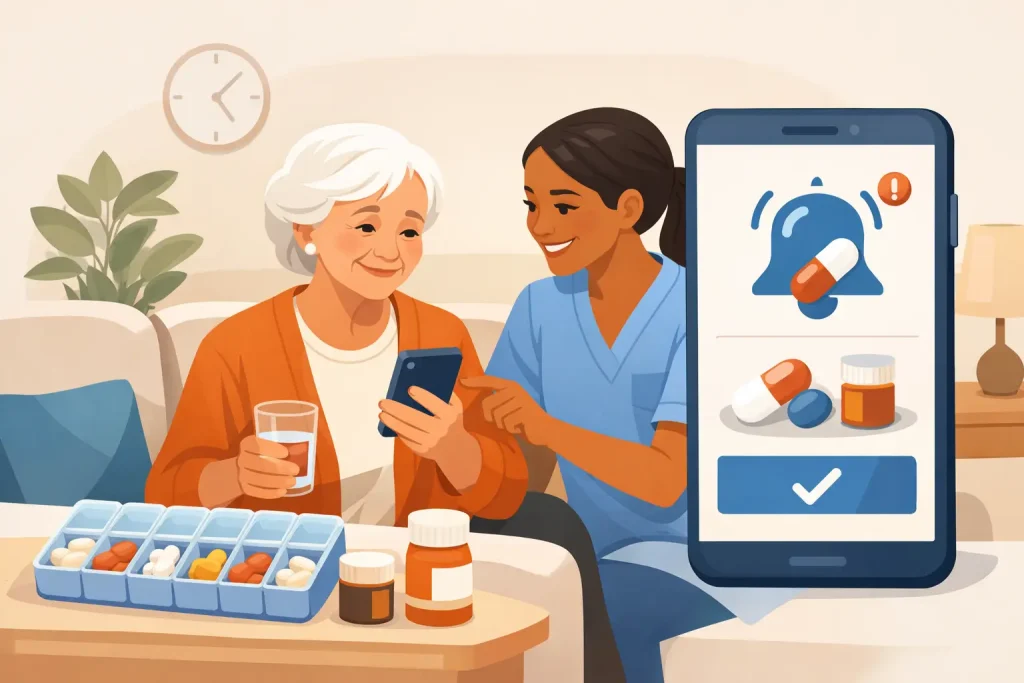
A missed blood pressure pill can seem small until it turns into dizziness, a fall, or an avoidable trip to the hospital. That is why medication reminder services for seniors matter so much. For many older adults, taking the right medication at the right time is part of staying safe, stable, and independent at home.
Medication routines often become more complicated with age. A senior may take one pill in the morning with food, another in the afternoon, and a third at bedtime. Some medications need to be spaced apart. Others can cause drowsiness, upset stomach, or confusion if they are taken incorrectly. Even very organized people can struggle when the schedule changes after a hospital stay, surgery, or a new diagnosis.
For families, this creates a quiet but constant worry. You may not live in the same home. You may be balancing work, children, and caregiving. You may call to check in, but you still wonder whether your parent actually remembered their medication or simply meant to. Reminder services help close that gap in a practical and respectful way.
How medication reminder services for seniors work
At their core, medication reminder services are designed to prompt a person when it is time to take prescribed medications. In a home care setting, that often means a caregiver provides a timely reminder, observes whether the client takes the medication as scheduled, and documents that the reminder was given based on the care plan and agency policies.
This is different from medical administration in many cases. A reminder service is usually supportive rather than clinical. The caregiver may bring water, help the client get to the kitchen table, read the time on the label, or encourage a consistent routine. But whether a caregiver can physically administer medication depends on state rules, the specific service plan, and the caregiver’s role and training.
That distinction matters. Families sometimes assume all medication help is the same, but it is not. Some seniors only need a verbal prompt and a steady routine. Others may need skilled nursing support, especially if they use injections, have swallowing difficulties, or are living with significant memory loss. The right level of help depends on the person’s health, cognition, and overall care needs.
Why reminders matter beyond the pill bottle
Medication adherence is about more than remembering a time on the clock. It is closely tied to safety, health outcomes, and confidence at home. When medications are missed or doubled, chronic conditions can become harder to manage. Blood pressure may rise, blood sugar may drop, pain may increase, or symptoms may return unexpectedly.
There is also an emotional side that families sometimes overlook. Seniors who struggle with medication routines may feel embarrassed, frustrated, or anxious about losing independence. A gentle reminder from a trusted caregiver can support dignity rather than undermine it. The goal is not to take over unnecessarily. The goal is to make daily life more manageable.
This support can be especially helpful during transitions. After discharge from a hospital or rehab facility, medication lists often change quickly. New prescriptions may be added, older ones may be stopped, and follow-up appointments may still be pending. That period is one of the most common times for confusion. Reminder services can help families create structure while everyone adjusts.
Who benefits most from medication reminder services
Not every senior needs the same type of help. Some people are highly independent and simply benefit from an extra check-in. Others need more consistent oversight because memory changes, low vision, arthritis, fatigue, or multiple prescriptions make the process harder.
Seniors living alone are often strong candidates for reminder services, especially if family members cannot visit every day. People with early-stage dementia may also benefit, though there may come a point when reminders alone are no longer enough. A person recovering from surgery may need temporary help until they are back into their normal routine. In other cases, the need is long term because the medication schedule is complex and the stakes are high.
Families also benefit. Many adult children carry the burden of remembering refill dates, calling to check on doses, and worrying about what happens between visits. A reliable reminder service does not remove every concern, but it can reduce the pressure and make caregiving more sustainable.
What to look for in a provider
When families explore medication reminder services for seniors, trust should come first. This is a very personal part of daily care. The senior should feel respected, not rushed or watched. Families should feel confident that routines will be followed carefully and concerns will be communicated clearly.
It helps to ask how reminders are handled in practice. Does the caregiver document each reminder? What happens if the client refuses medication or seems confused? How are changes to the medication list communicated to the care team? These details tell you a great deal about whether the service is thoughtful and dependable.
Consistency also matters. A senior is more likely to follow a routine when familiar caregivers are involved. Too many different faces can create stress and increase the chance of miscommunication. Good care is not only about showing up on time. It is about building trust, noticing changes, and understanding the person’s habits and preferences.
Families should also ask about scope. Reminder services can be very helpful, but they are not the same as medication setup, nursing oversight, or pharmacy management. If a loved one needs a pill organizer filled, has frequent medication changes, or cannot safely self-administer, a more comprehensive plan may be needed.
Medication reminders at home versus technology alone
Many families start with alarms, smartphone apps, or automatic dispensers. These tools can be useful, and for some seniors they work well. A simple audible reminder may be enough for a person who is cognitively sharp and comfortable with technology.
Still, technology has limits. An alarm cannot notice that a senior is too weak to get out of bed, too confused to understand the label, or too upset to eat before taking a medication that requires food. A dispenser cannot always respond when a person ignores the prompt or takes the wrong dose from a separate bottle.
Human support adds context. A caregiver can notice patterns, such as increasing forgetfulness, poor appetite, or swelling in the legs, and alert the family or care team. That kind of observation is often where real value lies. It supports not only medication routines, but the bigger picture of health and daily wellbeing.
In many homes, the best approach is a combination. Technology can reinforce timing, while a caregiver provides encouragement, accountability, and an extra set of eyes. It depends on the senior’s condition, comfort level, and the complexity of the regimen.
When a reminder service may not be enough
There are situations where reminder support is no longer the right fit on its own. If a senior frequently forgets what medication is for, takes duplicate doses, hides pills, or cannot understand simple instructions, the risk may be too high for reminders alone. The same is true if they have significant cognitive decline, severe tremors, or medical needs that require licensed clinical care.
This does not mean the person cannot remain at home. It means the care plan should be reassessed honestly. Families often feel pressure to choose the least intrusive option, but the safest option is sometimes more support, not less. A respectful evaluation can help determine whether nursing services, medication management, or closer supervision is needed.
A care decision rooted in dignity
Medication support is not just about compliance. It is about helping someone maintain stability, comfort, and confidence in everyday life. The right reminder service can preserve independence for longer, reduce avoidable setbacks, and give family members breathing room without leaving a loved one unsupported.
For a senior, being able to stay home safely often depends on a series of small routines going right each day. Medication is one of the most important of those routines. When reminders are handled with patience, consistency, and respect, they become more than a task. They become part of a care relationship that helps a person feel seen, supported, and secure.
If your family is weighing options, it helps to start with one honest question: does your loved one need a simple prompt, or do they need a fuller layer of support around their medication routine? That answer can shape a safer and more comfortable path forward at home.