
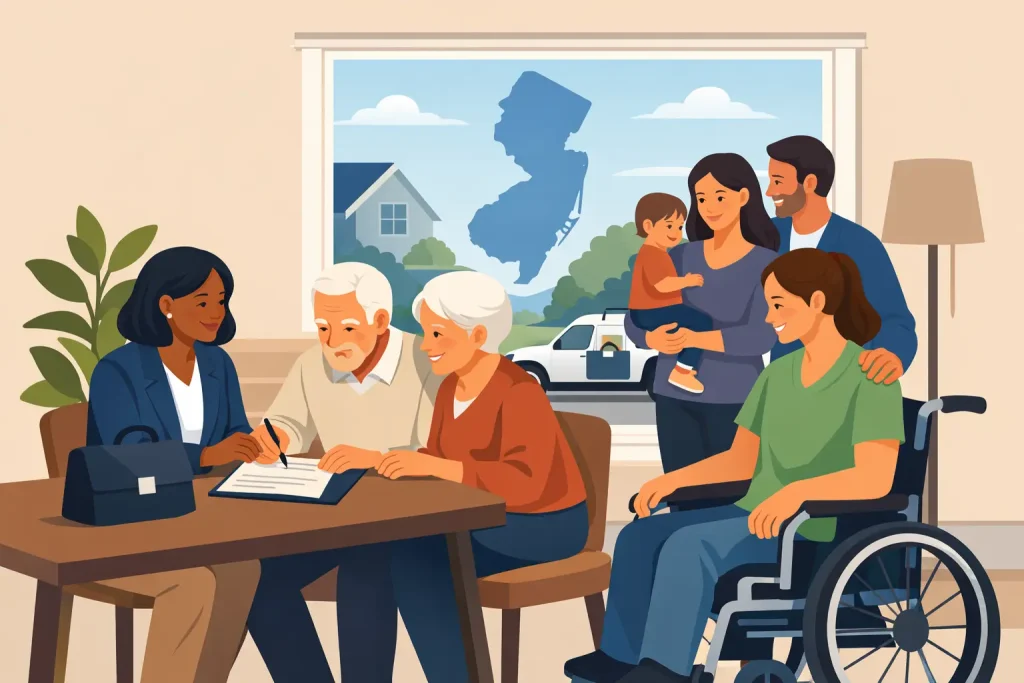
A hospital discharge packet is sitting on the kitchen table. A power of attorney needs signatures today. A family member cannot travel, and the nearest office might as well be across the state. This is when New Jersey mobile notary help becomes more than a convenience. It becomes a practical way to keep care, legal planning, and family decisions moving forward without adding more stress.
For many people, notarization sounds simple until real life gets in the way. Seniors may have mobility limitations. A person recovering after surgery may not be able to leave home safely. A caregiver may already be balancing medications, appointments, meals, and work. In those moments, having a notary come to the home, hospital, rehab setting, or another agreed location can save time and reduce strain.
What New Jersey mobile notary help really means
Mobile notary service means the notary travels to the signer instead of requiring the signer to visit an office. The service is especially helpful when documents are time-sensitive or when travel is difficult due to illness, disability, recovery, transportation issues, or family responsibilities.
In New Jersey, this kind of support is often used for healthcare-related paperwork, but it can also help with general personal documents. The value is not only in convenience. It is also in preserving dignity. Many people feel more comfortable reviewing and signing important paperwork in a familiar setting with the support of loved ones nearby.
That said, mobile notarization is not simply a door-to-door signature service. A notary still has legal responsibilities. Identity must be verified. The signer must appear willing and aware of what they are signing. The document may need witnesses depending on the form and purpose. A good mobile notary helps clients understand the process clearly while staying within those legal boundaries.
When mobile notary service makes the most sense
There are situations where mobile notarization is merely helpful, and others where it can make a real difference. Families often call for help during health changes, care transitions, or urgent planning needs.
A common example is after a hospitalization or surgery. Someone may need to complete insurance, care, or financial documents but be unable to travel. Another is long-term caregiving. If an older adult or adult with disabilities spends most of their time at home, asking them to arrange transportation, manage physical discomfort, and wait in an unfamiliar office may not be realistic.
Mobile notary service can also help when several family members need to coordinate a signing at one location. Instead of moving everyone around the appointment, the appointment comes to them. For working families, that can be the difference between resolving an issue in one visit or dragging it out for another week.
Who often needs New Jersey mobile notary help
The people who benefit most are often the ones already carrying a lot. Seniors with limited mobility are one group. Adults with disabilities who need familiar surroundings and support are another. Post-surgical clients, medically fragile individuals, and families managing serious illness also often need this kind of service.
Caregivers are a major part of the picture. Even when the signer is mentally clear and ready, the caregiver is usually the one coordinating logistics, gathering identification, confirming who must be present, and choosing a time that works around medical routines. A mobile notary can ease that burden by meeting the family where they are.
The service also supports members of the public with no medical situation at all. Some people simply need a reliable, professional option because they cannot leave work easily, have childcare responsibilities, or want the privacy of signing sensitive documents at home.
What to prepare before the notary arrives
The smoothest appointments usually happen when everyone knows what the notary can and cannot do. First, the document should be complete before the appointment, except for the signature fields that must be signed in front of the notary. Blank spaces can create delays or raise concerns.
Second, the signer needs acceptable identification. If there is any doubt about whether an ID is valid, it is wise to ask before the appointment rather than at the door. Third, confirm whether witnesses are required. A notary is not automatically a witness for every document, and some documents need additional adult witnesses who meet certain requirements.
The signer must also be able to communicate willingness and awareness. This matters greatly in healthcare and elder care settings. If a person is heavily sedated, confused, or pressured by others, the notary may need to stop the process. That can be disappointing for families, but it protects the signer and the integrity of the document.
Healthcare documents require extra care
Many families seeking New Jersey mobile notary help are dealing with healthcare-related paperwork. These documents may include powers of attorney, advance directives, affidavits, consent forms, and other records tied to care planning or personal affairs.
The challenge is that these moments are rarely calm. Families may be facing a sudden diagnosis, a discharge deadline, or a change in decision-making needs. Emotions run high, and people understandably want fast answers. A compassionate mobile notary helps bring order to the moment by explaining the appointment process, confirming who needs to be present, and helping the family avoid preventable delays.
Still, speed should never replace clarity. Notaries do not decide whether a document is legally appropriate for your situation, and they do not give legal advice. If a family is unsure which form is needed, they may need guidance from an attorney, healthcare provider, social worker, or other qualified professional before scheduling notarization.
The trade-offs to understand
Mobile service is convenient, but there are practical trade-offs. Travel-based appointments may cost more than visiting a standard office, especially for urgent requests, after-hours visits, or longer distances. For many families, the added cost is worth it because it reduces transportation problems, missed work, and physical strain. Still, it is best to ask about fees upfront.
Timing can also vary. If a document is needed the same day, availability may depend on location, travel conditions, and how quickly the signer and witnesses can be ready. In other words, mobile does not always mean immediate, though it often means easier.
There is also the question of setting. Home is usually ideal, but hospitals, nursing facilities, and rehab centers can be more complicated. Privacy, visitor policies, room changes, and the signer’s medical condition can all affect the appointment. An experienced notary will account for these realities, but families should expect a little flexibility.
Choosing a mobile notary with confidence
Not all mobile notary experiences feel the same. Families dealing with vulnerable adults often need more than punctuality. They need patience, professionalism, and respect. The right provider understands that this may be a stressful day, not a routine errand.
It helps to look for a service that communicates clearly before the visit. You should know what identification is needed, whether witnesses are required, what fees apply, and what could prevent completion of the notarization. You should also feel comfortable asking questions about the process.
For healthcare-related situations, a calm and compassionate approach matters. A notary who works well around seniors, adults with disabilities, and recovering patients can make the appointment feel less intimidating. Comfort Zone Home Healthcare serves many of these individuals and families, which is why a respectful, client-centered approach is so important in both care and notary support.
A simple service that can remove a major burden
When families are already managing caregiving, recovery, or urgent planning, even one extra errand can feel overwhelming. Mobile notary service helps remove that burden by bringing a necessary step directly to the person who needs it. It supports privacy, comfort, and practical access at a time when those things matter most.
If you are arranging notarization for yourself or someone you love, preparation and timing make a difference. Gather the document, confirm identification, check witness needs, and choose a setting where the signer can be comfortable and alert. A little planning can turn a stressful task into a manageable one.
Sometimes the greatest help is simply having one less obstacle in front of you. When an important signature cannot wait, the right support should meet people with care, respect, and a clear path forward.