
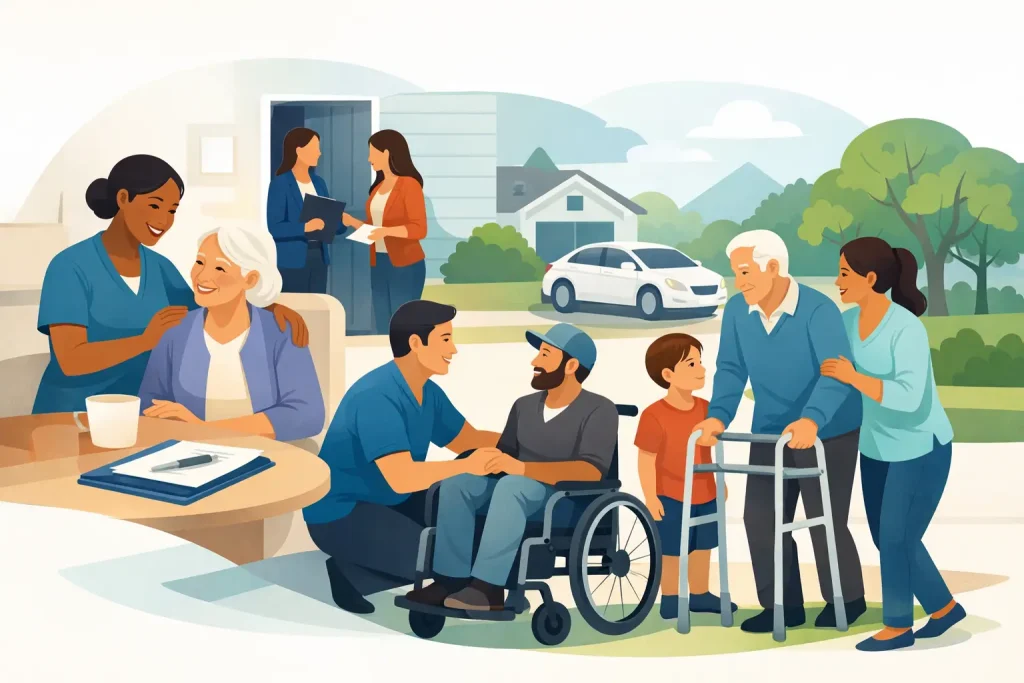
When families start looking for Essex County home caregivers, the search usually begins after a change that feels sudden, even if it has been building for months. A parent falls. A hospital discharge date gets moved up. A spouse who has been managing everything alone starts to show signs of exhaustion. In that moment, people are not just looking for help. They are looking for someone they can trust in their home, with their routines, and with a loved one’s dignity.
That is what makes this decision so personal. Home care is not only about tasks on a checklist. It is about how support is delivered, how a client feels during the day, and whether a family can breathe a little easier knowing someone dependable is there.
What Essex County home caregivers really do
Many families first think of home caregivers as help with bathing, dressing, or meal preparation. Those services matter, and for some households they are exactly what keeps a loved one safe at home. But good caregiving often goes further than physical assistance.
A caregiver may help someone move carefully from bed to chair, offer medication reminders, prepare a familiar meal, and notice small changes that others might miss, such as reduced appetite, confusion, or trouble getting around safely. Companionship also matters more than many people expect. For older adults, medically fragile individuals, or adults with disabilities, a calm and respectful presence can improve comfort as much as practical help does.
That is why fit matters. One client may need steady supervision and hands-on mobility support. Another may be largely independent but need help with errands, light housekeeping, and regular check-ins after surgery. The best care plan reflects the person, not just the diagnosis.
Start with the daily reality, not the label
Families often begin by asking for a type of care, but it can be more helpful to start with what the day actually looks like. Is your loved one waking up safely, getting to the bathroom without help, eating enough, and taking medications on time? Can they move around the house without a high fall risk? Are they isolated? Is a family caregiver already stretched too thin?
These questions reveal the real support needs. Someone may say they only need a few hours of help, but once the day is mapped out, it becomes clear that morning care is difficult, afternoons are lonely, and evenings are when confusion increases. In another case, a client may need temporary support during post-surgical recovery rather than long-term daily care.
This is where an experienced provider can be especially valuable. A thoughtful assessment should not feel rushed or generic. It should consider mobility, personal care needs, memory concerns, home safety, social needs, and the family’s own capacity to provide care. There is no one-size-fits-all schedule, and there should not be.
Qualities to look for in a caregiver
Skill matters, but character matters too. Families often remember how a caregiver made their loved one feel long before they remember the exact list of duties completed that day. Respect, patience, and consistency can make an enormous difference, especially for clients who feel vulnerable about needing help.
A strong caregiver should be reliable, attentive, and calm under pressure. They should understand boundaries while still being warm and approachable. Good communication is another essential quality. Families need updates they can trust, and clients deserve to be spoken to with dignity, not rushed through routines.
It also helps to ask how caregivers are matched with clients. A technically qualified caregiver may still not be the right fit if their style clashes with the client’s personality, routine, or comfort level. Some clients do best with a gentle conversational companion. Others prefer a quieter, highly structured approach. The practical side of care is important, but compatibility affects whether care will actually work over time.
Questions families should ask before choosing care
The most useful questions are often the simplest ones. Ask how care plans are created and adjusted. Ask what happens if a regular caregiver is unavailable. Ask how changes in condition are communicated. Ask whether the agency can support short-term recovery, ongoing personal care, respite for family caregivers, or more specialized non-medical support for adults with disabilities.
It is also reasonable to ask how the agency handles supervision and quality. Families should not feel uncomfortable asking about reliability, scheduling, and communication expectations. These are not minor details. They shape the day-to-day experience.
If your loved one has developmental disabilities or needs support through DDD-related services, the conversation may include different goals, such as community inclusion, skill-building, caregiver relief, and one-on-one support. In those situations, it is especially important to work with a provider that understands not only assistance with daily living, but also the value of independence, structure, and meaningful participation in the community.
The trade-offs families often face
Choosing care is rarely a perfect equation. Most families weigh a few competing priorities at once. They may want as many hours of support as possible while still staying within a budget. They may want consistency with one caregiver, but also need flexibility in case schedules change. They may be hoping for immediate help, while also wanting time to make a careful decision.
There can also be emotional trade-offs. A loved one may resist help at first because accepting care feels like losing independence. In reality, the right support often protects independence by making it possible to remain at home safely. Even so, this transition deserves patience. Families often do better when they frame care as support rather than control.
It also helps to expect that care needs can change. A plan that works after a hospital discharge may not be enough three months later. Someone recovering well may need fewer hours over time, while another person may need more help as mobility or memory declines. Flexibility is not a bonus feature in home care. It is part of good care.
Why local understanding matters
There is real value in working with caregivers and agencies that understand the rhythms of the local community. Essex County families are balancing work, caregiving, medical appointments, traffic, and often a mix of private-pay and Medicaid-related concerns. Practical knowledge of the area can help with scheduling, consistency, and responsiveness.
Local understanding also matters because care does not happen in isolation. It often involves communication with family members, discharge planners, support coordinators, social workers, and other professionals. A provider that is used to working within that broader circle of support can help reduce confusion and keep care more organized.
For families in New Jersey, this can be especially helpful when needs overlap. A household may need personal care for a senior, respite for a family caregiver, or support services for an adult with disabilities at different points in time. Having a provider that understands these realities can make the process feel less fragmented.
When care should start sooner than families think
Many people wait until there is a crisis. That is understandable, but it can make the decision more stressful. If a loved one is missing meals, struggling with bathing, showing increased forgetfulness, or relying heavily on an exhausted family member, it may be time to start the conversation now rather than after a fall, hospitalization, or burnout.
Early support does not have to mean full-time care. Sometimes a few hours a week creates enough stability to prevent bigger problems. A caregiver can help with routines, supervision, and companionship while giving family members time to rest or handle their own responsibilities. That kind of relief is not a luxury. It is part of sustaining care at home.
Providers such as Comfort Zone Home Healthcare often see this turning point clearly. Families may call because they think they need one specific service, then realize the deeper need is reassurance, consistency, and a care plan that respects both the client and the people who love them.
A good choice should feel steady, not rushed
The right caregiver arrangement usually brings a sense of relief, not pressure. Families should feel heard. Clients should feel respected. The plan should make daily life safer and more manageable without making the person receiving care feel reduced to a task list.
If you are evaluating Essex County home caregivers, trust the practical details and your instincts together. Look for professionalism, yes, but also warmth. Look for clear communication, but also patience. The best care supports health and safety while preserving something just as important – comfort, dignity, and the feeling of being truly cared for at home.
A helpful place to begin is simply this: picture the hardest part of the day, and ask what kind of support would make that moment feel calmer for everyone involved.