
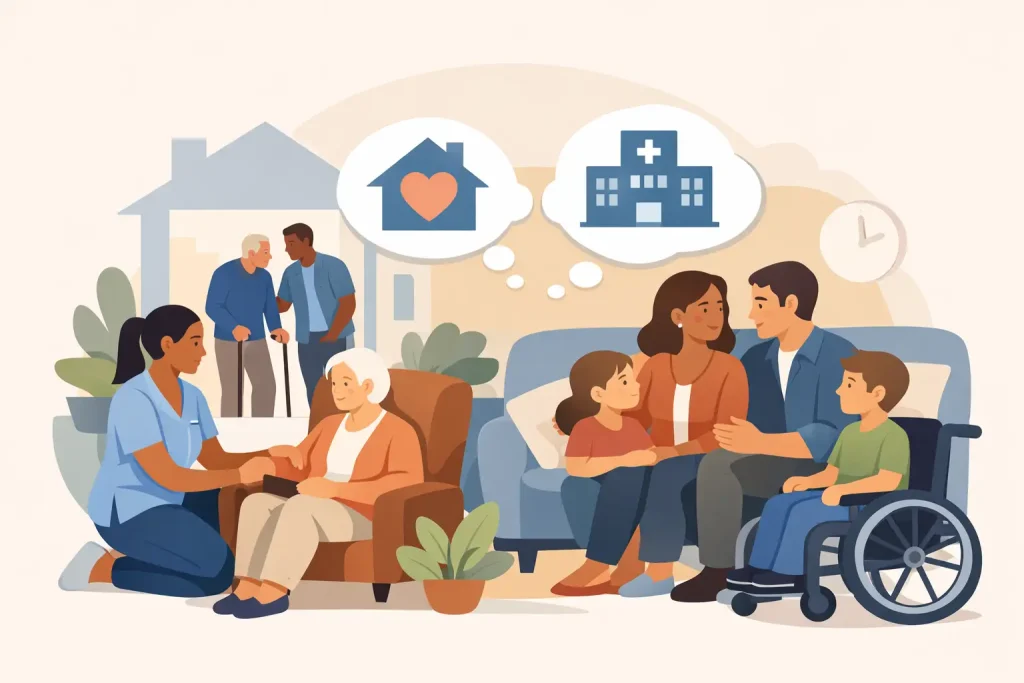
A daughter notices her father has started wearing the same clothes several days in a row. A spouse realizes getting in and out of the shower has become a struggle. A son gets a call that his mother missed another medication dose. These are often the moments when families start asking, when should families hire home care?
The honest answer is usually sooner than people expect. Many families wait until there is a fall, a hospital stay, caregiver burnout, or a serious decline in health. But home care is not only for emergencies. In many cases, bringing in support earlier helps a loved one stay safer, more comfortable, and more independent at home.
When should families hire home care for a loved one?
A good time to consider home care is when daily life starts feeling harder, less safe, or less manageable for the person receiving care or the family providing it. That change may happen gradually. A loved one may still be living at home, still want privacy, and still appear mostly fine to others. But small signs often tell the real story.
Maybe meals are being skipped because cooking is tiring. Maybe housekeeping has fallen behind. Maybe walking to the bathroom feels unsteady, or getting dressed takes much longer than it used to. Sometimes the first sign is not physical at all. It may be loneliness, confusion, forgetfulness, or a family caregiver who has reached a point of exhaustion.
Home care can help in all of these situations. It offers practical support with personal care, mobility, meals, reminders, companionship, errands, and safety supervision while helping a person remain in familiar surroundings.
The signs are often subtle before they become serious
Families do not always see one dramatic event that makes the decision obvious. More often, they notice a pattern. The refrigerator has expired food. Laundry piles up. Bills are overlooked. A loved one seems weaker after an illness and has not bounced back. Someone who used to enjoy going out now stays in bed or sits alone most of the day.
These changes matter because they can point to bigger risks ahead. Poor nutrition can lead to weakness. Weakness can lead to falls. Missed medications can lead to complications. Isolation can affect mood, memory, and motivation. When support is added early, families may be able to prevent a crisis instead of reacting to one.
That early step can also preserve dignity. Many people accept help more comfortably when care begins with a few hours of assistance rather than after a medical emergency forces major changes.
Personal care is becoming difficult
Bathing, grooming, dressing, and toileting are deeply personal tasks. When these become difficult, many people try to hide the struggle. They may say they are fine, even when they are avoiding showers because they feel unsteady or wearing the same outfit because dressing is painful.
If your loved one needs help with these routines, home care may be appropriate. Support with personal care can reduce fall risk, improve hygiene, and make each day feel more manageable without taking away a person’s sense of control.
Safety concerns are growing at home
A home that once felt easy to manage can become risky after illness, surgery, weakness, or changes in memory. Maybe your loved one is using furniture to walk. Maybe they are forgetting to turn off the stove. Maybe they wander at night or need help getting from bed to chair.
These are not small concerns. Safety supervision and mobility support can make a meaningful difference, especially for seniors, medically fragile individuals, and adults with disabilities who need dependable help in the home.
Family caregivers are overwhelmed
One of the clearest answers to when should families hire home care is this: when the family caregiver can no longer do everything alone without sacrificing their own health, work, or peace of mind.
Caregiving often begins informally. A daughter stops by after work. A spouse takes over medications and meals. A sibling handles appointments and errands. Over time, those responsibilities can grow into a full-time job layered on top of other obligations.
Caregiver stress does not mean a family has failed. It means support is needed. Respite care and in-home assistance can give family caregivers time to rest, work, care for children, or simply recover emotionally. That support often helps the entire household function better.
After a hospital stay is one of the most important times to act
Many families first arrange home care after discharge from a hospital, rehab center, or surgical procedure. This is often wise because the period right after discharge can be more difficult than expected. A person may be weaker, more fatigued, less steady on their feet, or temporarily unable to manage regular routines.
Even when recovery is expected, there may be a gap between medical instructions and daily reality. Someone still needs help with bathing, meals, reminders, transportation, and keeping an eye on safety. Home care can fill that gap and reduce the pressure on family members trying to manage everything at once.
The same is true for chronic illness. If a loved one has frequent medical appointments, medication changes, fatigue, or reduced mobility, steady in-home support can prevent repeated setbacks.
Memory changes can make early home care especially helpful
When forgetfulness becomes more frequent, families often wonder whether they are overreacting. That is understandable. Everyone forgets things from time to time. The concern grows when memory issues affect safety, personal care, medications, meals, or judgment.
A person may leave doors unlocked, forget recent conversations, miss doses, or become confused about time and routine. Early home care can provide structure, supervision, and companionship while helping the person remain in familiar surroundings. It can also give families a clearer picture of what kind of support is truly needed.
Waiting until confusion becomes severe can make the transition harder. Earlier care often feels less disruptive and more supportive.
Home care is not only for seniors
Families sometimes assume home care is only meant for older adults. In reality, it can also support adults with disabilities, medically fragile individuals, and people who need help participating safely in daily life and the community.
For some families, the question is not just about age or illness. It is about function. If a loved one needs one-on-one support, help with routines, supervision, or caregiver relief, home-based services may be the right fit. That is especially true when the goal is to maintain comfort, dignity, and as much independence as possible.
Why families often wait too long
There are good reasons families hesitate. A loved one may resist help. Adult children may feel guilty. Spouses may believe they should handle everything themselves. Some people worry that bringing in home care means giving up independence.
In many cases, the opposite is true. The right support can extend independence by helping a person remain safely at home longer. It can also ease tension within families. Instead of every interaction being about tasks, medications, and reminders, relatives may have more space to simply be family again.
Cost, scheduling, and comfort level also matter. Not every family needs full-day care. Sometimes a few hours a week is enough to start. Needs can change over time, and care plans often work best when they are flexible.
How to know if now is the right time
If you are asking the question repeatedly, that alone may be a sign to explore options. Families usually start wondering for a reason. You may not need an all-or-nothing decision today, but it may be time to talk through what support could help now.
Ask yourself whether your loved one is safe alone, managing personal care, eating well, taking medications correctly, and keeping up with daily tasks. Also ask whether the family caregiver is coping or running on empty. If the current setup depends on constant worry, rushed visits, or hoping nothing goes wrong, home care may already be overdue.
For families in New Jersey, especially those balancing care after discharge, long-term support needs, or caregiver strain, having a dependable local provider can make the process feel less overwhelming. Comfort Zone Home Healthcare works with families who need practical support delivered with warmth, professionalism, and respect.
The best time to seek help is often before a crisis forces the decision. A little support at the right time can protect safety, reduce stress, and help your loved one keep living with dignity in the place that feels most like home.