
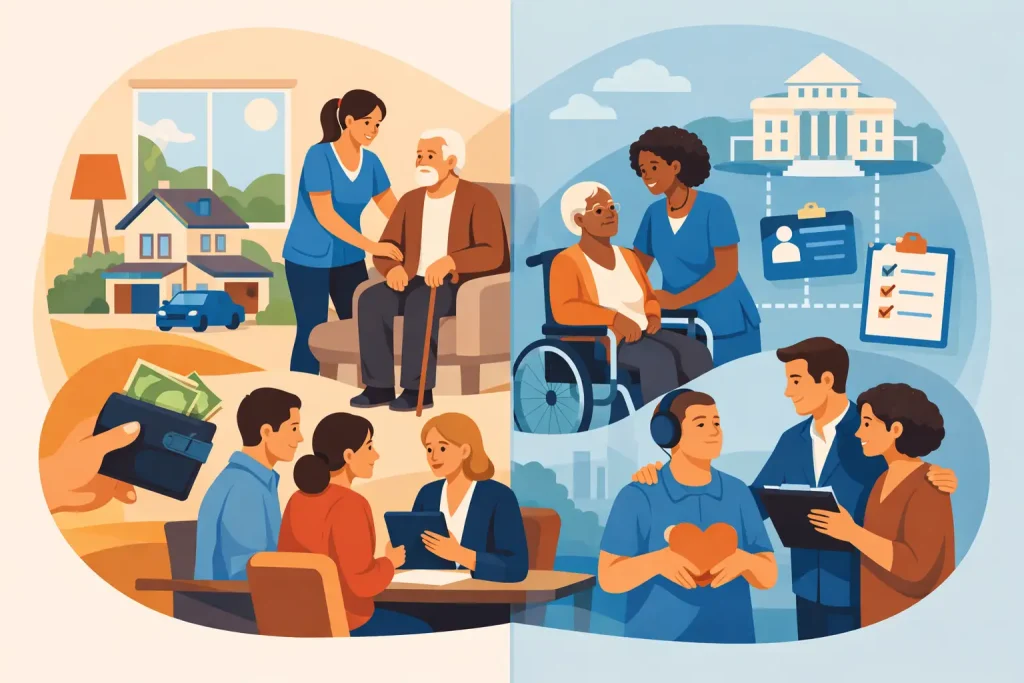
When a loved one needs help at home, the first question is often not about care tasks. It is about how that care will be paid for. That is why understanding private pay vs Medicaid caregiving matters so much for families trying to make thoughtful, sustainable decisions.
Both options can help someone remain safe and supported at home, but they work very differently. One may offer more freedom and faster access. The other may provide critical financial relief but come with eligibility rules and program requirements. For many families, the right answer depends on health needs, household finances, timing, and how much flexibility they need from a care plan.
Understanding private pay vs Medicaid caregiving
Private pay caregiving means the client or family pays directly for home care services. This may include personal care, companionship, meal preparation, mobility support, light housekeeping, medication reminders, errands, and supervision. Private pay is often the most straightforward path because services can usually begin as soon as care is arranged.
Medicaid caregiving, by contrast, refers to home care services funded through Medicaid for eligible individuals. These services may also include help with daily living activities, supervision, respite, and supports that allow a person to remain in the community instead of moving into a facility. In New Jersey, Medicaid-funded care may be accessed through specific programs, assessments, and managed care structures, depending on the person’s age, disability status, and needs.
The core difference is simple. Private pay is driven mainly by what the client wants and can afford. Medicaid caregiving is driven by financial and clinical eligibility, program rules, and approved service hours.
Cost is only one part of the decision
It is natural to focus first on price. Private pay requires out-of-pocket payment, which can feel overwhelming, especially if care is needed for many hours each week. For short-term recovery, a family may decide that private pay is manageable. For long-term care, those costs can become significant.
Medicaid can reduce or remove much of that financial burden for people who qualify. For families already balancing medical bills, housing costs, and lost work time from caregiving, that support can be life-changing.
Still, lower cost does not automatically mean easier access. Medicaid applications, income and asset reviews, functional assessments, and approval timelines can all affect when services start. If someone needs help right away after a hospital discharge or during a sudden decline, private pay may be the faster option while longer-term funding is being sorted out.
This is where families often feel stuck. They are not choosing between good care and bad care. They are choosing between different pathways to care, each with real benefits and real limitations.
Flexibility in care plans and scheduling
One of the biggest advantages of private pay caregiving is flexibility. Families can often choose the schedule that works best for them, whether that means a few hours of help in the morning, overnight support, weekend coverage, or more personalized companionship. Care plans can usually be adjusted quickly as needs change.
That flexibility can be especially helpful for clients recovering from surgery, seniors who need non-medical support, or family caregivers who need reliable respite on a schedule that fits real life. If a daughter needs help for her mother every weekday from 7 a.m. to 11 a.m., private pay may make that arrangement easier.
Medicaid caregiving can still provide valuable support, but services are typically tied to assessed need and approved hours. In other words, care is not always scheduled simply according to preference. It is often based on what the program authorizes. Some families find this structure manageable, while others feel it limits their options.
Neither approach is better in every situation. A family with urgent and changing needs may value the responsiveness of private pay. A family with ongoing needs and financial strain may accept less flexibility in exchange for more affordable long-term support.
Eligibility changes the conversation
Private pay has no financial eligibility requirement. If a person wants care and can pay for it, services can usually be arranged quickly after an assessment and care planning process.
Medicaid caregiving is different. A person must meet financial criteria and also show a level of need that qualifies them for home and community-based support. That can be confusing for families, especially when a loved one clearly needs help but has not yet completed the documentation or assessments required.
There can also be gray areas. Some people may not currently qualify for Medicaid but may qualify later if their financial situation changes. Others may be eligible for certain support services but not the exact amount of care the family expected. This is one reason families often benefit from speaking with experienced providers, support coordinators, or case managers who understand the local system.
For adults with disabilities, including those receiving DDD-related supports, eligibility and service structure may involve an additional layer of coordination. Families are not just choosing a payment source. They are also navigating which services fit the person’s goals, supervision needs, and daily routines.
Speed of starting care
When someone comes home from rehab, starts falling more often, or can no longer manage bathing alone, timing matters. Families may not have weeks or months to wait for services.
Private pay is often the faster route because approval from a public benefits program is not required. Once the provider and family agree on the care plan, services may begin relatively quickly.
Medicaid caregiving may take more time depending on the person’s application status, assessment schedule, and care coordination process. For that reason, some families begin with private pay care and later transition to Medicaid-funded services if the client becomes eligible. That approach is not right for everyone, but it can offer a practical bridge during a difficult period.
The caregiver experience can differ too
Families often focus on funding first, but the day-to-day experience also matters. What kind of support does the client want? How important is schedule consistency? Does the family need a caregiver with experience in mobility support, dementia-related supervision, or community-based disability services?
With private pay, there is often more room to shape care around preferences, routines, and household needs. Families may feel they have more direct input into the type and timing of care.
With Medicaid, the support can still be meaningful and high quality, but it may involve more coordination among agencies, authorizations, and program requirements. Some families are comfortable with that process. Others find it stressful and prefer the simplicity of direct private arrangements if finances allow.
The key is not to assume that one funding source guarantees a better caregiving relationship. The quality of care still depends on the provider, the care plan, communication, and how well services match the client’s needs.
How to think through private pay vs Medicaid caregiving for your family
The most helpful starting point is to ask a few practical questions. Does your loved one need help immediately, or is there time to go through an eligibility process? Are care needs temporary, long-term, or likely to increase over time? Is the main concern affordability, flexibility, or both?
It also helps to think beyond today. A family may be able to afford private pay now, but not indefinitely. Another family may qualify for Medicaid support, yet still want to add private pay hours for evenings or weekends if approved services do not cover enough time. In real life, care decisions are not always either-or. Sometimes the best plan involves a combination of resources.
For families in New Jersey, this conversation can be especially important because support systems may include traditional home care, Medicaid-funded personal care, and disability-related community services. A provider such as Comfort Zone Home Healthcare may be able to help families understand what type of support fits their situation without making the process feel overwhelming.
There is no one-size-fits-all answer
Private pay vs Medicaid caregiving is not just a financial comparison. It is a decision about timing, control, sustainability, and peace of mind. Private pay may offer faster starts and greater flexibility. Medicaid may open the door to essential long-term support that would otherwise be out of reach.
The right choice depends on the person receiving care and the people supporting them. A daughter caring for her aging father, a guardian planning services for an adult with disabilities, and a spouse managing post-surgical recovery may all arrive at different answers for good reason.
If you are weighing these options, give yourself permission to ask detailed questions and take the full picture into account. Good care is not only about what is available. It is about what will truly work for your loved one, your family, and the road ahead.