
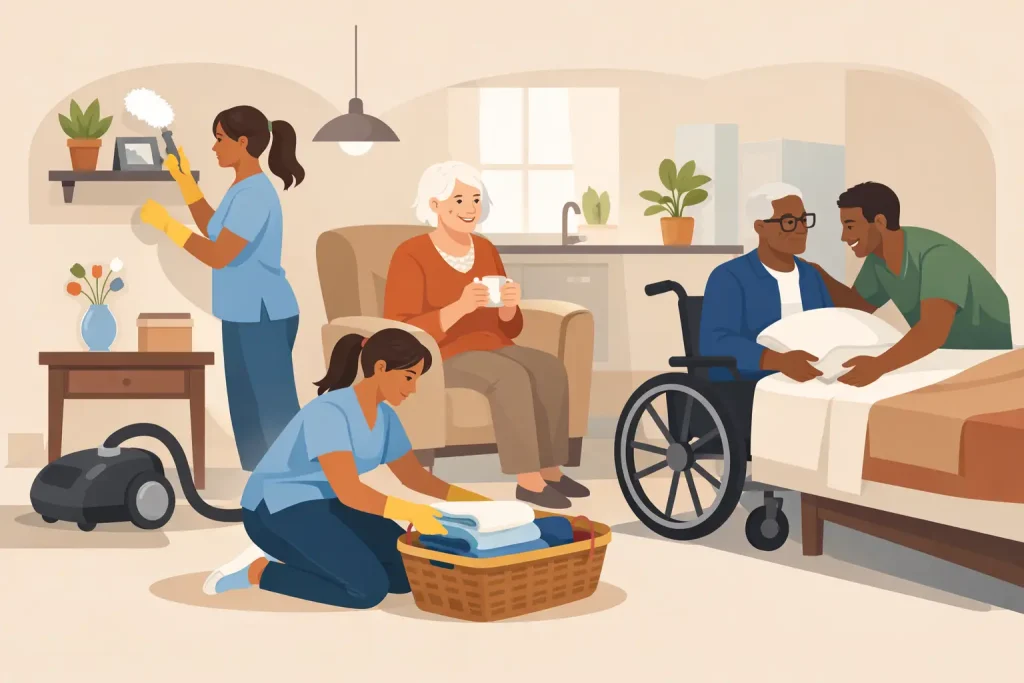
A sink full of dishes or a laundry basket on the floor may seem minor at first. For an older adult, though, those everyday tasks can become tiring, frustrating, or even unsafe. That is why light housekeeping for seniors matters so much. It helps keep the home comfortable, reduces daily stress, and supports independence in a practical, respectful way.
For many families, the question is not whether a parent or loved one wants to stay at home. Most do. The real question is what kind of support makes home life manageable without taking away dignity. Light housekeeping often plays a bigger role than people expect because a clean, organized space can affect safety, mood, mobility, and overall wellbeing.
What light housekeeping for seniors usually includes
Light housekeeping is not the same as deep cleaning or full housekeeping service. It focuses on the routine household tasks that help a home stay tidy, sanitary, and easy to move around in. In a home care setting, these tasks are usually connected to the senior’s immediate living space and daily comfort.
That may include washing dishes, wiping kitchen counters, sweeping or light mopping, taking out the trash, doing laundry, changing bed linens, dusting commonly used areas, and organizing clutter in walkways or frequently used rooms. Caregivers may also help with simple meal cleanup, straightening the bathroom, and making sure supplies are easy to reach.
The goal is not to make the house look perfect. The goal is to make it safer, calmer, and easier to live in. That distinction matters. Families sometimes expect a caregiver to provide the kind of heavy-duty cleaning a professional cleaning crew would handle, but home care light housekeeping is usually centered on health, comfort, and function.
Why this kind of support matters more with age
Aging changes how people move through their homes. Bending to pick up laundry, carrying a vacuum, reaching high shelves, or standing at the sink for too long can become difficult. Even seniors who are mentally sharp and determined to do everything themselves may find certain chores more physically demanding than they used to be.
When those tasks pile up, the home can start to feel overwhelming. Clutter may increase fall risk. Missed laundry can affect hygiene and comfort. An unclean kitchen or bathroom can create sanitation concerns. Small housekeeping issues often grow into larger quality-of-life problems if no one steps in early.
There is also an emotional side to this. Many older adults take pride in maintaining their homes. When they begin struggling with routine chores, they may feel embarrassed or discouraged. Compassionate housekeeping support can ease that burden without making someone feel judged or pushed aside.
The connection between light housekeeping and senior safety
Safety is one of the clearest reasons families look for housekeeping support. Falls are a serious concern for older adults, and the physical layout of the home plays a major role. Loose items on the floor, crowded hallways, overflowing laundry, and slippery surfaces can all increase risk.
Light housekeeping helps reduce those hazards. Keeping walkways clear, managing spills quickly, removing trash regularly, and making sure everyday items are within reach can all support safer movement around the home. Clean floors and uncluttered rooms do not just look better. They help seniors navigate their space with more confidence.
This is especially important after surgery, after a hospital stay, or when a senior is living with arthritis, weakness, balance issues, or memory changes. In those cases, even a modest amount of home support can make daily routines much safer.
Light housekeeping supports independence, not just cleanliness
Some families hesitate to bring in help because they worry it may feel intrusive. Others fear their loved one will see it as a loss of independence. In practice, light housekeeping often does the opposite. It can preserve independence by removing the tasks that drain energy or create risk.
If a senior no longer has to struggle with changing sheets, carrying laundry, or standing to wash dishes, they may have more energy for bathing, enjoying meals, visiting with family, or taking part in the activities they still value. Support with chores can make it easier for someone to remain in their own home longer and with less daily strain.
It also allows care to be tailored. Some seniors only need help with a few tasks once or twice a week. Others benefit from broader daily assistance that includes personal care, meal preparation, reminders, companionship, and household support. There is no single right level of care. It depends on health, mobility, home setup, and family availability.
What light housekeeping does not usually include
Clear expectations are important. Light housekeeping for seniors generally does not include heavy scrubbing, moving furniture, washing exterior windows, cleaning out basements or garages, or other labor-intensive projects. It also may not include care for areas of the home the client does not use regularly.
That does not mean those tasks are unimportant. It simply means they often fall outside the scope of non-medical home care and may require a separate cleaning service or a different type of support. Families benefit from asking specific questions rather than assuming all housekeeping means the same thing.
This is also where communication matters. A good care plan should spell out which household tasks are included, how often they will be done, and how those tasks fit into the person’s larger care needs.
Signs a senior may need housekeeping help
Sometimes the need is obvious. Other times, it shows up gradually. You may notice unopened mail piling up on tables, expired food in the refrigerator, laundry left undone, or a bathroom that no longer looks safe or sanitary. You may also see your loved one avoiding certain parts of the house because they are harder to manage.
There are subtler signs too. A parent who always kept a neat home may suddenly seem indifferent to mess. They may complain of being tired after simple chores or start rewearing clothes because laundry feels like too much effort. In some cases, pain, shortness of breath, memory issues, or depression may be part of the picture.
Families should not assume laziness or lack of concern. Often, the issue is that the work has become physically or emotionally harder than the person wants to admit.
How families can choose the right kind of support
The best place to start is with the senior’s actual daily routine. Which chores are becoming difficult? Which areas of the home feel unsafe or neglected? Is the main issue physical fatigue, limited mobility, memory changes, or caregiver burnout within the family?
From there, it helps to think about light housekeeping as one piece of a larger support system. Some older adults only need help keeping the kitchen, bathroom, and laundry under control. Others also need assistance with bathing, dressing, meal preparation, transportation, or supervision.
A professional home care provider can help families look at the whole picture instead of treating housekeeping as an isolated problem. That kind of planning can be especially helpful after discharge from a hospital or rehab setting, when even temporary support at home may prevent setbacks.
For families in New Jersey, working with a trusted provider such as Comfort Zone Home Healthcare can make these conversations feel less overwhelming. The right support should feel respectful, practical, and centered on the person’s comfort and goals.
A clean home can ease stress for everyone
When families are trying to balance work, caregiving, and their own responsibilities, housekeeping often becomes one more source of pressure. Adult children may spend visits catching up on chores instead of sitting down and enjoying time with a parent. Spouses may become exhausted trying to manage everything alone.
Light housekeeping can relieve some of that pressure. It creates a more manageable home environment for the senior, and it gives family caregivers room to focus on connection instead of constant task management. That shift can improve the emotional tone of care in a meaningful way.
The value is not just in a clean countertop or folded towels. It is in the comfort of a home that feels livable, safe, and cared for. For many seniors, that kind of support helps them hold onto routines, dignity, and a greater sense of peace right where they most want to be.