
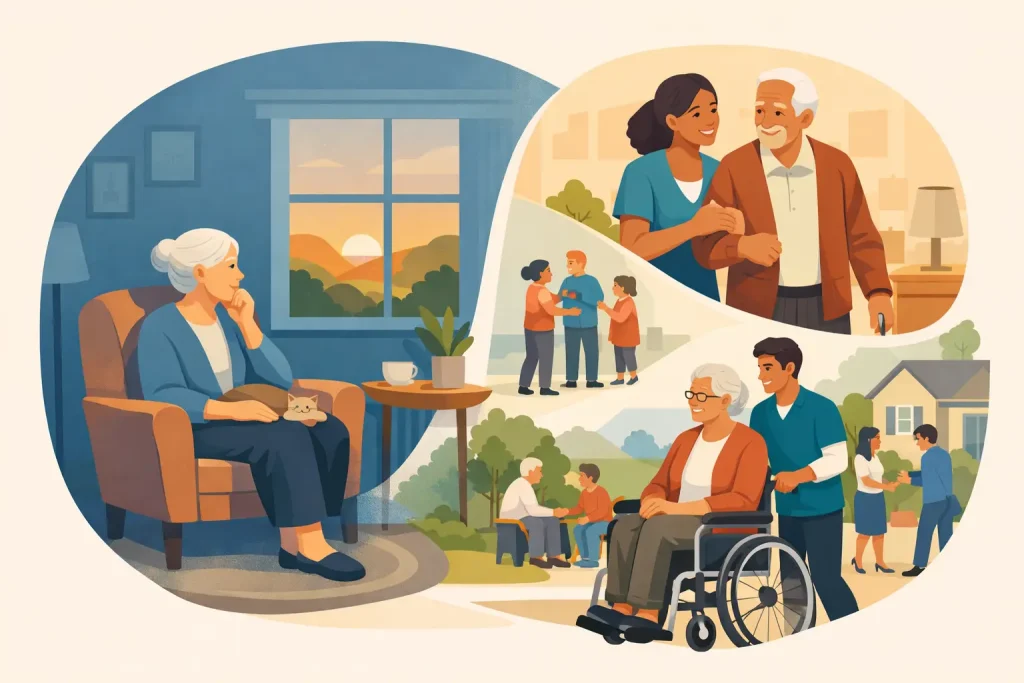
A parent forgets to turn off the stove once, then again a few weeks later. A neighbor mentions unopened mail piling up. A usually sharp grandmother misses a doctor’s appointment she has kept every year for decades. Moments like these leave families asking a painful question: when should seniors stop living alone?
There is rarely one single event that gives a clear answer. More often, it is a pattern of changes in safety, health, judgment, and daily functioning. The goal is not to take away independence too quickly. It is to protect dignity, reduce risk, and make sure an older adult has the right level of support at the right time.
When should seniors stop living alone? Start with safety, not age
There is no exact age when living alone becomes unsafe. Some older adults manage well into their 80s or 90s with minimal help, while others need daily support much sooner because of illness, memory loss, mobility problems, or social isolation. Age by itself is not the best guide.
A better question is whether the person can live alone safely and consistently. Can they prepare meals, take medications correctly, bathe, dress, move around the home, and respond to emergencies? Can they manage bills, keep medical appointments, and make sound decisions? If those abilities are becoming unreliable, living alone may no longer be the safest choice.
Families often struggle because the senior may still appear fine during a short visit. A parent might be able to hold a conversation, offer coffee, and insist everything is under control. But a closer look can reveal missed medications, spoiled food, falls that were never reported, or confusion that comes and goes.
Signs an older adult may no longer be safe alone
The most concerning signs usually show up in everyday routines. You may notice poor hygiene, the same clothes being worn repeatedly, or weight loss because shopping and cooking have become too difficult. Sometimes the home itself tells the story, with clutter increasing, laundry going undone, or bills left unopened.
Memory changes deserve special attention. Forgetting a name now and then is different from forgetting whether medication was taken, wandering outside, missing familiar routes, or becoming confused about time and place. If memory problems affect judgment or safety, the risk of living alone rises quickly.
Falls and mobility issues are another major warning sign. A senior who struggles to get in and out of bed, climb stairs, or use the bathroom safely may be one accident away from a medical emergency. Even one fall can change everything, especially if they cannot call for help.
Changes in mood and behavior can matter just as much as physical decline. Depression, fear, withdrawal, and increasing anxiety often make daily life harder. A person who is isolated may eat less, move less, ignore medical needs, and lose confidence in managing alone.
You may also notice poor decision-making. This can include leaving doors unlocked, letting strangers into the home, sending money to scammers, driving unsafely, or refusing needed care despite obvious problems. These are not small issues. They point to a growing gap between what the person believes they can manage and what is actually safe.
Health conditions that change the answer
Certain diagnoses make the question of when should seniors stop living alone more urgent. Dementia is one of the clearest examples because it affects memory, judgment, problem-solving, and the ability to respond to emergencies. Early-stage dementia does not always mean a person must move immediately, but it does mean families should plan sooner rather than later.
Other conditions can also make solo living risky. Parkinson’s disease, stroke recovery, heart failure, diabetes with frequent low blood sugar, vision loss, severe arthritis, and chronic balance problems may all interfere with daily safety. A senior who has recently been hospitalized or discharged from rehab may need extra support even if the decline is temporary.
Medication complexity is often overlooked. Some older adults take many prescriptions at different times of day. If they are skipping doses, doubling them, or mixing them up, the consequences can be serious. Home care support, medication reminders, and closer supervision can help bridge that gap.
It is not always all or nothing
One of the biggest misconceptions is that the only choices are total independence or moving out immediately. In reality, many seniors can remain at home safely with the right support in place.
That support may start small. A few hours of help with bathing, dressing, meals, errands, or medication reminders can make a meaningful difference. Companionship and safety supervision can also reduce isolation and help families feel more confident that someone is checking in regularly.
For some families, this middle ground is exactly what they need. A senior may not be ready for assisted living or a move in with relatives, but they may no longer be safe completely alone all day and night. Home care can preserve routine and comfort while addressing the areas that have become difficult.
This is often where a thoughtful care plan matters most. The right solution depends on the person’s health, home setup, family involvement, finances, and preferences. What works for one household may not work for another.
How families can talk about it without causing a shutdown
These conversations are emotional because they touch identity, privacy, and control. Many seniors hear, “You can’t manage anymore,” even when the family is trying to say, “We want you safe.” That is why the approach matters.
Start with observations, not accusations. Saying, “I noticed you seemed unsteady getting into the shower,” is more respectful than saying, “You can’t live alone anymore.” Keep the conversation focused on support and safety, not blame.
It also helps to ask questions. What feels harder lately? What worries them most? Would help with meals or bathing make the day easier? Seniors are often more open when they feel included in the decision instead of pushed into it.
If emotions run high, bring in a trusted professional. A physician, hospital discharge planner, social worker, or care coordinator may help the family and senior look at the situation more objectively. Sometimes hearing the same concern from a neutral expert carries less emotional weight.
When living alone is no longer the right fit
There are times when added support at home is not enough. Frequent falls, wandering, serious cognitive decline, repeated medical crises, inability to use the bathroom safely, or unsafe nighttime behavior may point to the need for 24-hour supervision or a different living arrangement.
Caregiver burnout also matters. If a daughter, spouse, or other relative is stretched beyond what they can realistically provide, the current setup may no longer be sustainable. A plan that depends on exhausted family members is not a safe long-term plan.
The best time to make a change is usually before a crisis forces one. Waiting until after a serious fall, a fire risk, a hospitalization, or a wandering incident can limit choices and raise stress for everyone involved. Early planning gives families more room to consider what level of care fits best.
In many cases, families benefit from a gradual transition. That might mean starting with part-time home care, increasing hours as needs grow, and reassessing regularly. For New Jersey families, community-based support and dependable in-home assistance can provide a safer path forward while preserving as much independence as possible.
Comfort Zone Home Healthcare works with families facing these decisions every day, and one truth comes up again and again: most people do not need less dignity when they need more help. They need care delivered with respect.
If you are asking when should seniors stop living alone, trust what you are seeing, not just what you hope is true. A thoughtful response now can protect comfort, safety, and peace of mind later, while still honoring the person at the center of the decision.