
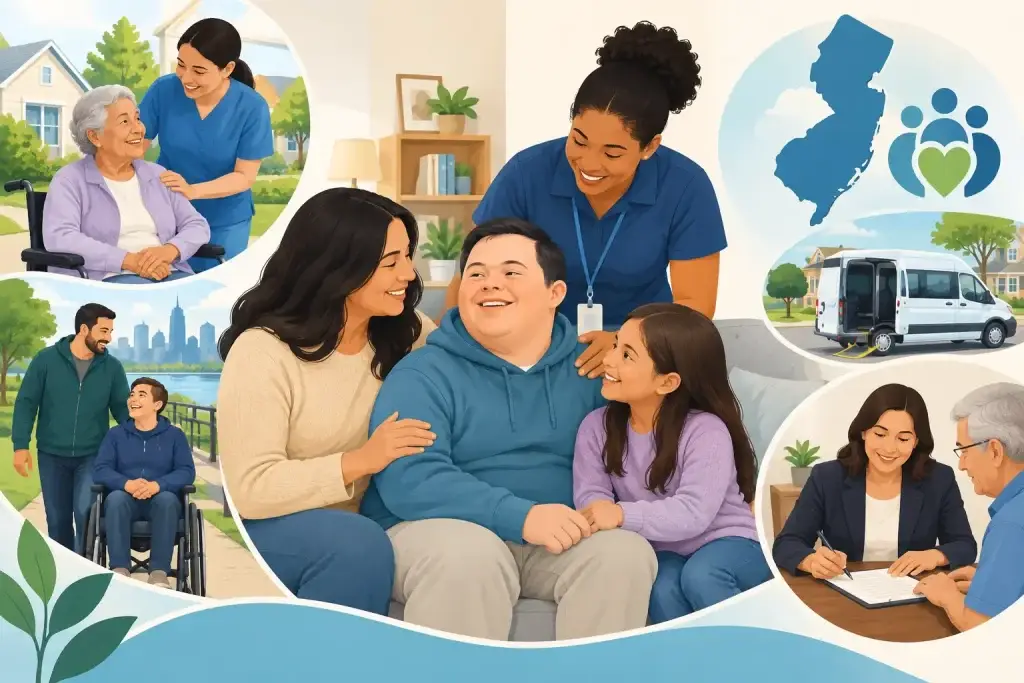
For many families, DDD service enrollment begins with a question that feels both practical and deeply personal: How can my loved one receive support while continuing to build a meaningful, self-directed life? In New Jersey, the Division of Developmental Disabilities, commonly called DDD, helps eligible adults access services that can support daily living, community participation, caregiver relief, and greater independence.
The process can involve forms, evaluations, Medicaid steps, and planning conversations. That can feel overwhelming, especially when a family is also managing school transitions, health needs, work, or caregiving responsibilities. Knowing what happens at each stage can make the path clearer and help you prepare for the decisions ahead.
What DDD Services Can Support
New Jersey DDD services are designed for adults with developmental disabilities who need ongoing support in one or more areas of life. The goal is not to make decisions for a person. It is to provide the right level of assistance so the person can pursue their own goals, routines, relationships, and place in the community.
Depending on the individual’s needs and approved plan, services may include Individual Supports, Respite, Community-Based Supports, and Community Inclusion. A direct support professional may assist with personal care, meals, household routines, medication reminders, transportation, appointments, safety supervision, communication, and skill-building. Support can also include spending time in the community, practicing social skills, participating in preferred activities, or learning to manage daily responsibilities more independently.
The right service mix depends on the person. Someone living with family may need a few hours of support each week to participate safely in community activities. Another person may need more regular assistance with daily routines, supervision, or personal care. Families caring for a loved one full-time may need respite so they can rest, work, attend appointments, or meet other family responsibilities.
Who May Be Eligible for New Jersey DDD
DDD generally serves New Jersey residents age 21 and older who have a qualifying developmental disability. The condition must have begun before age 22, be expected to continue indefinitely, and create substantial functional limitations in major life areas.
A diagnosis alone does not automatically determine eligibility. DDD reviews how the disability affects a person’s daily functioning and level of support needed. Families may be asked to provide medical, psychological, educational, or other records that help document the person’s diagnosis and functional needs.
Young adults approaching their 21st birthday often begin planning before they leave school-based services. Starting early can reduce gaps in support during this transition. Adults who have not previously applied may also begin the process later, provided they meet eligibility requirements.
Medicaid Is Usually Part of the Process
For many community-based DDD services, the person must be enrolled in New Jersey Medicaid and meet the financial and program requirements connected to DDD funding. Medicaid applications and eligibility questions can take time to resolve, particularly when income, benefits, guardianship, or household circumstances are involved.
If a family is unsure where to begin, it can help to treat DDD eligibility and Medicaid eligibility as related but separate steps. A person may be found eligible for DDD, yet still need to complete Medicaid requirements before funded services can begin. Keeping copies of submitted documents and recording the names and dates of agency contacts can make follow-up easier.
How DDD Service Enrollment Usually Works
The exact timeline varies. Some applications move forward quickly when records are complete, while others require additional documentation or follow-up. Families should expect a process rather than a single appointment.
1. Apply for DDD eligibility
The first step is submitting an application to the New Jersey Division of Developmental Disabilities. The application asks for information about the individual, their diagnosis, their living situation, and how they manage everyday tasks. Supporting records are typically needed to help DDD make an eligibility determination.
Useful documents may include diagnostic evaluations, medical records, school records or Individualized Education Programs, Social Security benefit information, proof of New Jersey residency, and guardianship paperwork when applicable. Requirements can change, so families should confirm the current documentation requested for their situation.
2. Complete assessments and establish service needs
After eligibility is confirmed, DDD uses an assessment process to better understand the person’s functional needs. In New Jersey, the New Jersey Comprehensive Assessment Tool, or NJ CAT, helps identify areas where support may be needed, such as personal care, mobility, health and safety, communication, behavior, and community participation.
This assessment should reflect the person’s real day-to-day experience, including support that family members already provide. Families sometimes minimize needs because helping has become routine. Clear, honest examples are more useful than general statements. If someone needs reminders every day, cannot safely travel alone, or needs supervision during personal care, those details matter.
3. Work with a support coordinator
A support coordinator helps the individual and their family develop a person-centered plan. This is an opportunity to discuss what a good life looks like for the person, not simply what tasks need to be covered.
The conversation may include where the person wants to spend time, skills they want to develop, health and safety concerns, family routines, cultural preferences, communication needs, and the type of staff relationship that would feel comfortable. The support coordinator also helps connect the plan to available funding and approved services.
4. Develop an Individualized Service Plan
The Individualized Service Plan, often called an ISP, outlines goals, authorized services, and the providers who will deliver those services. It should be tailored rather than copied from a standard template. A well-developed plan describes the kind of support needed, when it is needed, and what outcomes matter to the individual.
For example, a goal may focus on preparing simple meals, attending a community program, maintaining a safe routine after work, or giving a family caregiver regular time away from caregiving. The plan can evolve when needs, preferences, health, or living arrangements change.
5. Select and begin services with a provider
Once services are authorized, the individual or guardian can choose from qualified providers that offer the approved supports. Availability can differ by county, service type, staffing needs, and schedule. Starting services may require an intake meeting, care planning, staff matching, and coordination with family members or other professionals.
Choosing a DDD Provider With Care
A provider’s role goes beyond filling scheduled hours. Direct support professionals often become a meaningful part of a person’s weekly routine, so reliability, respect, communication, and compatibility matter.
Ask how the agency matches staff with clients, how it handles call-outs, and how families are updated about concerns or progress. It is also reasonable to ask about staff training, supervision, experience with personal care or behavioral needs, and the agency’s approach to community participation. A provider should listen closely to the individual’s preferences, including language, routines, interests, and boundaries.
Comfort Zone Home Healthcare provides DDD supports with a focus on dignity, dependable care, and meaningful participation in everyday life. For families in Essex, Union, Hudson, Passaic, and surrounding New Jersey communities, local familiarity can also help when support includes community activities, appointments, or established routines.
Common Concerns Families Have
Families often worry that accepting services will reduce their role in their loved one’s life. In a healthy service relationship, the opposite should be true. Professional support can give families more breathing room while keeping the individual and their trusted circle involved in planning.
Others worry that the plan will be too rigid. While services must follow authorization and program requirements, an ISP is meant to be reviewed and updated as circumstances change. If a person’s health declines, a caregiver’s availability changes, or a new goal becomes a priority, bring it to the attention of the support coordinator.
There can also be a wait between enrollment steps and the start of services. During that period, stay in contact with the support coordinator, respond promptly to requests for documents, and ask what remains outstanding. A polite, organized follow-up can prevent small administrative issues from becoming longer delays.
Preparing for a Strong Planning Meeting
Before meeting with a support coordinator or provider, take time to gather practical examples of a typical week. Consider what the person enjoys, where support is needed, what situations feel unsafe or stressful, and what caregivers are currently doing behind the scenes. Include strengths as well as challenges.
It can help to write down a few priorities in the individual’s own words whenever possible. One person may care most about getting out into the community. Another may want more privacy while learning daily living skills. A family may need reliable respite on certain days. These details give the planning process direction and help make support feel personal rather than generic.
A thoughtful DDD enrollment process takes patience, but it can create room for greater confidence, connection, and stability. Keep asking questions, speak plainly about the support your family needs, and choose partners who treat your loved one as a whole person with preferences, goals, and a valued place in the community.