
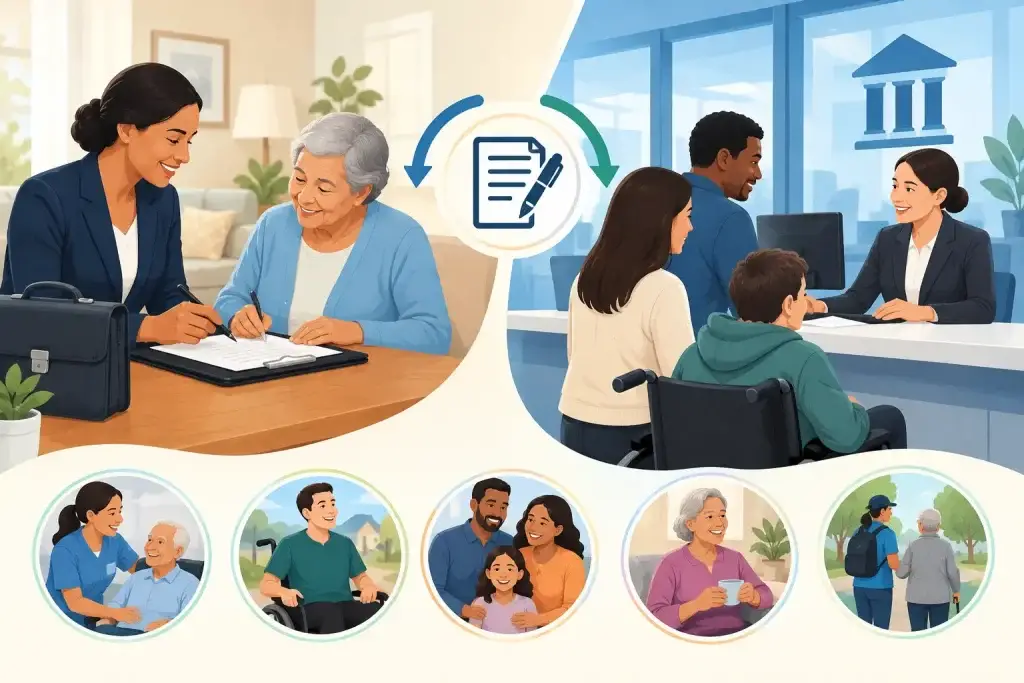
A hospital discharge packet is ready, a power of attorney needs signing, and the person who must sign cannot easily leave home. In that moment, the question is not simply notary versus bank. It is whether the signer can receive the right notarial service safely, promptly, and with the required protections in place.
A bank may offer notary services, often at little or no cost for account holders. That can be a practical option for a straightforward document during regular business hours. But a bank is not the only place to find a notary, and it may not be the best fit when mobility, timing, privacy, document complexity, or a medical setting is involved.
Notary Versus Bank: The Key Difference
A notary public is a state-appointed official who verifies the identity of a signer and helps deter fraud. A bank may employ or make available a notary public, but the bank itself is not performing the notarization. The notary is.
This distinction matters because the legal purpose of notarization does not change based on location. Whether the notary works at a bank, office, law firm, hospital, or visits someone at home, the notary must follow the same applicable state rules. The signer generally must appear before the notary, present satisfactory identification, and show that they understand and are willing to sign the document.
What changes is the experience. A bank notary is usually tied to the bank’s hours, staffing, customer policies, and branch procedures. A mobile notary travels to the signer, which can be especially helpful for older adults, people recovering from surgery, individuals with disabilities, busy caregivers, and families handling an urgent healthcare matter.
When a Bank Notary May Be a Good Choice
For a simple form and a signer who can travel independently, a bank can be convenient. Someone who already has an account at the bank may be able to schedule an appointment at a nearby branch and complete the notarization while running other errands.
Bank notary services can work well when the document is complete, the signer has valid identification, and there is no urgent deadline outside normal hours. For example, a person may use a bank notary for a routine affidavit, a school form, or a document related to a financial transaction.
Still, it is wise to call before going. Not every branch has a notary available every day, and a notary may be out of the office, assisting another customer, or unavailable near closing time. Some banks prioritize their own customers or limit the types and number of documents they will notarize. A bank may also decline documents it considers outside its internal policy, even if another qualified notary may be able to assist.
When a Mobile Notary Is Often the Better Fit
Mobile notary service brings the appointment to the person who needs it. That can remove a significant burden when transportation, physical comfort, or caregiver schedules make a bank visit difficult.
For families, the value is often practical as much as it is emotional. A loved one who is weak after hospitalization may not be able to wait in a branch lobby. A caregiver may be responsible for supervision and cannot easily leave the house. A person receiving hospice care, recovering from surgery, or living with limited mobility may feel more comfortable signing documents in a familiar setting.
Mobile service can also help when timing is tight. Documents connected to discharge planning, healthcare decisions, estate planning, school matters, or housing may need attention quickly. While availability varies, a mobile notary can often offer greater scheduling flexibility than a traditional branch appointment.
At Comfort Zone Home Healthcare, mobile notary services are designed with these real-life circumstances in mind. A respectful, organized visit can help clients and families handle important paperwork without adding unnecessary travel or stress.
Medical and Healthcare Documents Need Added Care
Healthcare-related notarizations deserve special consideration. Documents may involve advance directives, powers of attorney, authorization forms, insurance matters, discharge paperwork, or other decisions that affect a person’s care and support.
A notary’s role is limited but meaningful. The notary confirms identity and observes the signing process. The notary does not decide whether a document is legally appropriate, explain legal consequences, choose what a signer should do, or determine a person’s medical capacity. If the signer has questions about what the document means, they should speak with an attorney, healthcare provider, social worker, or other appropriate professional before signing.
The signer must also be willing and aware of what is happening. Family members may be present for support, but they should not pressure, direct, or answer for the signer. If a notary has reason to believe the person is confused, being coerced, or unable to understand the signing, the notarization may need to be postponed or declined. This protects the signer and the integrity of the document.
Some documents require witnesses in addition to a notary. Those requirements are not interchangeable. A notary is not automatically a witness, and a witness is not automatically a notary. Before the appointment, check the document instructions or ask the receiving agency, attorney, or provider what is required.
Questions to Ask Before Choosing a Bank or Notary
The best choice depends on the document and the signer. Before scheduling, consider whether the signer can comfortably travel, whether the appointment must happen at a particular time, and whether the document requires witnesses, multiple signers, or special handling.
It also helps to ask whether the service has experience with the setting involved. A bank appointment may be perfectly appropriate for a routine document. A mobile notary may be a more considerate option for a client in a hospital, rehabilitation center, assisted living community, private residence, or other care setting.
Cost is another factor. Banks may provide complimentary notarization to customers, while mobile notaries typically charge for notarization and travel. For some families, the bank’s lower cost is the right choice. For others, the convenience of avoiding transportation arrangements, missed work, or physical strain justifies the mobile service fee.
Privacy should be considered as well. Sensitive healthcare, financial, or family documents may be easier to handle in a quiet home or care setting than in a busy public branch. The right environment can give a signer time to review completed paperwork and proceed without feeling rushed.
How to Prepare for a Smooth Notary Appointment
Good preparation helps prevent delays, whether the appointment is at a bank or at home. Have the document completed before the notary arrives, but do not sign it in advance if the notary must witness the signature. The notary needs to see the signer sign or acknowledge an existing signature, depending on the type of notarial act requested.
Bring an unexpired government-issued photo ID if possible. Make sure names on the identification and documents are consistent. If the signer cannot provide standard identification, contact the notary ahead of time to discuss acceptable alternatives under New Jersey requirements.
Review the document for blank spaces, missing pages, and instructions about witnesses. The notary cannot tell you how to complete legal or financial forms. If a section is unclear, get guidance from the organization that issued the document or from qualified legal counsel before the appointment.
For a mobile visit, choose a calm, well-lit place where the signer can sit comfortably. If the signer uses glasses, hearing aids, or communication supports, have them available. A few minutes of thoughtful preparation can make the experience more comfortable and respectful for everyone involved.
Choosing the Service That Supports the Signer
The bank option is often useful for routine needs, especially when the signer is mobile and the branch can confirm availability. Mobile notarization is often more suitable when travel is difficult, when a caregiver needs flexibility, or when a healthcare-related situation calls for a quiet and supportive setting.
The most helpful choice is the one that protects the signer’s dignity while meeting the document’s requirements. When paperwork cannot wait but leaving home is a hardship, bringing the notary to the signer can turn one more stressful task into a manageable moment of care.