
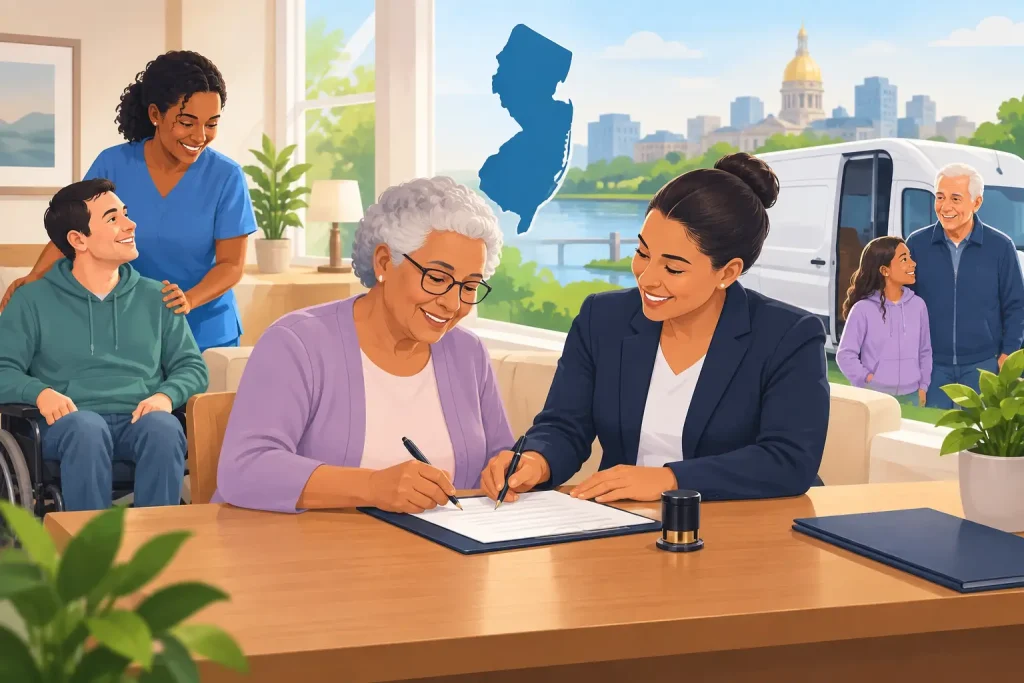
A notarized document can affect a home sale, healthcare decision, power of attorney, benefit application, or family matter. That is why notarization validity requirements deserve careful attention before anyone signs. A notary’s role is not simply to stamp paper. The notary helps confirm that the right person appeared, understood the purpose of signing, and signed willingly under the required notarial procedure.
For families managing care, hospital discharges, disability services, or a loved one’s legal paperwork, a missed detail can mean rescheduling an appointment or having a document rejected. Knowing what to prepare can make the process calmer and more respectful for everyone involved.
What Makes a Notarization Valid?
A valid notarization depends on the notarial act being completed correctly, not merely on the presence of a seal. In New Jersey, the signer generally must personally appear before the notary, either in person or through an authorized remote online notarization process when applicable. The notary must be able to identify the signer, assess that the signer is acting willingly, and complete the proper certificate for the act requested.
The exact requirements can vary based on the document and the type of notarization. An acknowledgment, for example, confirms that a person signed a document voluntarily. A jurat is different: the signer must sign in the notary’s presence and swear or affirm that the statements in the document are true. Using the wrong certificate or completing it incorrectly can create problems even when the signature itself is genuine.
A notary does not decide whether a document is fair, enforceable, complete for its legal purpose, or advisable to sign. Questions about what a document means should go to the attorney, agency, healthcare provider, title company, or organization requesting it. This protects the signer from receiving legal advice from someone who is not authorized to provide it.
The Signer Must Be Present, Identified, and Willing
Personal appearance is one of the central notarization validity requirements. A notary cannot notarize a signature based on a phone call, a photocopy of an ID, a signature that was already emailed, or a family member’s assurance that the signer approved it. For a traditional mobile appointment, the signer and notary meet face to face.
The notary also needs satisfactory evidence of identity. A current government-issued photo ID is often the easiest option, such as a driver’s license, state identification card, passport, or military ID. The name on the ID should reasonably match the name on the document. If names differ because of marriage, divorce, a middle initial, or another life change, the receiving organization may have its own documentation requirements. It is wise to ask that organization in advance rather than assuming the notary can resolve the discrepancy.
Willingness matters just as much as identity. The notary should speak directly with the signer and watch for signs of pressure, fear, or confusion. A relative may help coordinate the appointment or provide transportation, but they should not answer every question for the signer or pressure them to sign. If the notary believes the signer is being coerced, does not understand that they are signing a document, or cannot communicate their willingness, the notarization may need to stop.
This can feel disappointing when a family is facing a deadline. Still, it is a safeguard for the person signing and for the people who will rely on the document later.
Awareness Is Not the Same as a Medical Evaluation
Notaries are not physicians and do not make clinical capacity determinations. They do, however, need a reasonable basis to believe that the signer is aware of what they are doing and is signing voluntarily. A person who lives with dementia, a developmental disability, speech limitations, or a serious illness is not automatically unable to have a document notarized.
The key question is whether the individual can participate meaningfully in the signing at that moment. A calm setting, hearing aids, glasses, clear explanations from the document provider, and time to respond can be helpful. When capacity is uncertain or a document is especially significant, families should seek guidance from a qualified attorney before arranging notarization.
Document Details That Can Affect Acceptance
Before the appointment, look over the document for missing information. The document should be complete enough to sign, with names, dates, property details, account information, and other material terms filled in where required. A notary may decline to proceed when a document contains obvious blank spaces that could be filled in later, particularly if those blanks affect the agreement or statement being notarized.
The notarial certificate also matters. It normally states the state and county where the notarization occurred, the date, the signer’s name, the type of notarial act, and the notary’s signature and official stamp or seal. The venue must reflect the actual location of the notarization. A mobile notary who meets a client in Newark, for example, must use the appropriate venue for where the meeting took place, not where the document was prepared or where the signer lives.
Some forms include notarial wording already. Others have no certificate, offer several certificate choices, or use language prepared for another state. A notary may be able to complete the certificate presented, but should not choose a legal certificate type for the signer. The organization requesting the paperwork or the signer’s attorney should identify what is needed before the appointment.
Does a Notarization Expire?
There is no single expiration date that applies to every notarization. The notarial act reflects that a particular event occurred on a particular day: the signer appeared, was identified, and completed the required acknowledgment, oath, or signature process. The notary’s commission must be active on that date.
However, the document itself may have a deadline. Banks, title companies, courts, insurance carriers, government agencies, and healthcare facilities can require recently dated forms. A power of attorney, affidavit, real estate document, or enrollment form may also have separate rules about witnesses, recording, filing, or delivery. A valid notarization does not override those requirements.
For documents intended for use outside the United States, an apostille or authentication may be required after notarization. That is a separate process. The destination country, receiving organization, or legal professional can confirm whether it applies.
Healthcare and Family Documents Need Extra Care
Medical and care-related paperwork often carries emotional weight. Families may be arranging documents while a loved one is recovering from surgery, preparing for discharge, moving into supportive housing, or experiencing a change in health. Planning ahead can prevent a rushed decision at the bedside.
A healthcare proxy, advance directive, power of attorney, consent form, or benefits document may require a notary, witnesses, or both. Requirements are not interchangeable. Having two witnesses does not always replace notarization, and a notarization does not always replace witness signatures. The form instructions and the receiving provider’s rules should be reviewed carefully.
Witness eligibility can also be limited. In some situations, a witness cannot be a named agent, a beneficiary, a treating provider, or another interested party. Since these rules depend on the form and purpose, confirm them before gathering family members to sign.
How to Prepare for a Mobile Notary Appointment
A little preparation helps a mobile visit move at a comfortable pace, especially when the signer has mobility limitations or needs support at home, in a hospital, rehabilitation center, assisted living community, or another care setting.
Bring the completed document and any pages that belong with it, along with an acceptable original photo ID. Make sure the signer will be present and awake enough to participate. Provide a stable, well-lit place to sign, and arrange reading glasses, hearing devices, or other communication supports in advance.
It also helps to confirm whether witnesses are needed and whether they must be present at the same time. If the document is to be filed or submitted immediately, have the correct mailing or delivery instructions ready. The notary can complete the notarial act, but the signer or family is generally responsible for filing, recording, or sending the document afterward.
For remote online notarization, the receiving organization must be willing to accept that format, and the signer must be able to meet the technology and identity-verification requirements. A traditional mobile appointment is often more practical when someone is uncomfortable with technology or needs in-person support.
When a Notary May Need to Decline
A professional notary may decline an appointment or pause the process when the signer lacks acceptable identification, is not present, appears pressured, cannot communicate willingness, or presents an incomplete document with material blanks. The notary may also need to decline if the requested act is outside their authority or if the document requires legal guidance that a notary cannot provide.
That decision is not a judgment of the signer or the family. It is a commitment to protecting the integrity of the document and the dignity of the person signing it. When questions arise, taking time to contact the requesting agency or an attorney is usually the safest next step.
Comfort Zone Home Healthcare provides respectful mobile notary support for healthcare-related and general documents throughout New Jersey. Whether paperwork is part of a care transition or an everyday family responsibility, preparing early gives the signer the time, privacy, and peace of mind they deserve.