A loved one may be able to recover safely at home yet still need help every day. The difficult question is often not whether support is needed, but what kind. Understanding personal care versus skilled nursing can help families make a decision that protects safety, comfort, independence, and dignity without arranging services that do not match the person’s needs.
The two services can work alongside one another, especially after a hospitalization or during a period of changing health. They are not interchangeable, though. Personal care focuses on daily living support and supervision. Skilled nursing addresses clinical needs that require the judgment and training of a licensed nurse.
What Is Personal Care?
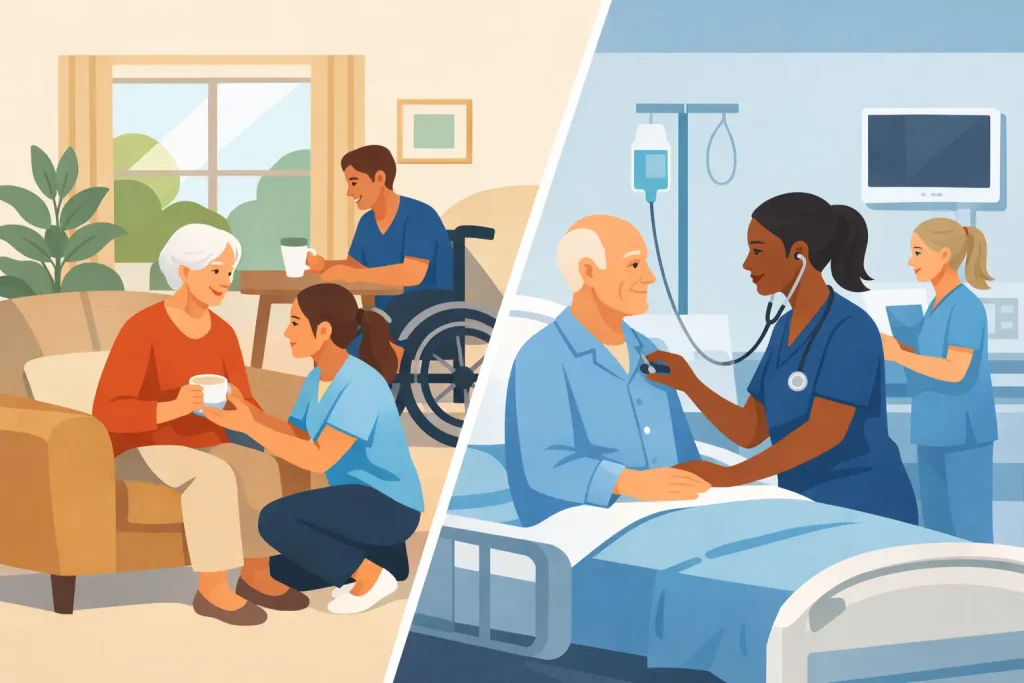
Personal care helps a person manage the everyday routines that can become difficult because of age, illness, disability, injury, surgery, or limited mobility. It is hands-on, practical support that allows many people to remain in a familiar home environment while receiving respectful assistance.
A personal care aide may help with bathing, dressing, grooming, toileting, transfers, walking support, meal preparation, light housekeeping, errands, and companionship. Caregivers can also provide medication reminders and observe for changes in a client’s usual condition, such as reduced appetite, new confusion, increased fatigue, or difficulty moving safely.
This work is deeply personal. A good caregiver does more than complete a task. They encourage the client to do what they can independently, respect routines and preferences, and create a calmer day for family members who may be balancing work, caregiving, and other responsibilities.
Personal care is generally appropriate when the main concern is help with activities of daily living rather than medical treatment. For example, a senior who is steady with a walker but needs help bathing and preparing meals may benefit from personal care. A client returning home after joint surgery may need support with dressing, safe movement around the home, and reminders to follow their discharge routine.
What Is Skilled Nursing?
Skilled nursing is clinical care delivered by a licensed nurse, such as a registered nurse or licensed practical nurse, based on the person’s needs and applicable care plan. It is designed for situations that require nursing assessment, clinical judgment, monitoring, or medical procedures.
Depending on the care setting and physician’s orders, skilled nursing may include wound care, injections, catheter care, tube feeding, medication management, monitoring of complex conditions, post-operative assessments, and education for clients and family caregivers. A nurse may also evaluate symptoms, identify concerns that need prompt attention, and communicate with the client’s physician or other members of the care team.
The central difference is not simply that one service feels more intensive. Skilled nursing involves tasks that must be performed or supervised by a licensed clinician under the appropriate plan of care. Personal care staff should not be expected to provide nursing services outside their training, role, or legal scope of practice.
Personal Care Versus Skilled Nursing: The Key Differences
When families compare personal care versus skilled nursing, it helps to look at the purpose of the support rather than the diagnosis alone. Two people with the same diagnosis may need very different levels of care depending on their symptoms, mobility, recovery stage, and available family support.
Personal care is usually ongoing assistance with ordinary daily needs. Its goal is to make daily life safer, more manageable, and less isolating. Skilled nursing is clinical and medically focused. Its goal is to address health needs that require licensed assessment or treatment.
A person with diabetes, for instance, may only need personal care if they manage their own condition but need assistance preparing balanced meals, getting to appointments, or standing safely in the shower. If they are experiencing unstable blood sugar, require clinical monitoring, or need help with a medically ordered treatment, skilled nursing may be appropriate.
The same distinction applies after a hospital discharge. Someone may need a nurse to assess a surgical incision and provide wound care, while also needing a personal care aide to help with bathing, meals, and mobility. In that situation, the safest plan may include both services rather than asking one provider to cover needs outside their role.
Signs Your Family May Need Personal Care
Personal care can be a meaningful option when a loved one’s health is relatively stable but daily tasks have become difficult or unsafe. Families often begin looking for support after small changes become more frequent: missed meals, laundry piling up, reluctance to bathe, unsteady movement, or increasing dependence on a spouse or adult child.
Consider personal care when the person needs regular help with bathing, dressing, toileting, meal preparation, household routines, transportation-related errands, or safe mobility. It can also be valuable when family caregivers need respite. A dependable caregiver can give relatives time to rest, work, attend appointments, or simply return to being a spouse, child, or friend rather than carrying every caregiving task alone.
For adults with developmental disabilities, direct support services may also focus on daily living skills, community participation, supervision, relationship-building, and caregiver relief. These supports can promote independence while honoring the person’s goals and choices. They are distinct from skilled nursing unless clinical nursing care is specifically needed.
Signs Skilled Nursing May Be Needed
Families should seek guidance from a physician, discharge planner, or licensed healthcare professional when there are clinical needs that cannot be safely managed through routine personal care. Skilled nursing may be needed after a complex surgery, during recovery from a serious illness, or when a chronic condition requires close monitoring and hands-on clinical treatment.
Warning signs can include a new or worsening wound, unexplained fever, sudden shortness of breath, medication complications, frequent falls, changes in alertness, swelling, uncontrolled pain, or a decline that feels different from the person’s usual condition. These concerns do not automatically mean a person needs long-term nursing care, but they do call for timely medical guidance.
If there is an emergency, such as chest pain, severe trouble breathing, signs of stroke, uncontrolled bleeding, or loss of consciousness, call 911 rather than waiting for a home care visit.
Questions to Ask Before Choosing Care
Start with the person’s actual day. Which tasks are difficult? What can they still do safely? Are there medical treatments involved, and who is responsible for them? A clear picture of daily needs is more useful than choosing a service based on a label alone.
It is also wise to ask the hospital discharge team or physician whether there are clinical orders, therapy recommendations, wound instructions, or medication concerns that require skilled oversight. Families should be clear about the frequency of care needed. A short nursing visit may address a specific clinical task, while personal care may be needed for several hours a day or on a schedule that supports morning and evening routines.
Payment is another practical consideration. Coverage can vary based on the service, program eligibility, insurance plan, medical necessity, and authorization requirements. Private pay, Medicaid-supported services, and other benefits may have different rules. A care coordinator or service provider can help explain available options, but families should confirm coverage directly with the relevant payer or program.
Building a Plan That Respects the Whole Person
The right care plan should not reduce someone to a list of tasks or diagnoses. It should consider the person’s preferences, culture, home environment, family involvement, communication needs, and goals for independence. A client may value a shower at a particular time, familiar meals, a quiet home, or support that allows them to attend a community activity. Those details matter because care works best when it feels respectful, not disruptive.
Comfort Zone Home Healthcare supports New Jersey families with compassionate personal care and direct support services designed around the individual’s routine, safety, and goals. When nursing needs are present, families can coordinate with the appropriate licensed clinical providers so each part of the plan is handled by the right professional.
Choosing care is rarely a one-time decision. Needs can improve after recovery, change gradually with age, or shift quickly after an illness. Begin with what is needed today, keep communication open with the care team, and revisit the plan whenever safety, health, or daily routines begin to change.