
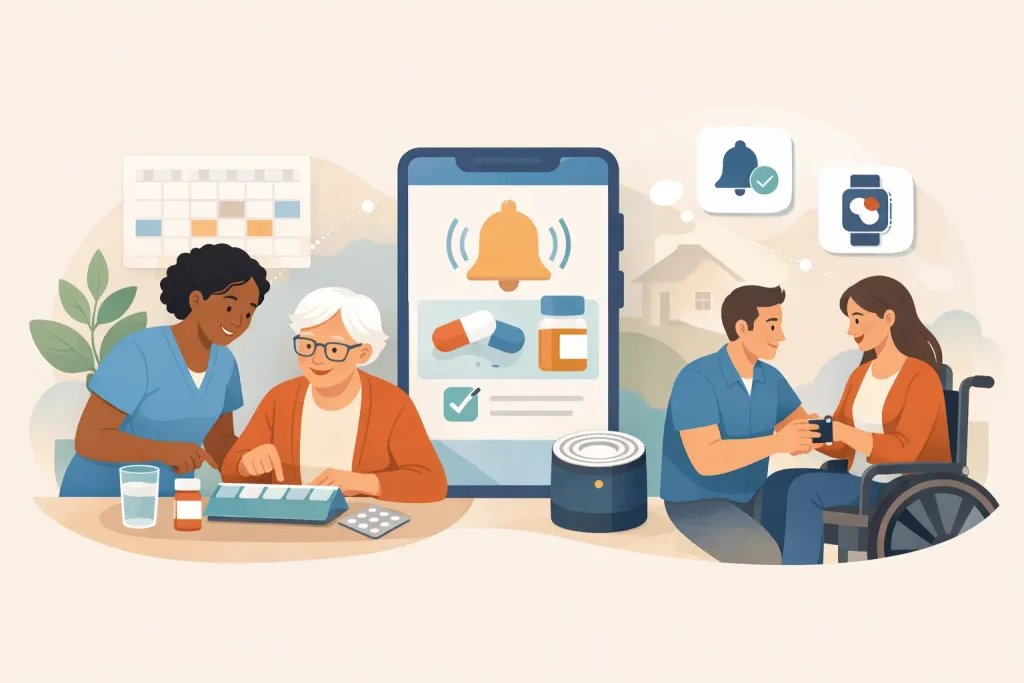
A missed dose can be worrying. A double dose can be more serious. For families helping an older parent, a loved one recovering from surgery, or an adult with disabilities, organizing medication reminders is often one of the small daily responsibilities that carries a great deal of weight.
The goal is not to make life feel overly scheduled or clinical. It is to create a calm, reliable routine that supports the person’s health while protecting their dignity and independence. The best system is usually the one that is easy to follow on an ordinary, busy day – not just when everyone is focused and rested.
Why medication reminders need a clear routine
Medication schedules can become complicated quickly. A person may take prescriptions at different times, need certain medications with food, use as-needed medicines under specific directions, or have recent changes after a hospital or rehabilitation stay. Memory changes, vision concerns, fatigue, and a disrupted daily routine can make it harder to keep track.
A clear reminder system gives families a shared point of reference. Instead of asking, “Did you take your pills?” several times a day, everyone can look at the same schedule or record. This can reduce confusion and make it easier to notice when a dose was delayed, missed, or needs follow-up.
Medication reminders are not the same as medication administration. Families and care providers should follow the individual’s care plan, the prescribing clinician’s instructions, and applicable New Jersey requirements. When there is any uncertainty about a medication, dose, interaction, or missed dose, the safest next step is to contact the pharmacist or prescribing provider rather than guessing.
Start by creating one accurate medication list
Before choosing alarms, apps, or pill organizers, begin with a current list. This is the foundation for every reminder system. Include prescription medications, over-the-counter medicines, vitamins, supplements, inhalers, eye drops, creams, and any medication taken only when needed.
For each item, record the medication name, strength, purpose if known, dosage instructions, timing, and the prescribing provider. Note special instructions such as “take with food,” “do not crush,” or “take at bedtime.” It also helps to write down the pharmacy’s phone number and any known allergies.
Review this list after every medical appointment, hospital discharge, emergency room visit, or medication change. Keeping an outdated list is one of the easiest ways for a well-intended reminder routine to become unsafe. If a medication has been discontinued, remove it from the active schedule promptly and confirm how any remaining supply should be handled.
Organizing medication reminders around real life
The most dependable schedules connect medication times to routines that already happen. For one person, that may be breakfast, lunch, dinner, and bedtime. For another, it may be when a home health aide arrives, after a morning shower, or before an evening television program.
Avoid making the system more complicated than necessary. If the directions allow flexibility, a reminder tied to a consistent daily activity may work better than a reminder set for a precise minute that is often missed. However, some medications must be taken at specific intervals or under special conditions. Those instructions should always take priority over convenience.
Use plain language. A schedule that says “morning” or “with breakfast” can be easier to understand than a page crowded with medical abbreviations. If several people provide support, place the schedule in an agreed-upon, private location and make sure everyone knows which version is current.
Choose reminders that match the person
A reminder tool should fit the individual’s abilities, preferences, and living situation. A smartphone alarm may be ideal for someone comfortable with technology. A large-print paper chart may be more useful for a person who does not use a phone or has limited vision. Some families use both: an alarm as the prompt and a written log as the confirmation.
Common options include a weekly pill organizer, a calendar or medication chart, phone alarms, smart speaker reminders, or an automated dispenser. Each has trade-offs. An organizer can make the week easier to view, but it must be filled carefully and stored safely. Digital reminders can be convenient, but they only help if the person hears the alert and can act on it. Automated dispensers may provide added structure, but they are not the right choice for every medication or every budget.
When choosing a tool, consider whether the person can open containers safely, read labels, hear alerts, and remember whether they have already taken a dose. The answer may change over time, especially after an illness, surgery, or hospitalization.
Create a simple way to document doses
A reminder tells someone it is time. Documentation helps answer whether the medication was actually taken. This distinction matters, particularly when family members share caregiving responsibilities.
A simple daily log can include the date, scheduled time, medication or medication group, and initials of the person who observed or confirmed the dose. Keep the format easy enough that it will be used consistently. If a dose is refused, delayed, or missed, write that down rather than leaving a blank that could be misunderstood later.
Do not try to solve a missed dose by doubling the next one unless a medical professional has specifically instructed you to do so. The appropriate response depends on the medication and how much time has passed. A pharmacist can often provide timely guidance.
Keep medications safe and easy to identify
Organization should support safety as well as timing. Keep medications in their original labeled containers unless they have been placed into a properly prepared organizer. Store them according to label directions, away from moisture, heat, children, pets, and anyone who should not have access.
It is also wise to avoid combining loose pills in one unlabeled container. Even if a family member recognizes them, another caregiver may not. Clear labels and a consistent storage location reduce the risk of mix-ups.
Check refill dates regularly. A reminder system cannot work well if a medication runs out on a weekend or during a busy week. Families may find it helpful to review supplies once a week and request refills before the last few doses are needed.
Include the person receiving care
Whenever possible, the individual should be part of decisions about their medication routine. Ask what feels helpful rather than assuming. Some people value a discreet alarm on their phone. Others prefer a family member to check in at a certain time. A respectful approach supports autonomy and can make the routine more likely to succeed.
This is especially important when a person feels frustrated by needing help. The conversation can focus on practical support: “What would make this easier for you?” Small choices, such as where the schedule is kept or what the reminder sounds like, can preserve a sense of control.
When extra support may help
Sometimes a family has created a thoughtful system and still feels stretched thin. That may happen when medication schedules are changing frequently, a caregiver works long hours, a loved one has mobility or memory challenges, or several daily tasks need attention at once.
In-home support can provide dependable medication reminders as part of a broader routine that may include meals, personal care, mobility assistance, safety supervision, companionship, and light housekeeping. For families across New Jersey, Comfort Zone Home Healthcare understands that reliable support is often about giving everyone more confidence in the day ahead.
The right level of help depends on the person’s needs and the directions provided by their healthcare team. A care plan can be adjusted as recovery progresses, routines change, or family caregivers need respite.
A medication reminder system does not have to be perfect to be helpful. It simply needs to be clear, current, and realistic enough to be followed with care. One well-organized routine can bring reassurance to the person receiving support and a little more breathing room to the people who love them.