
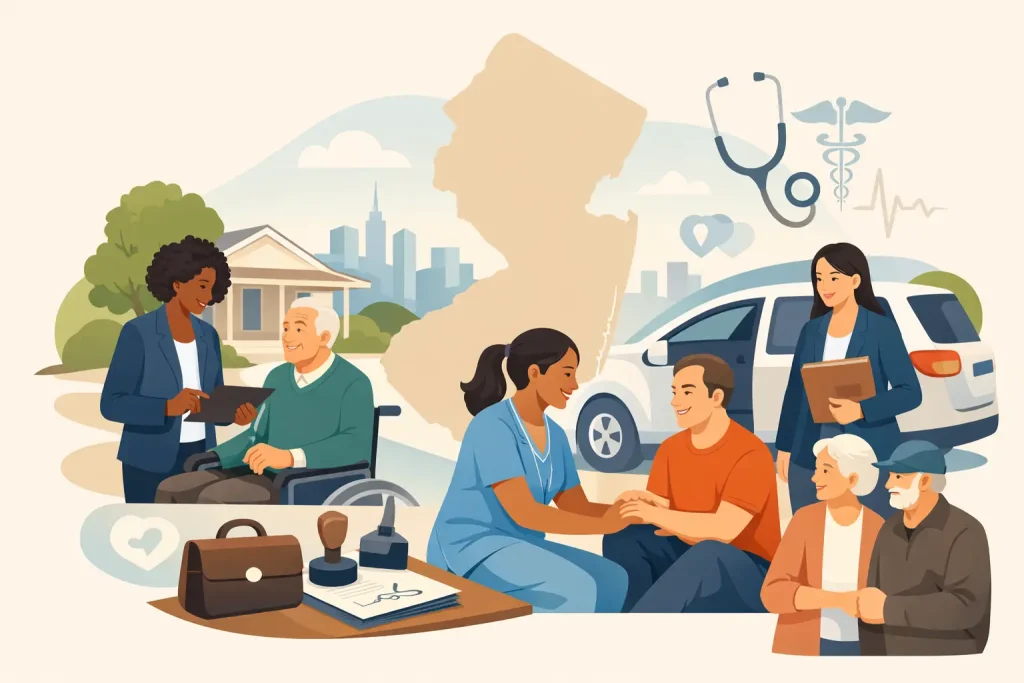
A healthcare document can become urgent without much warning. A parent may be preparing for surgery, a loved one may be leaving rehabilitation, or a family may need to complete paperwork while someone is recovering at home. In these moments, a New Jersey medical notary brings a practical service to the place where the signer feels safest and most comfortable.
Medical notarization is not only about placing a seal on a document. It is about helping people complete an important step with privacy, patience, and respect. For seniors, adults with disabilities, post-surgical clients, caregivers, and families facing a difficult decision, having a dependable mobile notary can remove one more burden from an already demanding day.
What a New Jersey Medical Notary Can Help With
A medical notary is a commissioned notary public who is experienced in meeting clients in healthcare-related settings, such as private homes, hospitals, rehabilitation centers, assisted living communities, skilled nursing facilities, or hospice settings. The role is the same as any other notary public: to verify the signer’s identity, confirm that they are signing willingly, and complete the notarization according to New Jersey requirements.
The difference is the setting. Medical situations often require more patience, thoughtful scheduling, and sensitivity to a client’s health, mobility, communication needs, and privacy. The signing may need to happen at a bedside, after a therapy appointment, or during a time when a family member or care team can be present if appropriate.
Healthcare-related documents that may require notarization can include powers of attorney, advance directive-related forms, estate planning documents, insurance paperwork, benefit forms, and other personal or financial documents connected to a person’s care. The exact requirements depend on the document. Some forms need witnesses, some need a notary, and some may require both.
A notary cannot decide which document a person should sign or explain the legal consequences of the document. That guidance should come from an attorney, healthcare provider, social worker, or the organization requesting the paperwork. A notary’s responsibility is to perform the notarization correctly and impartially once the document is ready.
Why Mobile Notarization Matters in Medical Situations
For a healthy person with reliable transportation, visiting a bank or office for notarization may be simple. For someone with limited mobility, chronic illness, recent surgery, or a serious medical condition, the trip can be exhausting or impossible. Family caregivers may also be managing medications, appointments, work schedules, and care responsibilities, leaving little time to search for an available notary.
Mobile service brings the appointment to the client. That may mean a kitchen table in Newark, a hospital room in Hudson County, a rehabilitation facility in Union County, or a family home elsewhere in New Jersey. The location is less important than creating a calm, appropriate setting where the signer can review the documents and complete the process without unnecessary stress.
This convenience does not mean the standards are relaxed. A mobile notary still needs to confirm the signer’s identity and willingness to sign. If a signer cannot meet the legal requirements for notarization at the time of the appointment, the notary must decline or postpone the notarization. While that can be disappointing, it protects the signer and the integrity of the document.
What a Notary Must Confirm Before Notarizing
Families sometimes assume that a relative’s diagnosis or hospital stay automatically prevents them from signing documents. That is not always the case. What matters during the appointment is whether the signer can communicate appropriately, understands that they are signing a document, and appears to be acting voluntarily.
A notary must also be satisfied with the signer’s identity. A current government-issued photo ID is usually the simplest option. If identification is unavailable or expired, do not assume the appointment cannot happen, but discuss the situation before scheduling. New Jersey notarial rules allow certain alternatives in some circumstances, and the proper approach depends on the facts.
A notary cannot notarize a signature if there are signs of pressure, coercion, or uncertainty about whether the signer wants to proceed. Family members may be present for support, but they should avoid answering every question for the signer or directing the signer’s decision. The appointment should preserve the signer’s voice and dignity.
How to Prepare for a Medical Notary Appointment
Good preparation helps an appointment move with less stress, especially when a client has limited energy or a narrow window between care needs. Before the notary arrives, confirm that the documents are complete and that the signing instructions are clear.
Bring together these essentials:
- The unsigned document or documents, unless the requesting organization has confirmed that an acknowledgment of an existing signature is permitted.
- Acceptable identification for the signer, preferably a current government-issued photo ID.
- Any required witnesses who are eligible and available at the scheduled time.
- Clear information about where the appointment will take place, including facility check-in procedures, room number, parking details, or visitor restrictions.
It is also wise to ask the attorney, healthcare provider, agency, or institution that supplied the form whether special witness language, identification rules, or signing instructions apply. A document can be notarized properly but still be rejected later if it was not completed according to the receiving organization’s separate requirements.
If the signer has hearing, vision, mobility, language, or communication needs, share that information when arranging the appointment. Small adjustments, such as allowing extra time, choosing a quieter room, or scheduling around medication and rest, can make a meaningful difference.
Special Considerations in Hospitals and Care Facilities
Hospitals, rehabilitation centers, nursing facilities, and assisted living communities often have visitor policies that affect mobile notary appointments. A facility may require advance approval, proof of identification, a health screening, or coordination with a nurse, social worker, discharge planner, or unit staff.
It helps to contact the facility before confirming the appointment. Ask whether notarization is allowed in the client’s room, whether a visitor must be on an approved list, and whether witnesses may enter at the same time. These details are especially important when a document needs multiple signatures.
Timing also matters. A client may be alert and comfortable in the morning but fatigued later in the day. Families should choose a time that supports the signer’s wellbeing rather than rushing to fit a convenient calendar slot. If the signer is receiving medication that affects alertness, or is too tired to communicate clearly, rescheduling may be the most respectful choice.
Understanding the Limits of a Medical Notary
A compassionate notary can make the process feel more manageable, but there are clear professional boundaries. A notary is not a lawyer, doctor, social worker, or financial adviser. They cannot assess legal capacity, determine whether a power of attorney is the right choice, advise a family on healthcare decisions, or choose witnesses on the client’s behalf.
Notaries also cannot backdate a notarization, notarize a blank document, or complete a certificate without the signer appearing as required. These safeguards exist for good reason. Healthcare-related documents can affect a person’s finances, housing, treatment preferences, and future care. Accuracy protects everyone involved.
When legal questions arise, families should pause and speak with the appropriate professional before moving ahead. When the document is ready and the signer is prepared, the notary can then provide the impartial verification the document requires.
Choosing a Dependable Mobile Notary in New Jersey
For medical situations, reliability is just as important as availability. Look for a notary who communicates clearly about appointment timing, travel, identification, witness needs, and any facility-related considerations. A professional should be comfortable explaining the notarization process in plain language without offering legal advice.
Compassion matters, too. A client may need a slower pace, a respectful introduction, or time to get comfortable before the signing begins. The best service does not treat a bedside appointment as a routine stop. It recognizes that the person signing may be navigating illness, recovery, grief, or a major family transition.
Comfort Zone Home Healthcare provides mobile medical and general notary services with that same client-centered approach, serving communities across New Jersey, including Essex, Union, Hudson, and Passaic counties.
Questions Families Often Ask
Can a medical notary visit someone at home?
Yes. Mobile notary service can be arranged for a private residence, provided the signer can meet the requirements for notarization and the documents are ready for signing.
Can a family member act as a witness?
It depends on the document and the organization that will receive it. Some documents have specific witness restrictions. Check the document instructions or ask the attorney or agency that prepared the form before the appointment.
What if the signer cannot sign their usual signature?
Do not assume the document cannot be notarized. The appropriate process depends on the signer’s circumstances and the document’s requirements. Explain the situation in advance so the notary can determine whether the appointment can proceed and what may be needed.
Can a notary come on short notice?
Availability varies, particularly for hospital and facility visits. Providing complete details early helps the notary assess scheduling and prepare for the location’s requirements.
When a family is handling medical paperwork, the goal is rarely just to finish a form. It is to make sure a loved one’s choices are treated with care. A respectful mobile notary appointment can give that moment the time, privacy, and attention it deserves.