
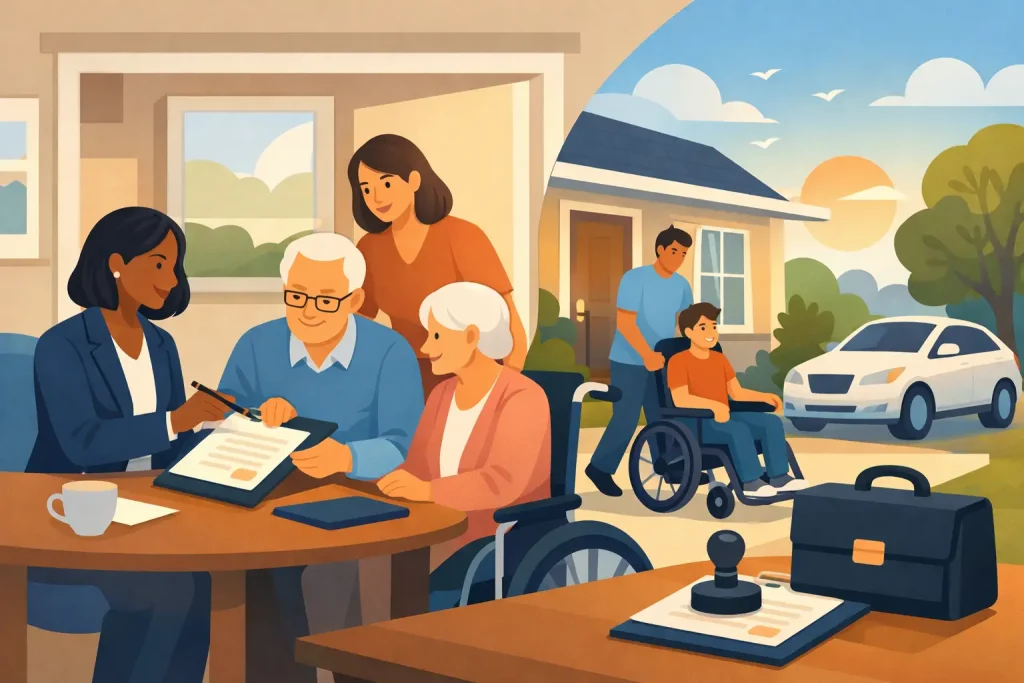
A document can feel urgent when a loved one is preparing for surgery, returning home from rehabilitation, moving into a care setting, or managing an unexpected legal or financial matter. In these moments, finding a notary public should not add unnecessary stress. A mobile notary can meet a signer where they are, helping families handle the notarization process with greater comfort, privacy, and dignity.
For many people, the convenience is only part of the value. When someone has limited mobility, relies on a wheelchair, is recovering from an illness, or needs familiar support nearby, traveling to a bank, office, or shipping store may be difficult. A professional mobile appointment allows the document to be handled in a setting that is more manageable for the signer and their family.
What a Notary Public Does
A notary public is a state-commissioned official who helps deter fraud in important document transactions. The notary verifies the identity of the person signing, observes the signature when required, and completes the notarial certificate and journal entry according to state requirements.
Notarization does not mean the notary approves the document, confirms that its terms are fair, or decides whether it will accomplish a legal goal. It also does not make a document automatically valid in every situation. The notary’s role is focused on the signing process: confirming identity, willingness, and awareness.
This distinction matters, especially when families are dealing with healthcare decisions, estate planning, housing matters, or financial paperwork. A notary may explain the type of notarial act being performed, but cannot provide legal advice, interpret legal language, or tell someone which document they should sign. Questions about a document’s meaning or legal effect should go to an attorney, the agency requesting the document, or another qualified professional.
When a Mobile Notary Public Can Be Helpful
A mobile appointment is often useful when the signer cannot easily travel or when timing and privacy matter. Families commonly request mobile notarization for advance directives, powers of attorney, healthcare forms, affidavits, real estate documents, school forms, and certain financial or insurance documents.
Healthcare-related paperwork deserves particular care. A person may be preparing documents before a planned procedure, following a hospital discharge, or arranging support after a change in health. In these situations, a calm visit at home, in a hospital, rehabilitation center, assisted living community, or other approved location can reduce the burden on the person signing.
It is worth remembering that each document may have its own rules. Some documents require witnesses in addition to notarization. Others may require a specific certificate, particular identification, or signing in front of certain people. A mobile notary can notarize the signature when the requirements are met, but the signer or document recipient should confirm any special instructions before the appointment.
What Must Happen at the Appointment
A successful appointment begins with the signer, not the paperwork. The notary must be able to communicate directly with the person whose signature is being notarized. That person must appear willing to sign and must understand, at a basic level, what they are signing.
Family members, caregivers, guardians, and friends can be an important source of practical support. They may help locate identification, arrange transportation within a facility, or provide a quiet setting. However, they should not pressure the signer or answer questions for them when the notary is determining whether the signer is acting voluntarily and with awareness.
The signer will generally need an acceptable, current government-issued photo ID. A driver’s license, state identification card, passport, or other qualifying identification may be appropriate depending on the circumstances. If identification is expired, missing, or unclear, contact the notary before the appointment rather than assuming the document can be completed.
The document should also be complete before signing. Blank spaces that affect the document’s purpose should be filled in, and the signer should not sign ahead of time unless the notary has specifically instructed them to do so. The notary needs to witness the signing or acknowledgment required by the certificate.
Capacity, Illness, and Sensitive Situations
Families sometimes worry that a loved one’s medical diagnosis will prevent notarization. A diagnosis alone does not automatically determine whether someone can sign. The key question is whether the person is alert enough to understand the general nature of the document and is signing of their own free will at that time.
A notary public is not a doctor and cannot evaluate or certify legal capacity. If the signer is unconscious, heavily sedated, unable to communicate, confused about the situation, or appears to be under pressure, the notary must decline the notarization. That can be disappointing when paperwork feels time-sensitive, but it protects the signer and the integrity of the document.
When possible, plan early. Completing appropriate legal and healthcare documents while a person is comfortable, alert, and able to make their wishes known can spare families from difficult decisions later. If a loved one’s ability to sign is uncertain, legal counsel can help identify the appropriate next steps.
How to Prepare for a Mobile Notary Visit
A little preparation can make the visit smoother and more respectful for everyone involved. Before scheduling, review the document for witness requirements and ask the receiving organization whether it has any special instructions. If witnesses are needed, arrange for eligible people to be present. In many cases, the notary may not serve as a witness, and a beneficiary or interested party may not be an acceptable witness.
Have the unsigned document ready, along with the signer’s identification. Choose a quiet, well-lit location with a stable surface for signing. For a hospital or care community visit, check visitor procedures and coordinate with staff when appropriate. The signer should have time to rest and should not feel rushed.
It is also helpful to share the appointment details honestly. Let the mobile notary know if the signer is in a hospital bed, has limited use of their hands, communicates in a different way, or needs an accessible meeting location. Practical accommodations may be possible, but the required personal appearance, identification, willingness, and awareness standards still apply.
Choosing a Service You Can Trust
When documents involve a loved one’s health, home, finances, or future wishes, reliability matters. Look for a commissioned New Jersey notary who communicates clearly about travel, identification, witness needs, fees, and what the appointment can and cannot accomplish.
Professionalism also includes knowing when not to proceed. A trustworthy notary will never overlook missing identification, ignore signs of pressure, or promise legal outcomes. That care may feel cautious, but it is part of protecting the people involved.
Comfort Zone Home Healthcare provides mobile medical and general notary services for individuals and families throughout New Jersey, including those who need a more convenient appointment at home or in a care setting. The goal is not simply to complete a stamp and signature, but to make an important task feel more manageable during a demanding time.
A well-prepared mobile notary visit can bring a measure of calm to paperwork that might otherwise feel overwhelming. When the signer is ready, the document is complete, and the right people are present, families can focus less on logistics and more on the person at the center of the decision.