
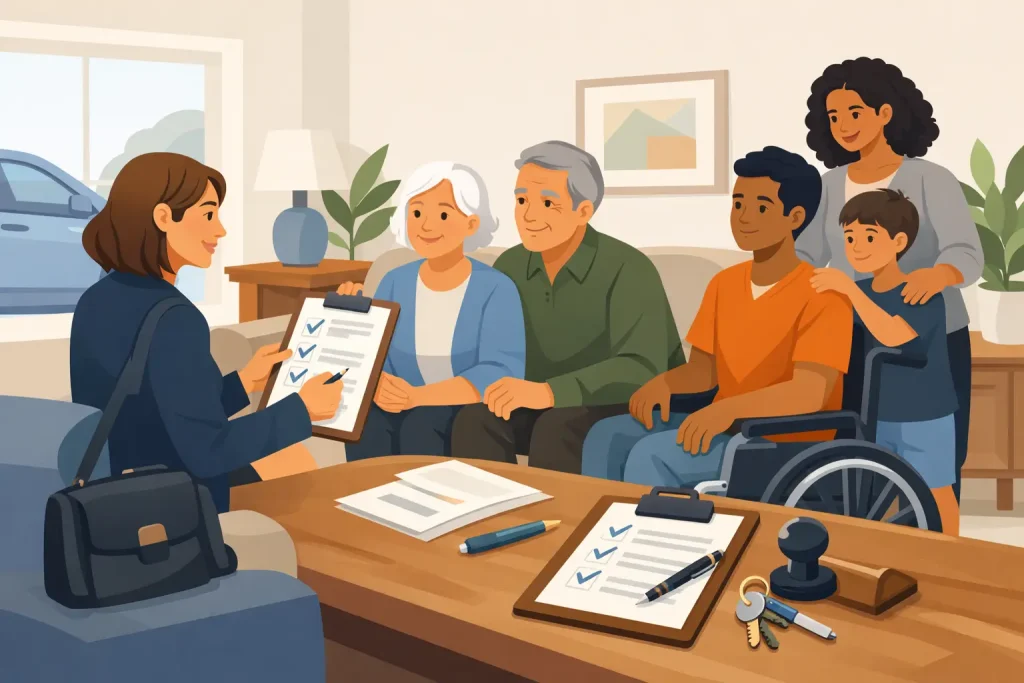
A medical notary appointment often comes up during a stressful moment: a hospital discharge, a change in care needs, a move to rehabilitation, or a decision that cannot wait. A clear medical notary appointment checklist helps families prepare without adding pressure to a loved one who may already be tired, ill, or overwhelmed.
Mobile notarization can bring needed convenience to a home, hospital, nursing facility, rehabilitation center, or other care setting. Still, a notary’s role is specific. The notary verifies identity, confirms that the signer appears willing to sign, and completes the required notarial certificate. A notary cannot explain legal documents, decide whether a person has legal capacity, or tell a family what a document means. Preparing ahead protects everyone involved and helps the appointment move forward with dignity.
Medical Notary Appointment Checklist: Start With the Document
Before scheduling a visit, look carefully at the document that needs notarization. Confirm that it is complete and ready for signature. The signer should not sign it in advance unless the notary or document instructions specifically say otherwise. In most cases, the notary needs to witness the signature or acknowledgment in person.
Review the document for blank spaces, missing pages, and incomplete dates. A notary may be unable to proceed if a document appears unfinished or has open sections that could later be filled in. If a form includes instructions from an attorney, healthcare provider, insurance company, court, or government agency, follow those instructions closely.
Common healthcare-related documents that may require notarization include powers of attorney, advance directives, healthcare proxies, consent forms, affidavits, insurance paperwork, and certain benefit or facility documents. Requirements can differ by document type. Some documents need witnesses in addition to notarization, while others require witnesses but not a notary. Check the document language before the appointment so the right people are present.
Confirm Who Will Sign and Their Willingness
The person signing must be physically present for the notarization. Family members, caregivers, facility staff, or legal representatives cannot sign for someone else unless they have the proper legal authority and the document permits that type of signature.
A notary must be satisfied that the signer understands they are signing a document and is doing so voluntarily. This does not mean the signer needs to understand every legal detail in the paperwork. However, the signer should be alert enough to communicate a basic awareness of what they are doing and should not appear pressured by anyone in the room.
For a loved one with dementia, cognitive changes, medication-related drowsiness, or a serious medical condition, timing matters. Consider scheduling at a time of day when the person is typically most awake, comfortable, and able to communicate. If the signer is in pain, heavily sedated, confused, or unable to respond, the notary may need to postpone the appointment. This can feel disappointing, but it helps safeguard the signer and the validity of the notarization.
It is also wise to give the signer space to answer the notary directly. Supportive family members are valuable, especially when helping a loved one feel calm, but the notary may ask others to step out briefly or reduce interruptions while confirming willingness.
Bring Acceptable Identification
Identification is one of the most common reasons a notary appointment is delayed. The signer should have a current government-issued photo ID available, such as a driver’s license, non-driver state ID, passport, or another form of identification accepted under applicable New Jersey notary rules.
Check the ID before the appointment. It should be readable, unexpired when required, and match the name on the document as closely as possible. A difference such as a maiden name, middle initial, or suffix may need clarification. Bring any supporting paperwork that helps explain a name change, but understand that the notary must still follow state requirements for identifying the signer.
If your loved one no longer drives or does not have current identification, do not assume a family member can simply confirm their identity. In some circumstances, a notary may be able to use credible witnesses or another permitted method, but this depends on state law and the notary’s ability to meet identification standards. Ask about the situation when arranging the appointment rather than waiting until the notary arrives.
Arrange Witnesses When the Document Requires Them
Witness requirements deserve attention because they are separate from notarization. A notary may sometimes serve as a witness if permitted, but this should never be assumed. The notary’s primary responsibility is to perform the notarial act correctly.
If witnesses are needed, choose adults who meet the requirements listed in the document or provided by the organization requesting it. Some forms restrict who may serve as a witness. For example, a beneficiary, an agent named in the document, a close family member, or a healthcare provider may not qualify under certain rules.
Make sure witnesses understand that they need to be present during the signing. They should bring identification if requested and should not sign ahead of time. If the appointment is taking place in a hospital or care facility, confirm visitor access and witness availability before the scheduled time.
Prepare a Comfortable Signing Space
A medical setting does not need to look like an office for a notarization to be handled professionally. It does need to offer enough privacy, light, and space to review identification and sign documents safely.
Choose a quiet area whenever possible. A bedside table, tray table, dining table, or clipboard may be enough, as long as the signer can comfortably hold and sign the document. Have pens available, including a pen that is easy to grip for someone with arthritis, weakness, tremors, or limited hand mobility.
For a signer who cannot physically sign in the usual way, do not try to solve the issue at the last minute. A signature by mark, a signature by direction, or another alternative may be possible in certain circumstances, but the process has specific requirements. Discuss the situation in advance with the notary and, when appropriate, the attorney or organization that prepared the document.
Privacy matters too. Medical information should not be shared more broadly than necessary. Keep unrelated visitors out of the signing area, and have only the required participants present. A calm environment can help the signer feel respected rather than rushed.
Share Key Details Before a Mobile Visit
When requesting a mobile notary, provide practical information upfront: the location, room or unit number if applicable, the type of document, the number of signers, whether witnesses are needed, and any mobility or communication considerations. Let the notary know if the signer is in a hospital, rehabilitation center, skilled nursing facility, assisted living community, or private residence.
Facility policies can affect the appointment. Some locations require visitor check-in, proof of identification, limited visiting hours, or approval from nursing staff. A signer may also have therapy, meals, medical rounds, or rest periods that should be considered when selecting a time.
If the document is urgent, be clear about the deadline. However, urgency does not change the notary’s legal duties. A careful appointment is better than a rushed signature that may later be questioned.
Know What a Medical Notary Cannot Do
Families often turn to a notary because they need help quickly, and it is understandable to have questions. A notary can explain the notarial process, but cannot provide legal advice, choose the correct document, interpret a power of attorney, determine mental capacity, or pressure a person to sign.
If there is disagreement among relatives, uncertainty about a loved one’s wishes, or concern that someone is being influenced, pause and seek guidance from a qualified attorney, social worker, case manager, or healthcare professional as appropriate. The notarization itself should never become a substitute for a difficult but necessary family conversation.
For families across New Jersey, preparing these details ahead of time can make a mobile visit feel less like another task during a crisis and more like a respectful step toward putting needed plans in place. Comfort Zone Home Healthcare approaches medical notarization with the same care we bring to supporting clients and families at home: patiently, professionally, and with respect for each person’s dignity.
A well-prepared appointment gives your loved one time to be heard, allows the notary to do their work properly, and helps your family focus on what matters most – comfort, care, and clear next steps.