
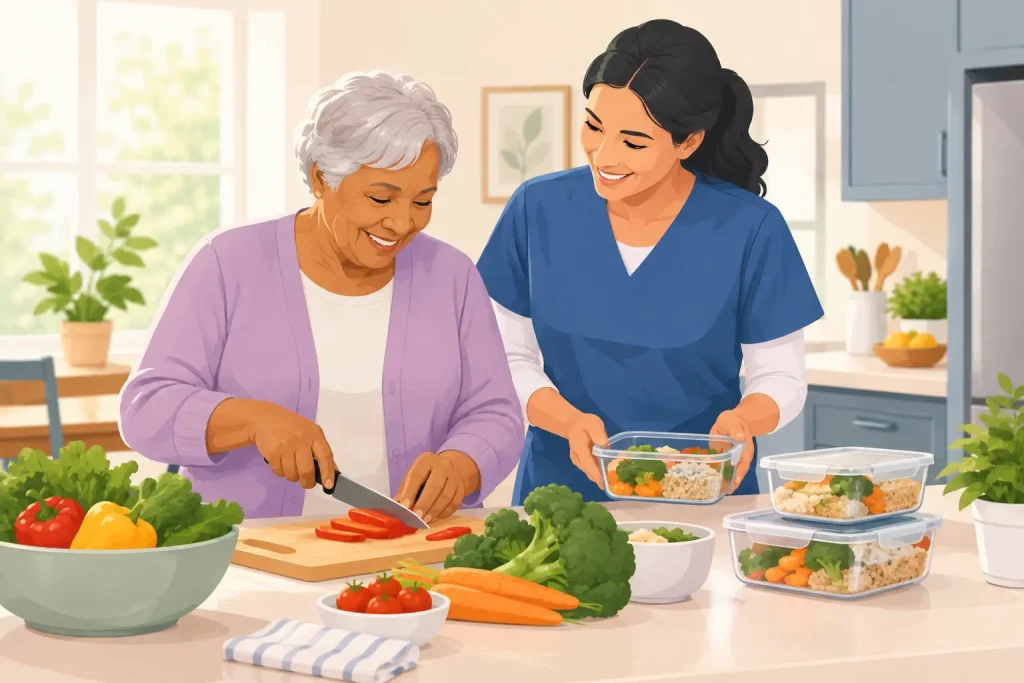
A refrigerator full of food does not always mean an older adult is eating well. After a hospital stay, a change in mobility, medication side effects, or simple fatigue can make shopping, cooking, and cleaning up feel overwhelming. Thoughtful meal preparation for seniors at home can help turn daily meals into a reliable source of nourishment, comfort, and independence.
For families, the goal is rarely to create perfect meals or follow a complicated menu. It is to make eating easier, safer, and more enjoyable while respecting the person’s routines, preferences, culture, and ability to do as much as possible for themselves.
Start With the Person, Not the Grocery List
A good meal plan begins with a conversation. Ask what foods the person enjoys, when they are most hungry, which foods are difficult to chew or swallow, and whether certain meals cause discomfort. A senior who has always preferred a light breakfast may not suddenly enjoy a large morning meal simply because it looks healthy on paper.
Health needs also shape the plan. Some people need to manage sodium, blood sugar, fluid intake, kidney disease, heart conditions, food allergies, or unintended weight loss. Others may have dental concerns, Parkinson’s disease, dementia, or reduced hand strength that affects their ability to use utensils and open containers.
When a physician, dietitian, speech-language pathologist, or other clinician has provided dietary instructions, those instructions should guide the plan. This is especially important for clients returning home after surgery or a hospital or rehabilitation stay. Home caregivers can support the routine, but specialized dietary decisions should be made with the appropriate health professional.
Create a Realistic Meal Routine
A dependable routine can reduce stress for both the senior and the family member coordinating care. Rather than preparing a different full meal every day, choose a manageable rhythm for shopping, cooking, portioning, and checking what is available.
Many households find that preparing two or three familiar dishes at once works better than cooking every day. A pot of low-sodium soup, baked chicken, roasted vegetables, oatmeal, eggs, fruit, yogurt, and whole-grain toast can become several simple meals without feeling repetitive. The right approach depends on appetite, storage space, dietary needs, and whether the person enjoys leftovers.
Smaller meals and nutritious snacks can be helpful when a person has a limited appetite. Cheese and crackers, yogurt with fruit, peanut butter on toast, a hard-boiled egg, or a smoothie may feel more manageable than a large plate of food. For someone who is losing weight or eating very little, families should speak with a healthcare provider instead of assuming that reduced intake is a normal part of aging.
Make Meals Easy to Serve
The best prepared meal is one the person can safely access and eat. Store portions in lightweight containers that are easy to open. Label them with the meal name and date, and include simple reheating directions when needed. Avoid filling containers too full, especially for a person with shaky hands or limited grip strength.
Keep commonly used items within reach. Plates, cups, utensils, and shelf-stable snacks should not require climbing, bending deeply, or lifting heavy items. If a senior uses a walker or wheelchair, consider how they will carry food safely from the kitchen to the table. A stable tray or a seated eating area near the kitchen may help.
Balance Nutrition With Familiar Comfort
Nutritious eating does not need to mean unfamiliar food. Often, small changes to favorite meals are more sustainable than an entirely new diet. A family recipe can be prepared with less salt, leaner protein, more vegetables, or baked rather than fried ingredients while still feeling like a meal the person knows and enjoys.
Aim to include protein, fiber-rich foods, fruits or vegetables, and adequate fluids throughout the day, unless a clinician has given different guidance. Protein can be especially helpful for recovery, strength, and maintaining muscle mass. Options such as eggs, fish, chicken, beans, Greek yogurt, tofu, and nut butters can be adapted to personal taste and chewing ability.
Texture matters as much as nutrition for many seniors. Dry meats, tough raw vegetables, crusty bread, or sticky foods can be difficult for someone with dental issues or swallowing concerns. Soft-cooked vegetables, tender proteins with sauce, soups, stews, mashed foods, and cut fruit may be easier choices. If coughing, choking, a wet-sounding voice after meals, or frequent chest infections are concerns, seek clinical guidance promptly rather than changing food textures without professional input.
Hydration also deserves attention. Older adults may not feel thirsty as often, and certain medications can increase dehydration risk. Offering water regularly, along with soups, milk, herbal tea, or other appropriate beverages, may help. Fluid recommendations can vary for people with heart or kidney conditions, so follow the person’s medical guidance.
Food Safety Is Part of Senior Meal Preparation
Foodborne illness can be more serious for older adults, particularly those with weakened immune systems or chronic health conditions. Safe handling is not an extra step. It is part of caring for someone well.
Wash hands before preparing food, keep raw meat separate from ready-to-eat foods, and refrigerate perishable items promptly. Leftovers should be cooled and stored in shallow containers, then reheated thoroughly before serving. When in doubt about how long food has been sitting out or whether a leftover is still safe, it is better to discard it.
Check refrigerator temperatures, expiration dates, and food labels regularly. Families should also look for items that are difficult to open, oversized packages likely to spoil, or foods that require more preparation than the senior can safely manage alone.
When Meal Preparation for Seniors at Home Needs More Support
Meal preparation can become difficult gradually. A senior may begin skipping meals, relying only on snacks, forgetting food on the stove, or losing interest in eating. A family caregiver may be trying to manage meals between work, parenting, medical appointments, and their own responsibilities. These changes are not signs of failure. They are signals that more support may be useful.
In-home care can provide practical help while preserving dignity. A trained caregiver may assist with grocery lists, meal planning, simple food preparation, kitchen cleanup, serving meals, and companionship during mealtimes. They can also provide reminders and observe changes such as poor appetite, unopened meals, difficulty chewing, or reduced fluid intake that should be shared with the family or care team.
The right level of help depends on the individual. One person may only need assistance preparing a few meals each week. Another may need daily support because of mobility limitations, memory concerns, recovery needs, or a developmental disability. The aim is not to take over tasks unnecessarily. It is to provide reliable support that helps the person remain safe and involved in their own routine.
For New Jersey families, Comfort Zone Home Healthcare understands that care at home includes the everyday details that can have a meaningful effect on well-being. A warm meal, a clean kitchen, and a familiar routine can offer reassurance to both the person receiving care and the family supporting them.
A simple first step is to notice what happens around mealtime this week. Is food being eaten, enjoyed, and handled safely? From there, small adjustments can make home feel more comfortable, one nourishing meal at a time.