
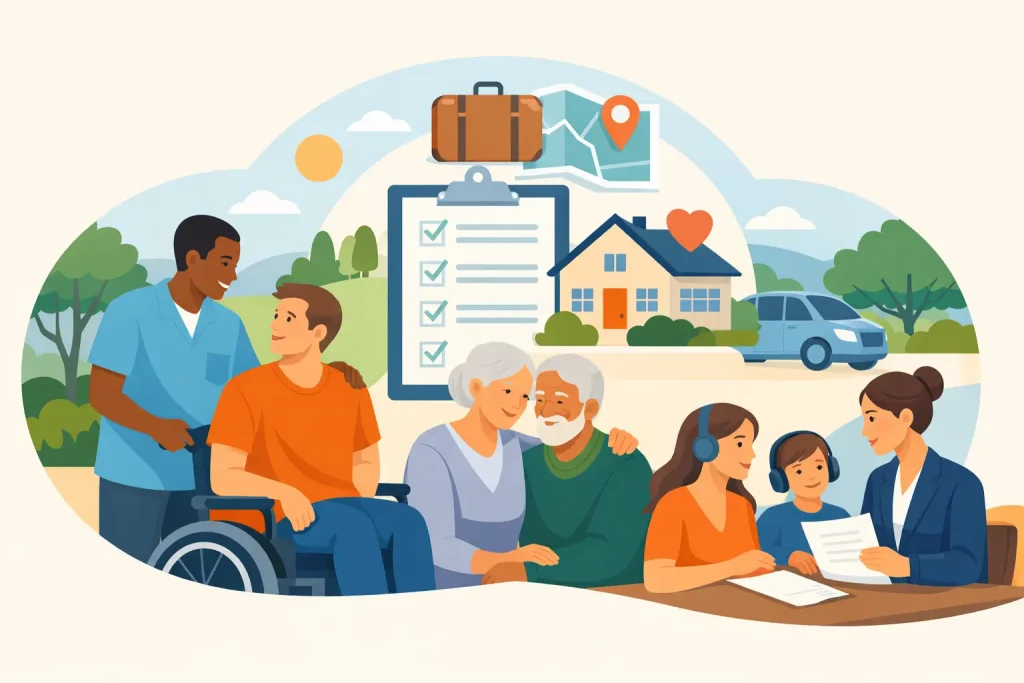
A caregiver may be the person who knows every routine, every calming strategy, and every small sign that something is not quite right. That level of care is meaningful, but it can also be exhausting. This guardian guide to respite planning is designed to help families create dependable time away from caregiving while keeping the individual’s comfort, safety, and preferences at the center.
Respite is not a sign that a guardian is stepping back from responsibility. It is a planned form of support that can help a caregiver rest, attend appointments, work, spend time with other family members, or simply return with more energy. When respite is thoughtfully arranged, it can also give the person receiving support an opportunity to build relationships, practice independence, and enjoy a change of pace.
Why respite planning deserves careful attention
Many families wait until a crisis to look for respite. A caregiver becomes ill, an unexpected obligation arises, or fatigue has reached a point where daily routines feel difficult to manage. Emergency coverage is sometimes necessary, but it leaves little room to identify the right provider, explain needs clearly, or help the individual adjust.
Planning ahead creates choices. Guardians can take time to find support that respects the person’s communication style, preferences, health needs, and usual schedule. They can begin with shorter visits and adjust the plan as trust grows. For individuals with developmental disabilities, consistency can be especially helpful when changes in routine are stressful.
The right schedule depends on the household. One family may benefit from a few hours each week for errands and rest. Another may need regular weekend coverage, overnight support, or additional help during a parent’s medical recovery. There is no single amount of respite that works for everyone. The goal is to create a realistic plan before caregiver strain becomes a crisis.
Start with the person, not the open time on the calendar
Respite works best when it is person-centered. Rather than beginning with, “When can someone come?” start with, “What will help this person feel safe, comfortable, and engaged while I am away?” That question shapes every practical decision that follows.
Think about the individual’s best times of day, favorite activities, sensory needs, food preferences, mobility needs, communication methods, and reactions to unfamiliar people or places. Some people enjoy community outings, while others are more comfortable with quiet support at home. A plan that looks convenient on paper may not be successful if it ignores those details.
Create a clear support profile
A short, practical support profile gives respite staff the information they need without requiring them to guess. It should be easy to update and kept where the provider can access it during each visit. Include the person’s preferred name, communication needs, daily routine, interests, foods to avoid, allergies, mobility or transfer guidance, and any known triggers or calming strategies.
Also explain what a good day looks like. For example, a person may enjoy music while preparing a snack, prefer advance notice before leaving the house, or need quiet time after a community activity. These details help a respite worker offer support that feels familiar and respectful rather than overly clinical.
For health and safety, provide current emergency contacts, physician information when appropriate, medication instructions, and clear guidance about when to contact the guardian or seek emergency assistance. If the individual has a behavior support plan, seizure protocol, or other specialized instructions, make sure the respite provider understands the plan and has the information needed to follow it.
Decide what respite should accomplish
Respite has two people to support: the individual receiving care and the caregiver. Naming the purpose of the service can make planning more effective.
A guardian may need uninterrupted time for sleep, a work shift, therapy, medical appointments, or caring for another child. The individual may need companionship, support with daily living activities, a chance to participate in the community, or practice with routines outside the usual caregiver relationship. Both sets of needs matter.
Be specific about what support is expected during the visit. This may include supervision, meal preparation, personal care assistance, mobility support, medication reminders, community participation, or help practicing daily living skills. It is also helpful to identify what is not expected. Clear boundaries protect the individual, the family, and the care professional.
Understand the funding and scheduling options
New Jersey families may access respite in different ways, including private pay, agency services, and programs connected to the Division of Developmental Disabilities, depending on the individual’s eligibility and approved service plan. If a person receives DDD services, the guardian should review the current plan with the support coordinator to understand the authorized respite services, approved hours, and any requirements for using them.
Authorization is not the same as availability. A family may have approved hours but still need to coordinate scheduling with a provider. It is wise to request support before a major need arises, especially around holidays, school breaks, family events, or planned travel. If regular coverage is needed, ask whether the agency can provide consistent staffing and what happens if the usual worker is unavailable.
Private-pay respite may offer more flexibility for families whose needs fall outside an approved plan or who need additional hours. The trade-off is cost. Families should ask for clear information about rates, minimum visit lengths, cancellation policies, and any different pricing for evenings, weekends, or overnight care.
Choose a provider with questions that matter
Trust is built through clear communication, professional standards, and follow-through. A warm first conversation matters, but guardians should also ask practical questions about how care is organized.
Ask how staff are screened and trained, whether the provider has experience with the individual’s specific support needs, and how the agency handles call-outs or schedule changes. Find out who to contact after hours and how concerns are documented and addressed. If personal care, mobility assistance, health-related routines, or behavioral supports are needed, confirm that the staff assignment and training match those needs.
It can also help to ask how the provider learns about the person beyond a service checklist. Respectful respite is not simply watching someone while a caregiver is away. It involves listening to the individual, encouraging choice, preserving dignity, and supporting a meaningful routine.
Comfort Zone Home Healthcare provides respite and other DDD support services with this person-centered approach for families throughout New Jersey. Families should still discuss their individual needs directly, because the best plan depends on the person, the authorized services, and the schedule required.
Make the first visits gradual when possible
The first respite visit does not need to be a full day. A shorter introduction can help everyone learn what works. The guardian may stay nearby at first, then leave for a brief errand before moving to longer periods of coverage. This approach is particularly useful when the individual has had limited experience with new support staff or finds transitions difficult.
During early visits, keep the routine simple. Choose familiar activities, avoid overpacking the schedule, and give the staff member time to build rapport. A successful visit may be as straightforward as preparing lunch together, taking a walk, listening to favorite music, or completing a preferred activity at home.
After each visit, have a brief check-in. Ask what went well, what seemed difficult, and whether any preferences or routines should be added to the support profile. Feedback should be a normal part of the relationship, not something saved only for problems.
Build a backup plan before you need one
Even a well-organized schedule can change. Illness, weather, transportation issues, and staff emergencies happen. A backup plan does not remove every concern, but it reduces uncertainty.
Keep emergency contacts current and identify at least one alternate person who understands the individual’s needs. Ask the respite provider how replacement coverage is handled and how much notice the family will receive if a change is necessary. If consistency is essential, discuss that openly from the beginning rather than assuming it will be available.
Guardians should also prepare essential documents and instructions in one secure, easy-to-find place. If healthcare forms or other documents require notarization, arranging a mobile notary in advance can prevent another time-sensitive task from adding pressure during an already busy period.
Let respite become part of sustainable care
Some caregivers feel guilty using respite, especially when they have been the primary support person for years. But rest is not separate from care. It helps make care safer, steadier, and more sustainable over time.
A good respite plan should leave both people feeling respected: the individual has been supported in a way that reflects who they are, and the guardian has had space to meet their own needs without constant worry. Begin with one manageable visit, keep communication open, and allow the plan to grow at a pace that feels right for your family.