
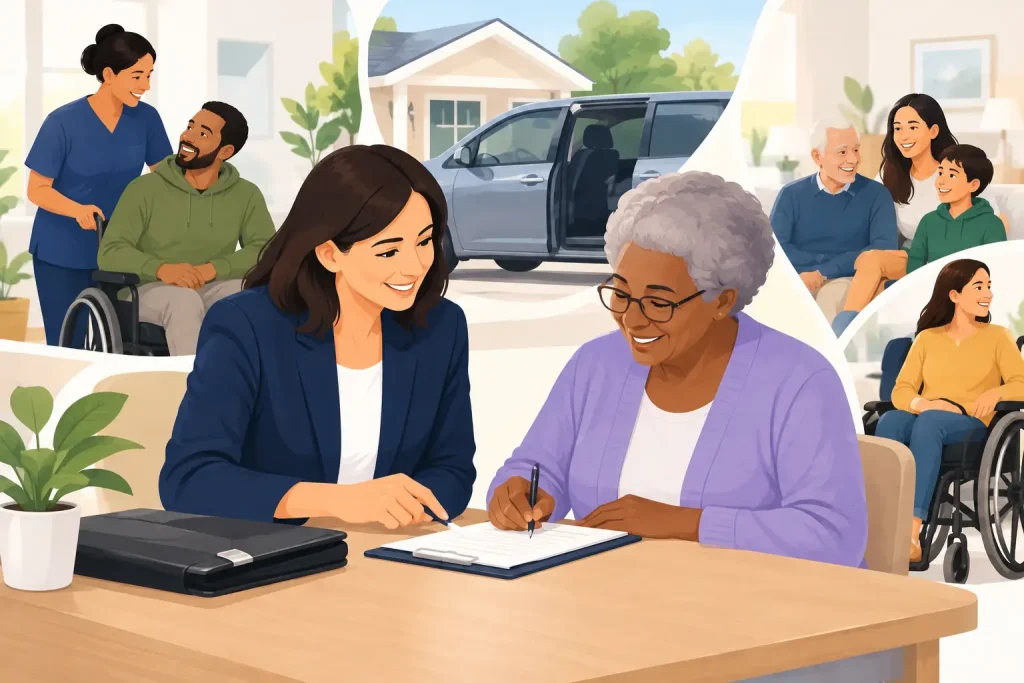
A hospital discharge may be planned for the afternoon, but a power of attorney still needs to be signed. An older adult may be comfortable at home but unable to travel to an office. A family caregiver may have a document that cannot wait until everyone’s schedules align. In moments like these, a mobile notary can bring an essential service directly to the person who needs it.
Mobile notarization is about more than convenience. For seniors, people recovering from surgery, individuals with disabilities, and families managing complex care needs, it can remove a stressful barrier from an already demanding day. The right support helps people handle important paperwork with privacy, dignity, and appropriate care.
What a Mobile Notary Does
A mobile notary is a commissioned notary public who travels to a mutually agreed location rather than requiring the signer to come to an office. The appointment may take place at a private residence, hospital room, rehabilitation center, assisted living community, workplace, attorney’s office, or another appropriate setting.
The notary’s role is to verify the identity of the signer, confirm that the person appears willing to sign, and complete the required notarial certificate. Depending on the document, the notary may administer an oath or affirmation, witness an acknowledgment, and apply the official stamp or seal as required.
A notary does not decide whether a document is fair, legal, or appropriate for someone’s individual circumstances. They cannot explain legal consequences, choose documents for a client, or pressure someone to sign. When legal guidance is needed, the signer or family should consult an attorney before the appointment.
That distinction matters, especially when documents involve estate planning, property, healthcare decisions, guardianship, or finances. A careful mobile notary provides a professional verification service, while legal and medical professionals address the advice and decisions behind the paperwork.
When a Mobile Notary Is Especially Helpful
Traveling to a bank, law office, or shipping center may be a simple errand for some people. For others, it can mean arranging wheelchair transportation, coordinating around medical appointments, asking a caregiver to take time off, or managing pain and fatigue. A mobile appointment can be a more practical choice when travel would create unnecessary strain.
Mobile notarization is often helpful after a hospitalization or during rehabilitation. Families may be organizing insurance documents, healthcare directives, financial paperwork, or forms connected to a new care arrangement. A notary who comes to the care setting can reduce one more logistical burden during a transition that already requires many decisions.
It can also be useful for people receiving care at home. Someone with limited mobility, a chronic condition, or a short-term recovery need may prefer to complete paperwork in familiar surroundings. Being at home can make the process less overwhelming, provided the signer is alert, willing, and able to communicate their understanding of what they are signing.
For family caregivers, the benefit is often time and coordination. Instead of moving a loved one through traffic and waiting rooms, the family can arrange an appointment around meals, therapy, nursing visits, or a time of day when the signer feels most comfortable.
Documents That May Need Mobile Notarization
The documents vary widely. Some are connected to healthcare and family planning, while others are routine personal or business matters. Common examples include:
- Advance directives, healthcare proxies, and other healthcare planning forms
- Powers of attorney and certain financial authorization documents
- Estate planning documents prepared by an attorney, such as wills or trusts
- Real estate, vehicle, school, employment, and business paperwork
- Affidavits, sworn statements, travel permissions, and benefit-related forms
Not every document requires notarization, and some documents require witnesses in addition to a notary. Requirements can differ based on the document, the organization receiving it, and the state involved. It is wise to confirm the requirements before scheduling so the appointment goes smoothly.
For example, a document may need two disinterested witnesses, meaning people who are not named in the document or who do not stand to benefit from it. A notary may be able to notarize the signer’s signature but may not automatically serve as a witness. Clarifying these details ahead of time can prevent a frustrating second appointment.
How to Prepare for a Mobile Notary Appointment
A little preparation can protect the signer’s time and make the visit calmer for everyone involved. The signer should have an acceptable, unexpired form of identification available, such as a driver’s license, state identification card, passport, or another ID permitted under applicable rules. If identification is unavailable, ask about options before the appointment rather than assuming a family member can simply confirm the person’s identity.
The document should be complete before the notary arrives, with any blank spaces addressed according to the document instructions. A notary generally cannot notarize a signature on an incomplete document. However, the signature itself should usually remain unsigned until the notary is present, unless the document instructions specifically permit otherwise.
It also helps to arrange a quiet, well-lit place with a stable surface for signing. In a hospital or facility, families should coordinate with staff so the visit does not conflict with medical treatment, therapy, rest, or safety procedures. If the signer uses glasses, hearing aids, a communication device, or mobility equipment, having those items ready supports a more comfortable experience.
Most importantly, give the signer room to speak for themselves. A notary must be satisfied that the person is signing voluntarily. Family members can assist with logistics, but they should not answer every question for the signer, rush the process, or create pressure around the decision.
Capacity, Privacy, and Respect in Care Settings
When a signer is elderly, ill, or living with a cognitive or developmental disability, families may understandably worry about whether notarization is possible. There is no single answer based solely on a diagnosis, age, or physical limitation. The key concern is whether the signer appears aware of the document and is acting willingly at the time of signing.
A person may have trouble holding a pen, speak slowly, use a communication aid, or need extra time and still be able to participate in notarization. Physical disability alone does not prevent someone from signing or acknowledging a document. At the same time, if a person is heavily sedated, confused, unable to communicate, or appears to be under pressure, the notary may need to decline the notarization.
This can feel disappointing when a family is facing deadlines, but it protects everyone involved. A responsible notary does not simply complete a stamp because relatives are present or paperwork is urgent. Respecting the signer’s independence and rights is part of the service.
Privacy also deserves attention. Healthcare documents can contain sensitive personal information. Only the people needed for the appointment should be present when possible, and the signer should have an opportunity to communicate without someone else speaking over them. In a care setting, thoughtful coordination helps preserve both confidentiality and comfort.
Choosing a Mobile Notary Service in New Jersey
Reliability matters when documents are tied to a discharge plan, a legal appointment, a property closing, or a family decision. Look for a commissioned notary who communicates clearly about availability, travel fees, identification requirements, witness needs, and the kinds of documents they can handle.
For healthcare-related appointments, experience working respectfully around clients, families, and care teams is especially valuable. The visit should feel organized but never rushed. A compassionate professional understands that a person may need a few extra minutes to get settled, ask for clarification from their attorney, or take a break.
Comfort Zone Home Healthcare provides general and healthcare-related mobile notary services throughout New Jersey, with particular support for families and clients who benefit from service in the place they are receiving care. This approach reflects a simple belief: important paperwork should not become another obstacle to comfort, safety, or independence.
Before confirming a visit, be prepared to share the appointment location, the number of documents, whether witnesses are required, and any access considerations. Let the notary know if the signer is in a hospital, rehabilitation center, or residence with visitor procedures. Clear information helps everyone plan respectfully.
A document may be only a few pages long, but the decision behind it can carry real weight. Bringing notarization to a person’s home or care setting creates space for that moment to be handled with patience, privacy, and the dignity every signer deserves.