
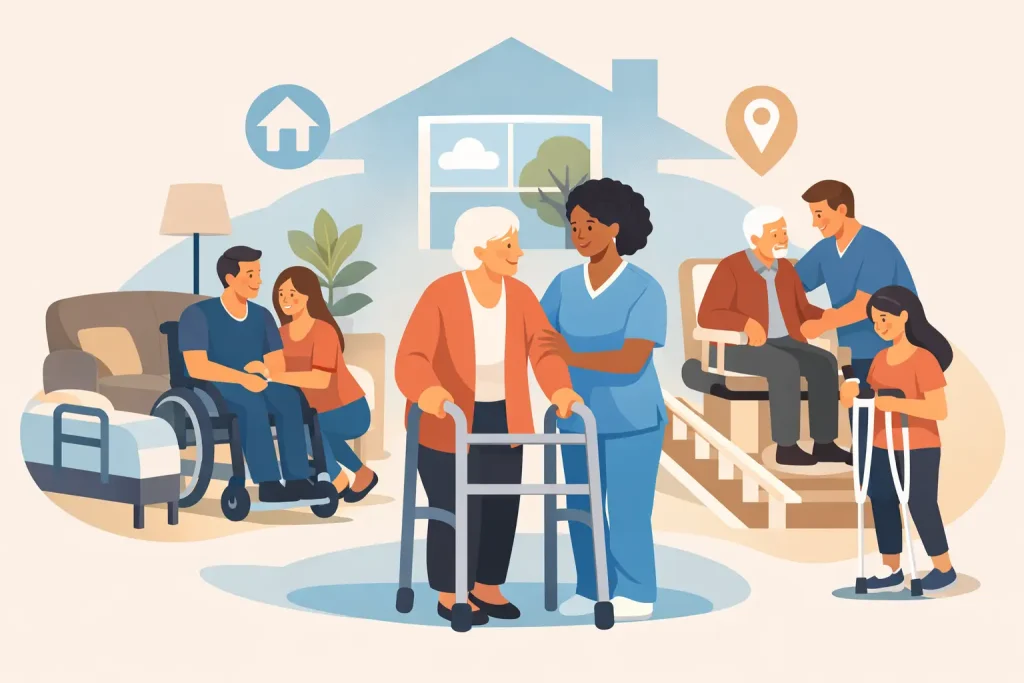
A short walk from the bedroom to the bathroom should not feel like the hardest part of the day. Yet for many seniors, adults with disabilities, and people recovering after surgery, those few steps can bring real worry. Mobility assistance at home helps turn daily movement into something safer, calmer, and more manageable without taking away dignity or independence.
For families, this often starts with a simple question: what kind of help is actually needed? Some people need a steady arm when standing up. Others need reminders to slow down, clear pathways, or support getting in and out of bed, a chair, or the shower. The right answer depends on the person, the home, and how movement affects daily life.
What mobility assistance at home really means
Mobility support is not only about preventing falls, though that is a major part of it. It is also about helping someone move through the day with less strain, less fear, and more confidence. That may include walking assistance, transferring from one surface to another, repositioning in bed, support with stairs, or supervision during personal care routines.
In many homes, mobility challenges show up gradually. A parent starts holding onto furniture while walking. A loved one becomes hesitant about using the bathroom alone. Someone coming home from the hospital may be able to walk, but only for short distances and only with close supervision. These moments can seem small at first, but they often point to a bigger need for support.
Good mobility assistance respects what a person can still do on their own. The goal is not to take over. It is to reduce risk while preserving as much independence as possible. That balance matters, especially for people who are adjusting to physical changes and do not want to feel like they are losing control over their lives.
Signs a loved one may need mobility assistance at home
Families do not always recognize the need right away because changes in mobility can happen little by little. Sometimes the clearest sign is a fall or near fall, but support is often needed long before that happens.
You may notice that your loved one takes much longer to get out of bed, avoids certain rooms, or becomes anxious about showering. They may stop carrying laundry, preparing meals, or going outside because moving around feels too difficult. In other cases, the issue is fatigue. A person may still be mobile, but they become unsteady as the day goes on.
Pain, weakness, dizziness, poor balance, and medication side effects can all affect safe movement. So can vision changes or confusion. For adults with disabilities, mobility support may also be part of a broader need for daily living assistance and supervision. There is no single profile. What matters most is whether movement at home feels safe and sustainable.
Why the home environment matters so much
A person’s physical ability is only one part of the picture. The layout and condition of the home can either support mobility or make it harder. Tight hallways, low furniture, cluttered floors, loose rugs, poor lighting, and steep stairs can quickly turn ordinary tasks into hazards.
This is why mobility assistance works best when it looks at both the person and the space. A caregiver may help with transfers and walking, but they may also notice that the path to the bathroom needs to be cleared or that a favorite chair is too low to stand up from safely. Small changes can have a real impact.
Even something as simple as proper footwear can make movement easier and safer. So can placing frequently used items within reach to reduce unnecessary bending or stretching. These practical details may not seem dramatic, but they often make daily life more comfortable.
The difference between support and overhelping
Families often worry about two things at the same time: safety and independence. They want to protect their loved one, but they do not want to make them feel incapable. That tension is very real.
The best mobility support does not rush in and do everything for the person. Instead, it encourages safe participation. If someone can stand with guidance, they should be supported to do that. If they can walk a short distance with supervision, that may be better than relying on a wheelchair for convenience alone. At the same time, pushing too hard can increase risk and frustration.
This is where experience matters. A trained caregiver can often recognize when a person needs hands-on help, when standby assistance is enough, and when an activity should be paused because it has become unsafe. There is no one-size-fits-all approach.
Who benefits from mobility support at home
Many people associate mobility help only with advanced age, but the need can arise across many situations. Seniors are certainly a large part of this group, especially those managing arthritis, weakness, balance issues, or chronic health conditions. But post-surgical clients also often need temporary support while regaining strength and confidence.
Adults with disabilities may benefit from consistent one-on-one assistance with transfers, walking, routines, and community access. People living with neurological conditions or medically fragile individuals may need careful supervision even when they are able to move. Family caregivers, too, benefit when they are no longer trying to physically assist with tasks that put both people at risk.
In many cases, mobility support at home can reduce unnecessary strain on spouses, adult children, or guardians who are doing their best but may not have the training or physical ability to help safely.
What professional mobility assistance can include
Support looks different from one client to another, but it often includes help with walking, standing, sitting, repositioning, bed mobility, toileting, bathing, dressing, and navigating the home safely. It may also involve safety supervision for someone who is impulsive, confused, or at high risk for falls.
A caregiver can also help create a more manageable daily routine. For example, if mornings are the hardest time for a client to move, having support available during rising, grooming, and breakfast can make the entire day feel less stressful. If evenings are when fatigue sets in, assistance with bathroom trips and bedtime routines may be the better fit.
For families coordinating care after a hospital or rehab discharge, this kind of support can be especially valuable. The transition home is often when limitations become most obvious. A person may no longer have nurses nearby, but they still need help moving safely through basic tasks.
When families should ask for help sooner
Many families wait until there is a crisis. That is understandable. People want to believe things will improve or that they can manage a little longer on their own. But when mobility concerns are already affecting hygiene, meals, sleep, or confidence, waiting often adds stress.
Getting support earlier can help prevent injuries, reduce caregiver burnout, and make it easier for the person receiving care to adapt. It can also create space for families to stop operating in constant worry. Instead of reacting to every close call, they can put a plan in place that feels thoughtful and steady.
For New Jersey families, working with a provider that understands both hands-on home care and the broader needs of individuals with disabilities can be especially helpful when care needs overlap. Comfort Zone Home Healthcare serves clients with this kind of practical, day-to-day support in ways that center safety, dignity, and comfort.
Choosing the right approach for your household
The right level of mobility help depends on several factors: physical strength, balance, cognition, the home setup, the time of day support is needed, and whether the need is short term or ongoing. A person recovering from surgery may improve quickly with temporary assistance. Someone with a progressive condition may need care that grows over time.
It also helps to think about personality and preferences. Some clients want quiet, gentle supervision. Others feel better with more active guidance and encouragement. Good care is never only technical. It is relational. People move more confidently when they feel respected and understood.
If you are unsure where to begin, start by observing what happens during ordinary routines. Pay attention to transfers, bathroom trips, bathing, meal preparation, and nighttime movement. Those moments usually reveal where support is most needed.
A safer home does not have to feel like a more restricted one. With the right mobility assistance at home, daily life can feel more stable, more comfortable, and more humane – which is often exactly what families have been hoping for.