
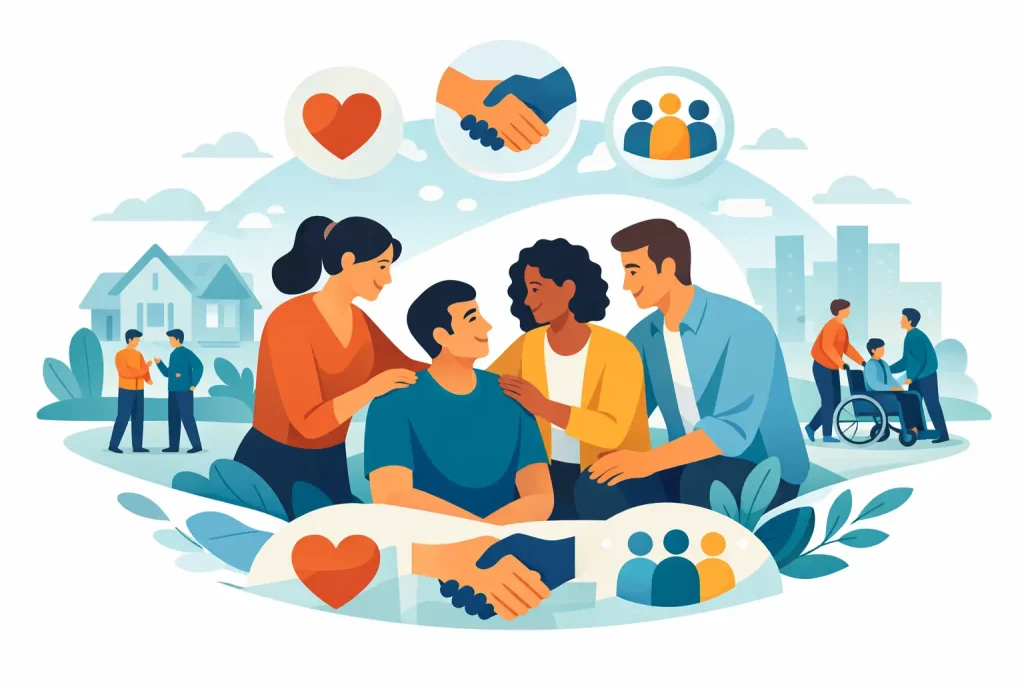
A person may need help getting to a doctor’s appointment, practicing grocery shopping, joining a local activity, or building routines that make daily life feel more manageable. When families ask what is community based support, they are usually trying to find a service that does more than supervise. They want support that helps a person live with greater independence, safety, and connection in everyday settings.
What is community based support?
Community based support is a service that helps individuals participate more fully in daily life outside of institutional settings. Instead of limiting care to the home or a clinical environment, this kind of support focuses on real-world activities such as errands, appointments, social outings, skill-building, and participation in the community.
For many individuals with disabilities, this service is not only about getting from one place to another. It is about having the right level of assistance to make choices, build confidence, develop practical life skills, and stay engaged with the world around them. The goal is support with purpose, not just presence.
Why community based support matters
Independence is rarely built in isolation. It grows when a person has safe, consistent opportunities to practice daily living in the places where life actually happens. That might mean learning how to order food at a restaurant, understanding how to check in for an appointment, or becoming more comfortable in public spaces.
Families often carry a heavy responsibility when a loved one needs extra support outside the home. They may worry about safety, communication, transportation, or whether their family member is truly included rather than simply accompanied. Community based support can ease that pressure by providing dependable, person-centered assistance that respects both the individual’s goals and the family’s concerns.
It also helps reduce the risk of social isolation. A person who spends most of their time at home may lose access to activities, relationships, and routines that support emotional well-being. Community involvement can improve confidence, increase a sense of belonging, and create more structure in day-to-day life.
What community based support usually includes
The exact services can vary based on the person’s needs, care plan, and eligibility, but community based support often includes assistance with transportation coordination, attending appointments, participating in recreational or social activities, and practicing everyday tasks in public settings. It may also involve helping a person build communication skills, follow schedules, or navigate community resources.
In practical terms, support may look like accompanying someone to the library, helping them shop for groceries within a budget, supporting attendance at a community event, or reinforcing routines that improve independence. Sometimes the work is hands-on. Sometimes it is more about cueing, prompting, encouragement, and supervision.
That distinction matters. Good support is not about doing everything for the person. It is about understanding when to assist directly and when to step back so the individual can build confidence and capability.
Community based support and community inclusion are related, but not identical
These terms are sometimes used together, and they do overlap, but they are not always the same. Community based support often centers on helping a person function safely and successfully in community settings. Community inclusion places stronger emphasis on belonging, participation, and meaningful connection.
For example, taking someone to a class is one level of support. Helping that person feel welcomed, engaged, and able to participate over time is a deeper level of inclusion. Both matter. The right approach depends on the individual’s goals, strengths, and current support needs.
For some people, the first priority is learning routines and building tolerance for unfamiliar environments. For others, the focus may be friendships, volunteering, hobbies, or broader participation in community life. A thoughtful provider recognizes that progress does not look the same for everyone.
Who benefits from community based support
This service can be valuable for individuals with developmental disabilities, adults who need structured help with daily activities, and families who want dependable support beyond the home. It may also benefit people who are capable of many tasks on their own but need guidance, redirection, or supervision to stay safe and successful in public settings.
Guardians and family caregivers often benefit as well. When a trusted support professional can help a loved one attend activities, practice life skills, or remain active in the community, family members may gain peace of mind and needed breathing room.
That said, community based support is not one-size-fits-all. Some individuals need short outings with simple supervision. Others need close attention, behavioral support, mobility assistance, or a carefully structured routine. Matching the service to the person is what makes it effective.
What good community based support looks like
The best support is person-centered, consistent, and goal-oriented. It starts with understanding who the individual is, what they enjoy, what challenges they face, and what progress would look like in real life. A support plan should reflect more than a schedule. It should reflect the person’s preferences, communication style, health considerations, and long-term goals.
Safety is a basic requirement, but quality support goes further. It encourages choice, respects dignity, and helps the individual do as much as possible for themselves. That could mean practicing small steps over time rather than rushing through an outing just to complete a task.
Good support professionals also pay attention to outcomes. Is the individual becoming more comfortable in the community? Are routines improving? Is anxiety decreasing? Are they building skills they can carry into other parts of life? Those questions matter more than simply checking off an activity.
What families should ask when considering services
When evaluating a provider, families and guardians should ask how support is tailored to the individual, what kinds of community activities are appropriate, and how staff handle safety, communication, and changing needs. It is also helpful to ask how progress is documented and how families or coordinators are kept informed.
Reliability matters just as much as compassion. A missed shift or poor communication can disrupt routines and create stress for the individual and the family. Professionalism, clear expectations, and consistent staffing often make a meaningful difference in the overall experience.
It is also worth asking whether the provider understands the balance between support and independence. Too little assistance can create frustration or risk. Too much can limit growth. Strong providers know how to adjust their approach based on the person, the setting, and the goal of the outing.
What is community based support in New Jersey DDD services?
In New Jersey, families often ask what is community based support when exploring services connected to the Division of Developmental Disabilities, or DDD. In that context, the service is generally designed to help eligible individuals access their community in ways that support independence, social development, and daily functioning.
Depending on the person’s approved plan, community based support may work alongside other services such as individual supports, respite, or community inclusion. Each service has its own purpose, and there can be overlap. What matters most is how the services come together to support the individual’s quality of life.
For families, this can feel confusing at first. Service names may sound similar, but their practical use depends on the person’s goals, funding, and assessed needs. A provider with direct experience can help families understand what the service is meant to accomplish and how it fits into a broader support plan.
Why the right provider makes a difference
Community based support happens in real time, in real environments, with real variables. Public spaces can be unpredictable. Appointments can run late. A person’s mood, energy, or comfort level can shift from day to day. That is why dependable staffing, thoughtful planning, and calm problem-solving are essential.
A strong provider does not treat community access as transportation alone. The work includes preparation, communication, supervision, encouragement, and follow-through. It also requires respect for the individual’s pace. Progress may be steady, but it is not always linear.
At Comfort Zone Healthcare Inc, this kind of service is approached with a focus on safety, dignity, and long-term empowerment. Families, guardians, and support coordinators often need a care partner who understands both the practical side of service delivery and the human side of helping someone grow in confidence and connection.
Community based support is most valuable when it helps a person move from simply being present in the community to feeling capable within it. That shift can start with something as ordinary as an outing, but for many individuals and families, it opens the door to a fuller and more independent life.

Pingback: What Is DDD Support Services? – Comfort Zone Health
Pingback: Individual Supports for Adults With Disabilities – Comfort Zone Health