
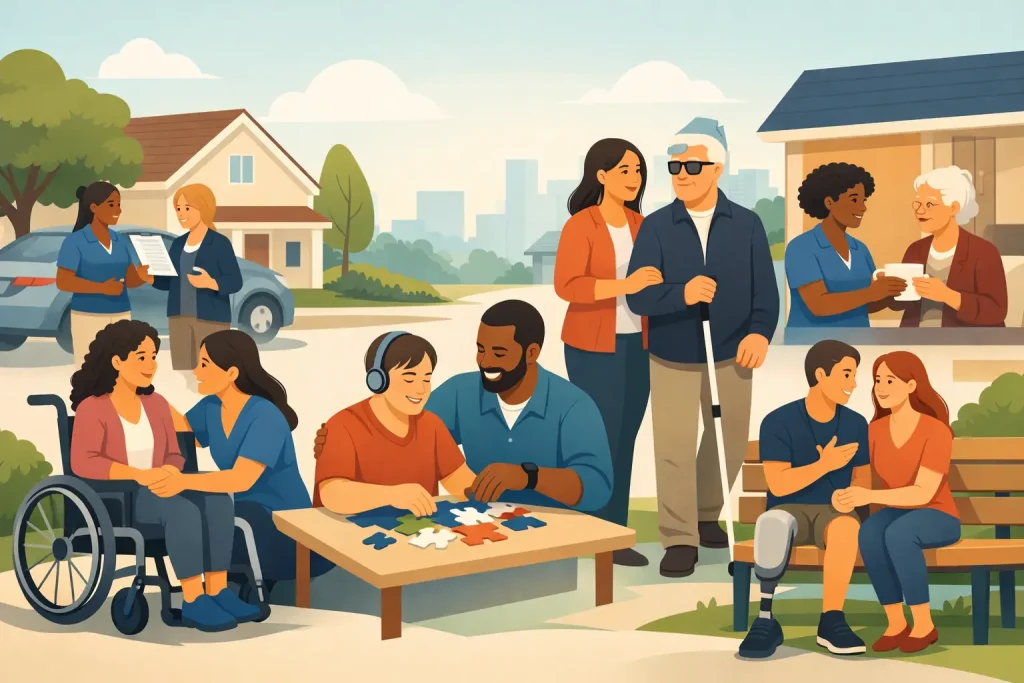
A good support plan should do more than fill hours in the day. It should help a person feel safe, respected, capable, and connected to the life they want to live. That is the real value of individual supports for adults with disabilities. When support is built around the person, not just the task list, it can strengthen independence while giving families greater peace of mind.
For many adults with disabilities, the right support makes everyday life more manageable without taking away choice or dignity. For families and guardians, it can ease the pressure of trying to do everything alone. For support coordinators and referral partners, it creates a practical path toward stability, routine, and community involvement.
What individual supports for adults with disabilities really mean
Individual supports are one-on-one services designed around a person’s unique needs, goals, routines, and preferences. That can include help at home, support in the community, supervision for safety, assistance with daily tasks, and guidance with building life skills. The key word is individual. No two people need support in exactly the same way.
Some adults may need hands-on help with bathing, dressing, meal preparation, or mobility. Others may be more independent physically but need cueing, supervision, transportation support, or help navigating community settings. One person may want support focused on social connection and confidence, while another may need a steady routine that reduces anxiety and helps them participate more fully in daily life.
This is why person-centered care matters. Support should reflect the individual’s abilities, not only their challenges. It should also respect culture, communication style, family dynamics, and long-term goals.
Why personalized support matters so much
Generic care often misses what makes a person feel comfortable and successful. A routine that works well for one individual may feel overwhelming or ineffective for another. Personalized support gives room for flexibility, which often leads to better outcomes.
When services are tailored, adults with disabilities may be more likely to build confidence in daily living skills, maintain consistent routines, and participate in their communities in meaningful ways. Families may also notice fewer gaps in care, less stress around scheduling, and better communication between everyone involved.
There is also an emotional side to support that should not be overlooked. Being treated with patience and respect can make a major difference in how someone experiences care. Adults do not want to feel managed. They want to feel understood.
What individual supports can include
The exact services depend on the person’s needs, funding, and care plan, but individual supports often include assistance with daily living tasks, supervision for health and safety, companionship, skill-building, and support with community activities. In practice, that may mean help getting ready in the morning, preparing meals, remembering medications, attending appointments, using transportation, or participating in social and recreational activities.
Some supports are very practical. A caregiver may help someone organize their day, keep up with hygiene, or safely move around the home. Other supports are more developmental. A direct support professional may encourage communication, model routines, build confidence in decision-making, or help a client practice everyday tasks until they become more comfortable doing them independently.
That balance matters. Good support is not about doing everything for someone. It is about helping with what is needed while preserving as much independence as possible.
Individual supports for adults with disabilities at home
Home is where routines are established and comfort is often highest, so support in that setting can be especially valuable. Many adults need assistance with personal care, light housekeeping, meal preparation, and staying safe throughout the day. Others may need structure and redirection to stay on task or reduce stress.
Home-based support can also help prevent small issues from becoming larger problems. Missed meals, skipped hygiene, medication confusion, cluttered walkways, or social isolation can gradually affect health and wellbeing. Consistent support can reduce those risks while helping the individual maintain a familiar environment.
For families, this can be a relief. Loved ones often want to help, but they may also be balancing work, children, their own health needs, or caregiving responsibilities for more than one person. Reliable in-home support can make daily life more sustainable for everyone involved.
Support in the community is just as important
A full life does not happen only at home. Community participation is often one of the most meaningful parts of individual support services. This may include going to a class, visiting a park, attending a faith-based activity, shopping, volunteering, or simply getting out into the community with the right level of assistance.
Community-based support can improve confidence, social skills, and overall wellbeing. It can also reduce isolation, which many adults with disabilities experience more often than people realize. Even small, regular outings can help a person feel more connected and engaged.
That said, community support should be approached thoughtfully. Some individuals thrive with a busy schedule and social interaction. Others do better with short outings, familiar places, and gradual changes. A good provider pays attention to those differences instead of pushing a one-size-fits-all routine.
How families can tell if the support is a good fit
The best support relationship is built on trust. Families often notice the difference quickly when the match is right. The caregiver or support professional takes time to learn the person’s preferences, communicates clearly, and shows consistency in how they provide care.
A good fit also means the individual is treated as an adult. Respectful support includes offering choices, listening carefully, protecting privacy, and encouraging participation in decisions whenever possible. Even when someone needs significant assistance, they still deserve to be involved in their own life.
It is also wise to look at how the provider handles change. Needs can shift over time due to health issues, family schedules, behavior changes, or life transitions. Support should be steady, but it should not be rigid.
Questions worth asking before starting services
Families and guardians often feel pressure to make quick decisions, especially when current arrangements are not working. Taking a little time to ask thoughtful questions can help avoid future frustration.
It helps to ask how the provider approaches person-centered planning, how they match staff with clients, and how they communicate with families or guardians. You may also want to ask how they handle schedule changes, safety concerns, and progress toward goals. If the individual has communication differences, sensory sensitivities, or behavioral support needs, those topics should be discussed openly from the start.
The goal is not perfection. The goal is clarity, consistency, and a shared understanding of what good support looks like for that person.
The trade-offs families should know
There is no single support model that works for everyone. More hours of service can provide stability, but they may also feel intrusive if the plan is not thoughtful. Too little support may preserve privacy, but it can leave important needs unmet. Some individuals do best with a highly structured routine, while others need flexibility and gradual pacing.
This is where honest assessment matters. The right amount of support depends on daily needs, safety concerns, personal goals, and the family’s capacity to help. It may take some adjustment to find the right balance.
Another trade-off is the pace of progress. Families sometimes hope services will lead to immediate changes in independence or behavior. Sometimes that happens. Often, progress is slower and more gradual. Building trust, practicing routines, and developing skills takes time. Small gains still matter.
A person-centered approach makes all the difference
When support is truly person-centered, the individual is not reduced to a diagnosis or a checklist. Their preferences guide the plan. Their strengths are part of the conversation. Their comfort and dignity stay at the center of every interaction.
This approach also strengthens collaboration between the individual, family, guardian, and provider. Everyone has a clearer sense of purpose, and support becomes more consistent across settings. That consistency can help reduce stress and create a steadier path forward.
For families in New Jersey looking for dependable, compassionate care, providers like Comfort Zone Home Healthcare understand that quality support is both practical and deeply personal. It is about helping adults with disabilities live with greater confidence, comfort, and connection.
The right support should make life feel more possible, not more complicated. When care is respectful, individualized, and grounded in real understanding, it can create room for growth, relief for families, and a better everyday experience for the person receiving it.